DIY Microfossil Kit: Unlocking Home Paleontology Potential
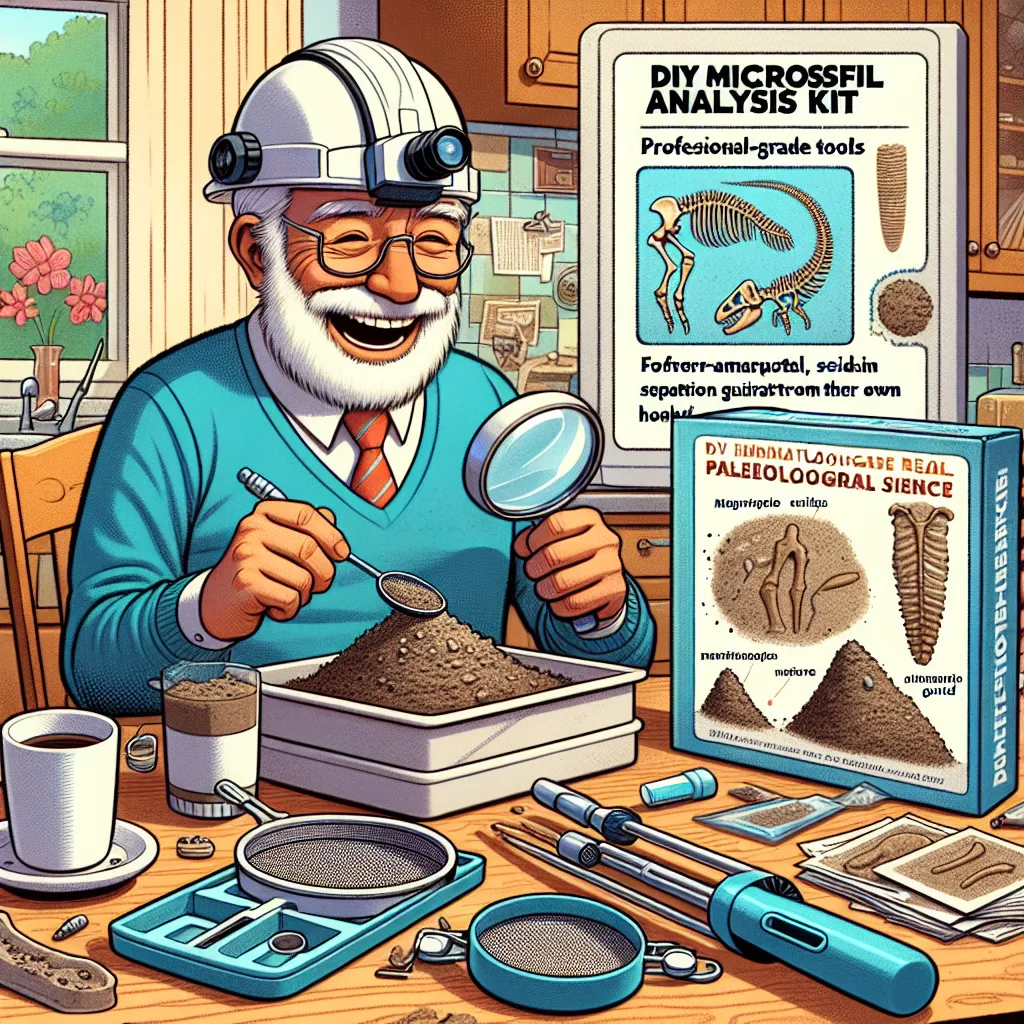
Fossil hunting has fascinated people for generations, but the tools and techniques needed to study microfossils remain locked away in academic labs. There’s a growing demand for citizen science, yet no easy way for enthusiasts to engage with real paleontological work from home. The solution is a Microfossil Analysis Kit that brings professional-grade tools—like sieves, magnifiers, sediment separation guides, and ID booklets—into an affordable, DIY package. Inspired by the painstaking recovery methods at sites like Alaska’s Prince Creek Formation, the kit would let amateurs analyze soil samples and hunt for real fossil fragments. Trends in DIY science, education-at-home, and hobbyist biology are booming, making now the perfect time. Example: a retired engineer in Ohio processes sediment samples on his kitchen table, finding a 70-million-year-old vertebra fragment, contributing to real research databases.
Description
No additional description provided.
The Pitch
For generations, fossil hunting has captivated the imagination of many, but the niche pursuit of microfossil study has traditionally been confined to the sterile environments of academic and professional laboratories. While public interest in citizen science projects is at an all-time high, there remains a significant barrier between amateur enthusiasts and meaningful engagement with genuine paleontological research from the comfort of their homes.
The solution lies in the conception of a Microfossil Analysis Kit. This innovative product aims to bridge the gap by providing a comprehensive set of professional-grade tools bundled into an accessible and affordable DIY package. The kit would include essential items such as sieves for sediment sorting, high-quality magnifiers for detailed observation, clear sediment separation guides, and illustrated identification booklets for discerning different fossil types. Inspired by the meticulous recovery methods employed at well-known paleontological sites such as Alaska’s Prince Creek Formation, this kit empowers enthusiasts with the capability to examine soil samples and discover authentic fossil fragments from their own homes.
The growing trends of home-based science, DIY education, and the increasing community of hobbyist biologists create a ripe environment for such an offering. Take, for example, a retired engineer in Ohio who processes sediment samples on his dining table. Through diligent use of the kit, he discovers a 70-million-year-old vertebra fragment. This contribution not only amplifies his personal knowledge but also feeds into broader research databases, showcasing the potential of citizen scientists to make significant discoveries.
To ensure the successful development and launch of this product, several steps and strategies can be implemented:
1. Product Development and Tools: - Start by partnering with paleontologists and educators to develop the kit’s components with authenticity and accuracy. - Utilize 3D printing technology and affordable manufacturing processes to keep production costs low, allowing for a more accessible price point. - Develop an accompanying digital platform or app that provides additional resources, such as video tutorials, fossil databases, and a community forum for kit users.
2. Launching the MVP: - Prioritize a pilot program by distributing initial kits to a selected group of educators, museum gift shops, and interested hobbyist communities to gather feedback. - Use crowdfunding platforms like Kickstarter or Indiegogo for a broader launch, generating capital and validating the concept with early adopters.
3. Go-To-Market (GTM) Strategy: - Establish collaborations with educational institutions, museums, and science clubs to promote the kit as an educational tool. - Engage with influencers and YouTube content creators focusing on DIY science and paleontology, ensuring wide-reaching social media visibility. - Attend science fairs, homeschooling conventions, and hobbyist expos to showcase the product directly to potential users.
4. Business Model: - Implement a direct-to-consumer sales model, leveraging an e-commerce platform to reach a global audience. - Offer subscription services or membership plans for continuous content updates, sample refills, and access to exclusive research findings and webinars. - Explore partnerships with schools and educational programs for bulk sales and curriculum integration.
By offering an inclusive gateway to genuine paleontological study, this Microfossil Analysis Kit not only democratizes the science of fossil hunting but also fosters a new wave of citizen scientists eager to engage with and contribute to our understanding of the natural world.