Distributed Network of Robotic Micro-Factories
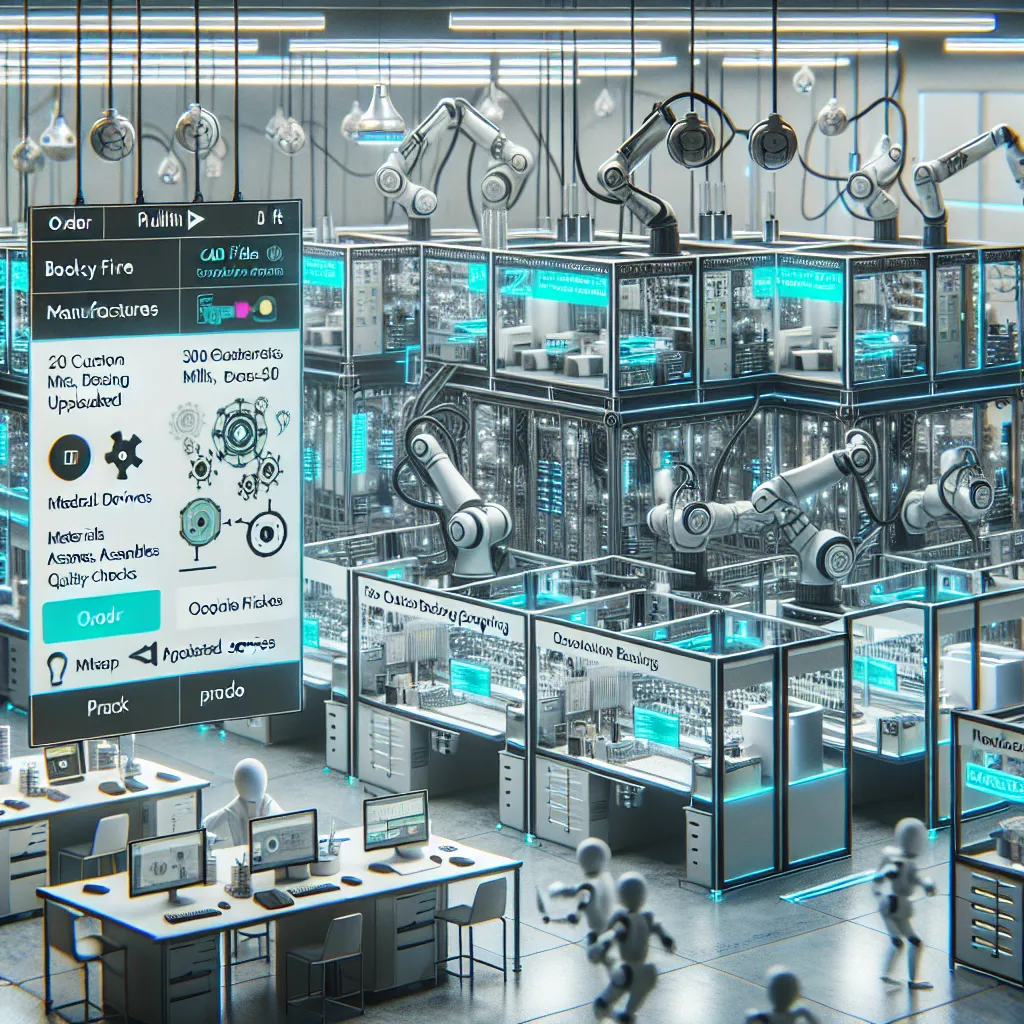
Hardware startups usually fail not because they can’t design things, but because they can’t manufacture early batches—factories don’t want 50–300 units, only massive orders. That slows iteration to a crawl. A startup could build a distributed network of robotic micro-factories—modular 10–40 ft units that can be booked like AWS compute. You upload CAD files, pick materials, order a batch size from 25 to 500 units, and a nearby automated cell prints, mills, assembles, and QC-verifies everything within 48 hours. The timing is perfect: robotic arms are cheap, AI CAM is mature, and industrial vacancies are everywhere. A medical-device team could order 200 custom casings and 50 proto-boards and have them delivered in two days, letting hardware iterate like software.
Description
No additional description provided.
The Pitch
In the rapidly evolving landscape of hardware innovation, one of the most significant bottlenecks for startups is the initial manufacturing process. While designing a product might be manageable, producing early-stage batches for testing, iteration, and market entry often poses a formidable challenge. Traditional factories typically require large orders, making it economically unfeasible for startups to order small quantities. This limitation slows down product development cycles and stifles innovation.
Identifying this crucial pain point opens the door to a transformative solution: the creation of a network of distributed robotic micro-factories. These micro-factories are compact, modular production units, which can be easily scaled and relocated. They offer manufacturing services on demand, allowing entrepreneurs to produce small to moderate batches of hardware efficiently and promptly.
Problem Statement:
The main problem facing hardware startups today is the gap between prototype and scaled production. Factories are designed to handle mass production, with minimum order requirements that are often too high for new companies working with limited budgets. This problem exacerbates the risk for startups, as they cannot test and refine their products without committing to large-scale orders.
Solution Overview:
The proposed solution is a network of robotic micro-factories. These are stand-alone units that can be booked much like cloud computing services. The process is user-friendly: startups transfer their CAD files, select desired materials, and order batch sizes ranging from 25 to 500 units. Near their location, an automated micro-factory unit interprets the files to undertake printing, milling, assembling, and quality checking. This allows for rapid turnaround, typically within 48 hours, facilitating quick iterations and development changes.
Product Details:
- Modular manufacturing units: Compact and easily deployable units (10–40 ft in size) designed for flexibility. - Advanced robotics: Utilize affordable robotic arms capable of handling multiple manufacturing tasks. - Mature AI-driven computer-aided manufacturing (CAM): Ensures precision and efficiency in production. - On-demand booking: Similar to cloud-based services, enabling customers to pay only for what they use. - Rapid turnaround: With local units, orders are produced and delivered swiftly, typically within 48 hours.
Tools to Facilitate MVP Launch:
- CAD software integration: Seamlessly connect popular CAD programs to the manufacturing units for easy file upload. - Online platform for ordering: A user-friendly website or app to book manufacturing slots, select materials, and manage orders. - Inventory management: Tools for tracking materials and production status to optimize workflow and reduce waste. - Automation tools: Software to automate task scheduling, job assignments, and maintenance checks.
Go-To-Market Strategy (GTM):
- Initial focus on hardware startups in sectors like medical devices, IoT, and consumer electronics. - Partnerships with co-working spaces, tech incubators, and startup accelerators to reach potential clients. - Demonstrations and exhibitions at tech and industry events to showcase the capability of micro-factories. - Incentives for early adopters, such as discounts or free trial orders, to seed the market with initial users.
Business Model:
- Pay-per-use pricing: Customers pay based on the number and complexity of units manufactured, akin to cloud service providers. - Subscription plans: Offers for regular clients who need consistent manufacturing services, including priority booking and discounted rates. - Partner programs: Collaborate with material suppliers and CAD software companies for integrated services and shared revenue models.
In summary, by leveraging advancements in robotics and AI-driven manufacturing, this network of distributed micro-factories offers hardware startups a way to bridge the gap between prototype and market-ready products, thus fueling faster innovation cycles and reducing the risk traditionally associated with production.