Discreet Personal Safety Device Using Thermal Detection
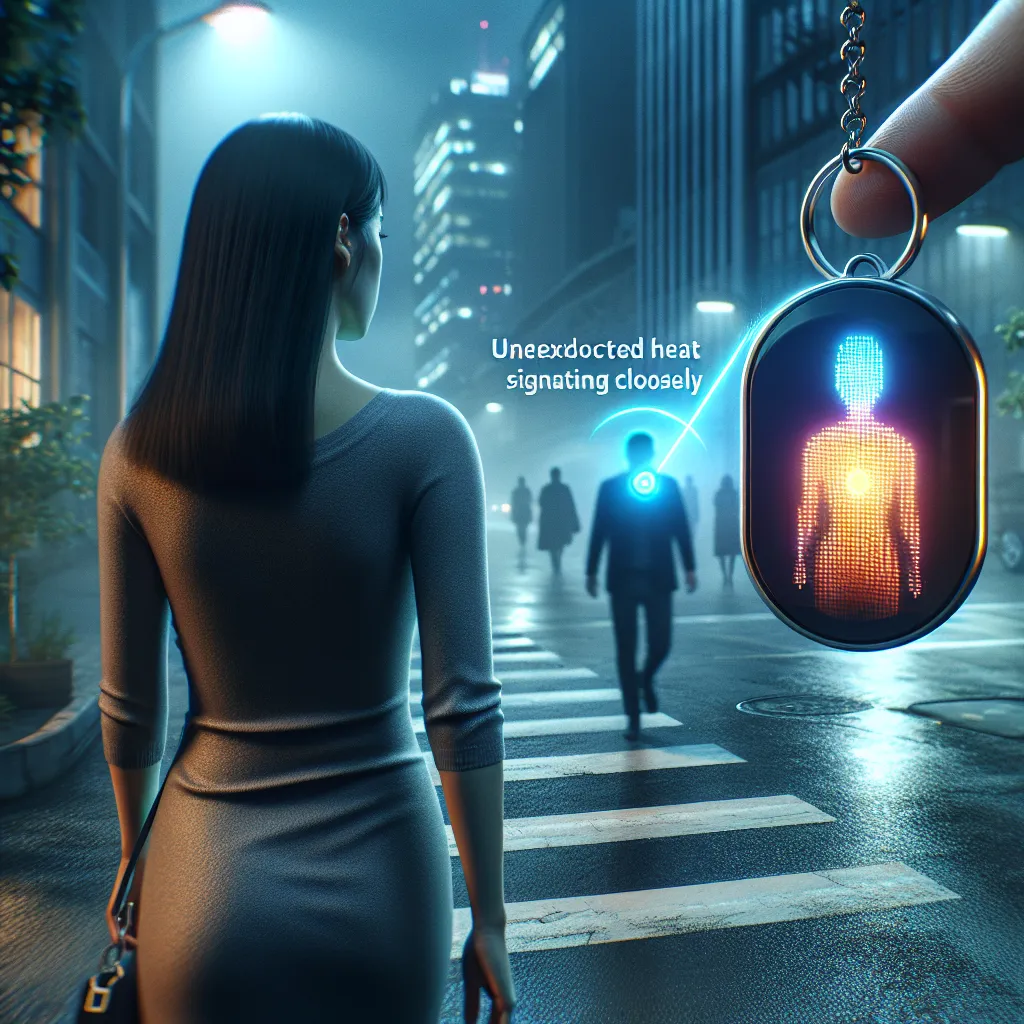
Walking home at night, especially for women or vulnerable groups, comes with anxiety about being followed. Using MIT’s thermal film, a keychain-sized device could passively scan behind or around the user and vibrate or light up when it detects unexpected heat signatures nearby—like a person following too closely. Unlike cameras or microphones, this protects privacy while offering passive, real-time awareness in a discreet form. As personal safety becomes a bigger focus, this brings real utility in a minimalist, always-ready design.
Description
No additional description provided.
The Pitch
Walking home at night can be a source of anxiety, especially for women and vulnerable groups. It is not uncommon for individuals to feel uneasy when they sense someone is following them too closely, leading to increased stress and discomfort. Traditional safety tools such as cameras and microphones often compromise privacy or require active engagement, which may not be ideal in tense situations. Thus, there is a growing need for a discreet but effective device that ensures personal safety without infringing on privacy.
#### Identifying the Problem
The core problem here is the anxiety and potential danger associated with being followed while walking alone at night. Existing safety measures are either too intrusive, demanding constant attention, or lack the real-time responsiveness required to assess immediate threats.
#### Offering a Solution
To address this issue, imagine a keychain-sized device utilizing MIT’s advanced thermal film technology. This device can passively scan the area behind or around the user, detecting unexpected heat signatures that suggest someone is following too closely. The device would alert the user with a vibration or light signal, offering reassurance and awareness without needing to actively operate the device.
#### Product Details
- **Design**: Compact and minimalist, fitting easily on a keychain for constant accessibility. - **Technology**: MIT’s thermal film, a non-invasive sensor that detects changes in temperature indicative of human presence. - **Notification System**: Audible vibrations or visual cues to alert the user discreetly. - **Privacy**: No data recording or transmission, ensuring the user's privacy is intact. - **Battery Life**: Long-lasting battery with a simple USB charging port for ease of use.
#### Tools for Easy MVP Launch
1. **Prototyping Platforms**: Use platforms like Arduino or Raspberry Pi for initial prototyping. 2. **Thermal Sensing Technology**: Obtain access to MIT's thermal film or other similar technology. 3. **3D Printing**: Utilize 3D printing services to develop ergonomic and user-friendly device casings. 4. **Manufacturing Partners**: Collaborate with electronics manufacturers for small-scale production runs.
#### Go-To-Market Strategy
1. **Target Audience**: Focus initially on women and vulnerable groups who frequently commute alone at night. 2. **Partnerships**: Collaborate with safety advocacy groups and self-defense trainers to raise awareness and drive credibility. 3. **Marketing Channels**: Utilize social media campaigns, emphasizing user testimonies and video demonstrations of the product in action. 4. **Retail Strategy**: Start with direct-to-consumer sales through an online platform, expanding into retail partnerships with travel and accessory stores.
#### Business Model
- **Direct Sales**: Primary revenue through direct device sales. - **Subscription Services**: Optional subscription for premium features, such as enhanced battery life or advanced notification systems. - **Referral Program**: Provide incentives for customers who refer others to boost the word-of-mouth marketing.
#### Conclusion
As personal safety becomes increasingly prioritized, the proposed device offers a tangible, privacy-protecting solution to a prevalent concern. By leveraging cutting-edge technology and focusing on a minimalist design, this device brings significant utility to those seeking peace of mind during night-time commutes.