Digital Twins for Teams
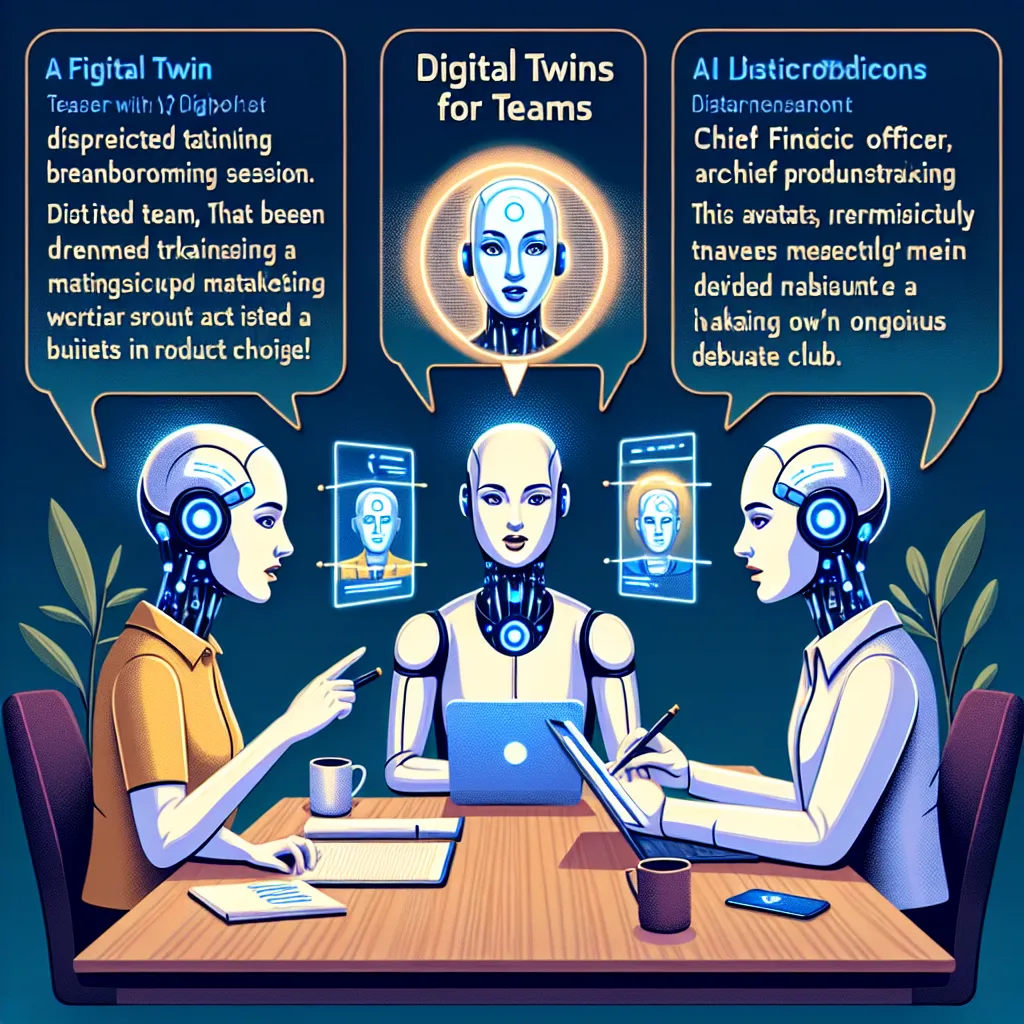
Collaborating with distributed teams is inefficient, especially in fast-moving R&D or ideation contexts. “Digital Twins for Teams” uses meeting transcripts to train AI avatars of team members, enabling asynchronous brainstorming, idea vetting, and simulation of conversations. Think of it as a debate club of clones, refining ideas 24/7. Microsoft’s CEO recently endorsed this “think with AI, work with people” model, and teams are already recording meetings to build this. Example: a founder simulates product discussions with digital twins of their CFO, CPO, and advisor to get strategy clarity before a real-world pivot decision.
Description
No additional description provided.
The Pitch
With the rapid pace of innovation and the increasing prevalence of remote work, the way teams collaborate needs to evolve. For those who operate in fast-changing environments, particularly in areas like research and development or ideation, current collaboration practices can often be inefficient. Introducing a novel approach—Digital Twins for Teams—which aims to revolutionize team collaboration by turning meeting transcripts into AI avatars of team members. These avatars enable asynchronous brainstorming, idea vetting, and conversation simulation, providing a continuous cycle of refinement.
Backstory
In many organizations today, pivotal decisions are often delayed due to the inability of team members to be physically present at the same time. The concept of digital twinning has emerged as a promising solution, gaining traction with recent endorsements from industry leaders. The idea is straightforward but powerful: create AI replicas of team members from meeting transcripts that can simulate their thought processes and responses. These digital twins facilitate ongoing discussions and refine concepts continuously, unbounded by the constraints of time zones or schedules.
Problem Statement
The core challenge teams face in distributed work environments is maintaining efficiency and alignment in ideation and decision-making processes. Traditional means of collaboration, even with video conferencing tools, can slow down the innovation pipeline, leaving teams reactive rather than proactive. There's a clear need for a system that allows continuous engagement and refinement of ideas without requiring team members to be physically or temporally aligned.
Solution
The solution lies in harnessing artificial intelligence to convert meeting transcripts into digital replicas—or twins—of team members. These AI avatars serve as stand-ins for real individuals during brainstorming sessions, discussions, and strategy meetings. Teams can interact with these digital entities to simulate conversations, debates, and decision-making processes, effectively creating a 24/7 environment for ideation and problem-solving. This makes the process not only faster but can also yield higher-quality outcomes as ideas are constantly iterated and refined.
Product Details
The core product is an AI-driven platform that transforms existing meeting transcripts into digital avatars of each participant. Key features include:
- Transcript Analysis: AI algorithms analyze past meeting transcripts to create personality profiles and dialogue patterns for each team member. - Avatar Interaction: Users can engage with AI avatars in a simulated environment, testing ideas and options in real-time. - Asynchronous Collaboration: The platform facilitates brainstorming and scenario testing without needing all team members to be present simultaneously. - Continuous Improvement: AI algorithms learn and adapt over time, improving the accuracy and relevance of avatar interactions.
Tools for MVP Launch
Getting started with a Minimum Viable Product (MVP) requires selecting the right tools:
1. Natural Language Processing (NLP) Tools: To process and analyze meeting transcripts. 2. AI and Machine Learning Platforms: Such as TensorFlow or PyTorch, for building and training the avatars. 3. Cloud Infrastructure: Services like AWS or Google Cloud for scalable data processing. 4. Collaboration Platforms: Integration with existing tools like Slack or Microsoft Teams to streamline the user experience.
Go-to-Market Strategy (GTM)
1. Early Adopters: Target industries that are early adopters of new technologies, like tech startups and innovation hubs. 2. Partnerships: Collaborate with remote work platforms and video conferencing tools to enhance adoption. 3. Pilot Programs: Implement pilot projects with select companies to demonstrate effectiveness and refine the product. 4. Educational Content: Develop webinars and content that explains the benefits and uses of digital twins in team collaboration. 5. Influencer Endorsements: Gain support from industry leaders to build credibility and reach a wider audience.
Business Model
1. Subscription-Based: Offer a tiered subscription model where companies pay based on the number of digital avatars they require. 2. Usage Fees: Charge based on avatar interaction volume or the number of scenarios simulated. 3. Enterprise Solutions: Provide tailored solutions for large enterprises with specific customization and integration needs.
Conclusion
Digital Twins for Teams presents an exciting opportunity to transform how distributed teams collaborate and innovate. By leveraging AI to create dynamic, interactive avatars, organizations can overcome the challenges of asynchronous work and cultivate a persistent, evolving environment for idea exploration and decision-making. Through strategic implementation and targeted outreach, this platform is poised to redefine team collaboration in the digital age.