Digital Evidence Authenticity Verification Platform
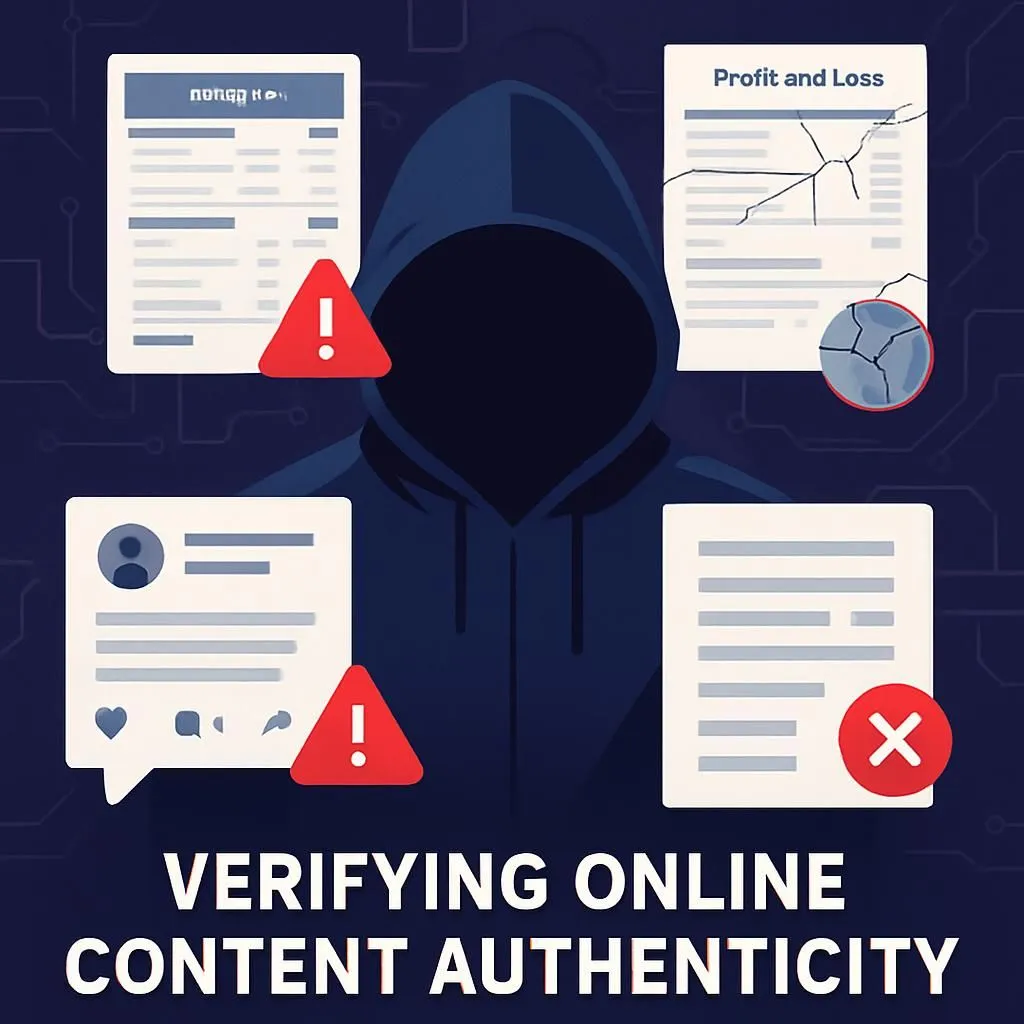
The internet increasingly runs on screenshots, betting slips, profit-and-loss statements, social proof, and performance claims, yet verifying whether any of it is authentic is difficult. As AI-generated content becomes indistinguishable from real content, trust online continues to erode. This platform would analyze screenshots, transaction records, social posts, and digital documents to determine whether evidence has likely been manipulated, fabricated, or taken out of context. Customers could include media companies, financial communities, marketplaces, compliance teams, and consumers. The timing is ideal because synthetic content is growing exponentially while the tools to verify authenticity remain fragmented and difficult to use.
Description
No additional description provided.
The Pitch
This business would not just detect fake images; it would become a trust layer for the parts of the internet where people make decisions based on someone else’s receipts. Screenshots have become a strange kind of informal currency: proof of income, proof of trade, proof of message, proof of outrage, proof of success. The more commerce and reputation depend on these artifacts, the more valuable it becomes to know whether they deserve to be believed.
The most interesting insight is that fraud is shifting from impersonating people to impersonating evidence. A fake identity is often less persuasive than a convincing-looking bank balance, trade history, customer review, or private conversation. People do not need to forge an entire reality; they only need to forge the one image or document that causes someone else to trust them. That makes verification useful not only after harm occurs, but at the exact moment belief is being formed.
This could also become valuable because authenticity is contextual, not binary. A screenshot may be technically unedited but still misleading because it is cropped, old, selectively sampled, or missing the surrounding transaction history. The strongest product would not simply say “fake” or “real”; it would explain what can be trusted, what is uncertain, and what is suspicious. That kind of graded judgment is much more useful in messy real-world decisions than a dramatic fraud verdict.
There is also a distribution advantage hidden in the behavior itself. Questionable proof travels socially: in group chats, trading forums, creator posts, marketplaces, dating apps, and newsrooms. Every time one person checks a claim, the result becomes relevant to everyone exposed to the same artifact. Verification can attach to the object being judged, not just the user who requested it, which means trust signals can compound around widely circulated claims.
The deeper business is not content moderation; it is evidence infrastructure. As synthetic media becomes normal, people will stop asking whether digital artifacts can be faked and start asking which institutions they trust to interpret them. A company that earns that role could sit quietly beneath many online interactions, turning a chaotic universe of screenshots and claims into something closer to admissible evidence.