Design-First OS for AI Agents
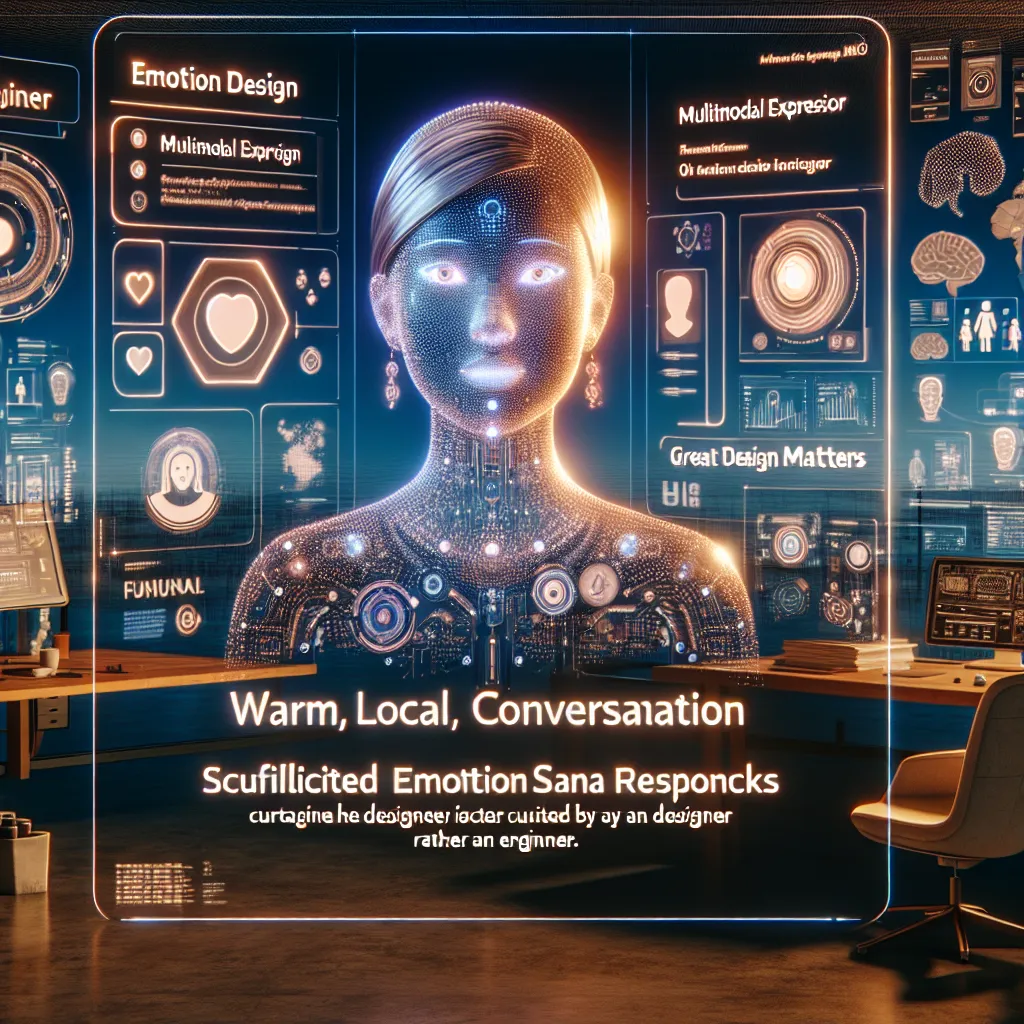
AI agents are becoming part of everyday workflows, yet the way they’re presented remains sterile and technical—often built by developers with little regard for UX or emotional trust. Users won’t adopt agents that feel robotic or untrustworthy. What’s needed is a platform where designers—not engineers—define the face, tone, and behavior of agents. It’s a visual OS to shape how intelligence is delivered, with tools for emotion design, UI components, and multimodal expression. YC says, “great design is going to matter even more” as product barriers drop. With agents becoming interfaces for everything, their presentation becomes the product. Now that LLMs are decoupled from UI, this lets a designer craft a virtual travel concierge that feels warm, local, and conversational—trust is built not just by capability, but by feel. AI’s brain is ready. What it lacks is a soul. Designers can give it one.
Description
No additional description provided.
The Pitch
As artificial intelligence continues to integrate into our daily lives, its presence is increasingly felt in various applications—ranging from customer service bots to personal assistants. However, the current development approach often focuses on technical feasibility over user experience, leading to AI agents that can feel impersonal and mechanical. This has created a gap in adoption: users are hesitant to trust or engage with agents that lack warmth and personality.
Backstory:
Traditionally, the creation of AI agents has been dominated by developers who emphasize functionality over form. While technical prowess is essential, it often results in output that lacks a human touch. This shortcoming poses a challenge: for AI to be genuinely helpful and widely accepted, it needs to resonate emotionally with users. To bridge this gap, the design community must be empowered to take the reins in defining how AI agents appear, sound, and behave—reshaping them from mere tools into trusted companions.
Problem:
The primary issue is the disconnect between technical development and human-centered design in AI. Current AI platforms focus heavily on performance metrics, sidelining crucial aspects like user interface and emotional engagement. As a result, there's a lack of platforms that allow designers to innovate freely, crafting experiences that users can truly connect with. This technical bias leaves designers unable to express their visionary concepts, preventing AI from reaching its full potential for user interaction and engagement.
Solution:
The solution lies in developing a comprehensive platform that empowers designers with the tools to craft AI personalities. This platform would function as a visual operating system where designers have the autonomy to sculpt the “face,” tone, and overall personality of an AI agent. Equipped with resources for emotion design, customizable UI components, and support for multimodal expression, designers can create agents that aren't just intelligent but emotionally resonant. This shift in focus from technical prowess to emotional intelligence is pioneering a new era in AI development.
Product Details:
1. Visual Interface: A user-friendly, drag-and-drop environment tailored for design professionals to define agent attributes without needing to code.
2. Emotion Design Tools: Features for customizing expressions, voice intonations, and contextual responses that align with brand values and tone.
3. Multimodal Capabilities: Support for integrating text, speech, and visual cues to craft more engaging and interactive experiences.
4. Customizable Personas: Libraries of pre-made personalities or the ability to design unique, bespoke characters from scratch.
5. Analytics and Feedback: Insights into user interactions to continuously refine and enhance the agent's demeanor and effectiveness.
Tools for Launching as an MVP:
- Design Software: Integration with tools like Adobe XD, Sketch, or Figma for interface design. - Voice Modulation APIs: Use services like Google Text-to-Speech or Amazon Polly for personalized voice settings. - Emotion Recognition APIS: Leverage tools like Affectiva to ensure emotional accuracy in interactions. - Front-End Frameworks: Employ React or Vue.js for building a dynamic and responsive interface.
GTM Strategy:
1. Identify early adopters within the design community passionate about AI and UX. 2. Launch a beta program to gather feedback and refine product features. 3. Develop partnerships with design schools and communities to build advocacy. 4. Create educational content to demonstrate the power and possibilities of humanized AI agents. 5. Utilize social media campaigns to showcase success stories and potential transformations.
Business Model:
1. Subscription Tiers: Offer different levels of access based on the number of agents, customization options, and support features. 2. Licensing to Enterprises: Provide white-label solutions for businesses looking to integrate unique agents into their customer-facing operations. 3. Marketplace: Create a repository where designers can sell pre-designed personality templates and components.
Conclusion:
By shifting the focus from purely technical construction to a more holistic design-oriented approach, this platform offers a revolutionary way for designers to breathe life into AI agents. It bridges the gap between functionality and user experience, helping foster a new wave of AI applications that are not only intelligent but emotionally connective. When designers can shape the soul of AI, they enhance its capacity to assist, engage, and trust, ultimately transforming the landscape of human-machine interaction.