Delicious Protein Treats: Bakery Cart Franchise
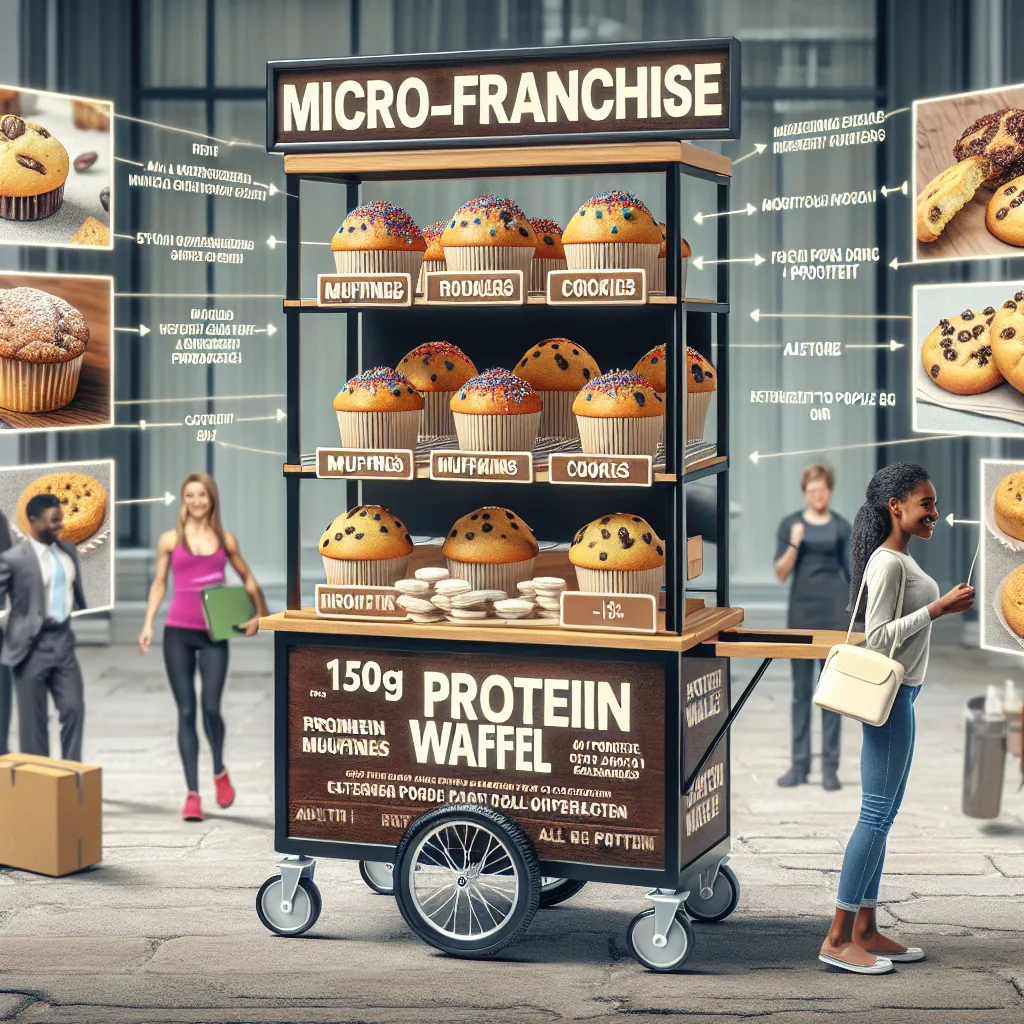
High-protein muffins and cookies exist—but they’re mostly supermarket brands that taste like cardboard. This micro-franchise model lets entrepreneurs run a compact bakery cart or kiosk selling genuinely delicious, protein-enriched treats (15–20g each) in high-foot-traffic spots like office lobbies, campuses, and festivals. Central kitchens handle production; operators just bake and sell. Example: A student in Austin opens a protein waffle cart outside the gym, sells out daily, and pays off her $8K startup cost in under three months.
Description
No additional description provided.
The Pitch
With the rise in health-conscious eating, protein-enriched snacks have gained in popularity. However, most supermarket options fall short in taste, often likened to cardboard. An innovative micro-franchise model emerges as a solution, allowing entrepreneurs to tap into a lucrative market by offering flavorful, protein-rich treats like muffins, cookies, and waffles. These can be sold from compact bakery carts or kiosks in bustling locations such as office lobbies, university campuses, and local festivals.
Backstory As the demand for nutritious snacks grows, both consumers and entrepreneurs are seeking options that provide health benefits without compromising on taste. While major brands struggle to balance taste and nutrition, there is a niche for fresh, delectable, and protein-packed snacks in convenient locations. This model empowers individuals to start their own business with relatively low capital while meeting consumer demand for better-quality food.
Problem Current market offerings in the protein snack sector are often mass-produced, lacking both in flavor and freshness. Consumers who seek high-protein snacks are typically disappointed by the taste, leading to a gap in the market for a product that combines taste with nutritional benefits. Additionally, aspiring entrepreneurs often face high barriers to entry in food-related businesses due to the complexities of production and distribution.
Solution This micro-franchise model simplifies the process for entrepreneurs by centralizing production and focusing on a straightforward distribution method. By handling production in central kitchens, the model ensures high-quality and consistent products. Franchise operators need only to focus on baking and selling, minimizing their burden and allowing them to provide fresh products directly to their customers.
Product Details The micro-franchise will offer a selection of protein-enriched muffins, cookies, and waffles, each containing 15 to 20 grams of protein. These treats will be available in a variety of flavors that cater to diverse palates. The easy-to-use carts or kiosks will be equipped with necessary baking equipment, allowing operators to provide fresh snacks on the spot. The franchise offers training to ensure consistent product quality and customer satisfaction.
Tools for Launching the MVP 1. Pre-packaged baking mixes sent from central kitchens ensure standardization. 2. Portable carts or kiosks designed for minimal setup and easy mobility. 3. A user-friendly point-of-sale system for seamless transactions. 4. Comprehensive operational training and support resources. 5. Access to a community of fellow operators for sharing tips and experiences.
Go-to-Market (GTM) Strategy 1. Market Research: Identify potential high-foot-traffic locations such as college campuses, fitness centers, office complexes, and event spaces. 2. Strategic Partnerships: Collaborate with local gyms or universities to create exclusive selling spots. 3. Digital Marketing: Utilize social media platforms to build brand awareness and engage with target customers. 4. Local Events: Host tasting events and promotions to attract initial customers and generate word-of-mouth.
Business Model This micro-franchise operates on a shared revenue model, where central operations supply pre-made mixes and equipment, and independent operators focus on sales. An initial startup cost provides operators with the necessary equipment and inventory to start. Operators retain a percentage of sales, offering them autonomy and incentivizing growth.
Conclusion This micro-franchise model addresses consumer demands for tasty and healthy snacks while offering entrepreneurs a simplified path to business ownership. By ensuring quality through central production and providing substantial support to operators, the venture stands poised to succeed in a rapidly growing market, meeting the needs of both health-conscious consumers and aspiring business owners.