Dehydrated Meal Subscription Delivery Service
Backpackers eat entire meals that weigh a few ounces, sit on a shelf for months, and become dinner when you add hot water. Meanwhile, meal delivery companies are shipping refrigerated boxes full of water across the country every week. Build a meal subscription around dehydration instead. Real meals get cooked, dehydrated, shipped cheaply without giant ice packs, then rehydrated at home in minutes. Better shelf life means less waste. Lower weight means cheaper logistics. Emergency food figured out the technology. Backpackers proved people will eat it. Someone should make the version you'd actually want for dinner.
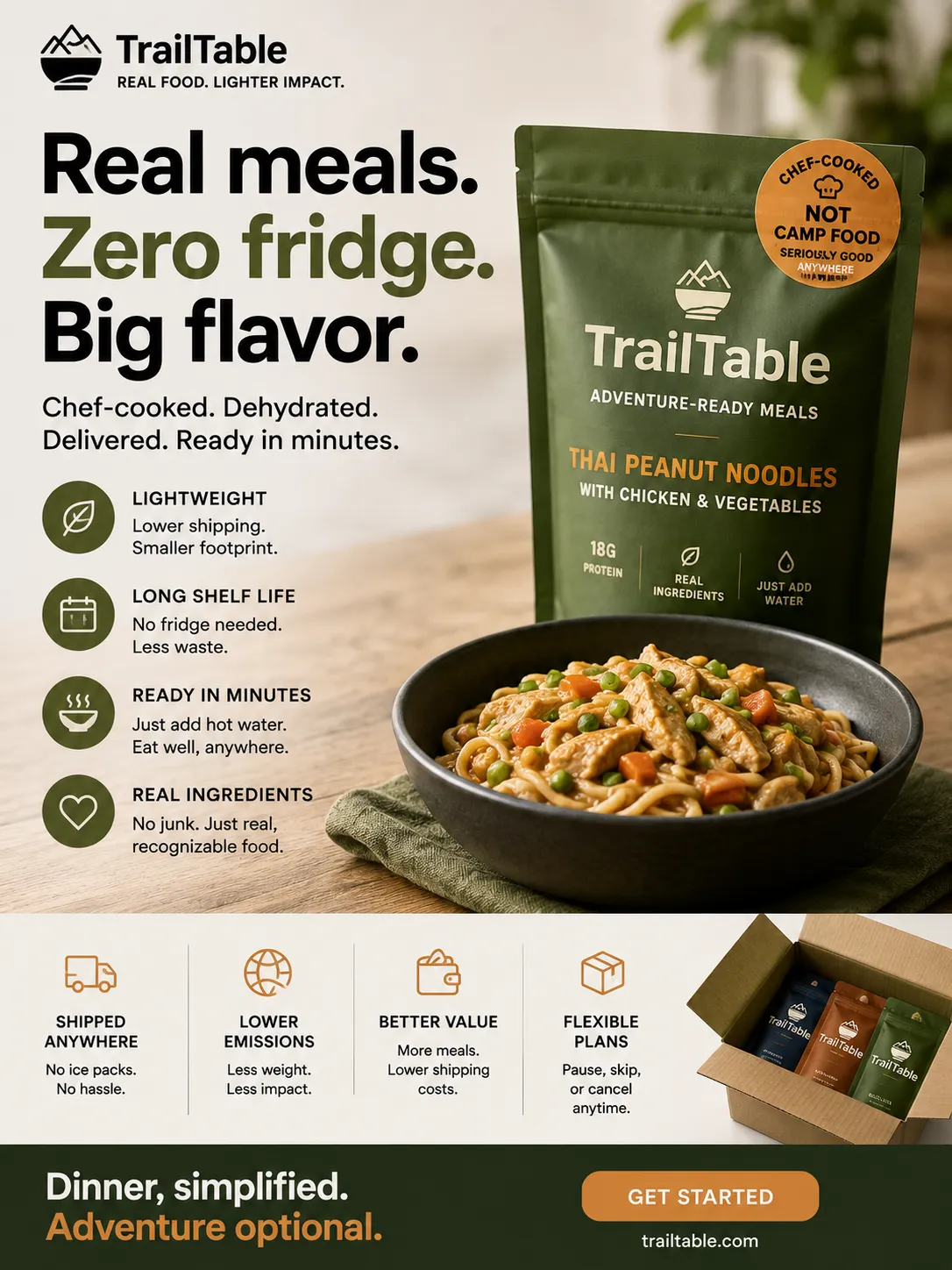
Description
No additional description provided.
The Pitch
The oddity of meal delivery is that it turned dinner into a cold-chain logistics problem. Most of what gets shipped is water, padding, and perishability. A dehydrated meal company would invert the equation: cook where cooking is efficient, remove the heavy part, and let the customer add back the cheapest ingredient in their kitchen. That sounds mundane, but it changes the physics of the business. Weight, spoilage, failed deliveries, packaging volume, and delivery-window pressure all shrink at once.
The deeper opportunity is that convenience food has been split between two unsatisfying poles: fresh but operationally fragile, or shelf-stable but culturally low-status. Dehydration sits in a strange middle that has never really been claimed for everyday eating. It can preserve the structure of an actual cooked meal without requiring the customer to trust a sad frozen tray or a science-fiction pouch of “survival food.” If the product tastes like something someone would have cooked in a pot, the format stops feeling like a compromise and starts feeling like a pantry upgrade.
Shelf life also changes the psychology of subscription. Refrigerated meal kits create obligation: eat this by Thursday or feel guilty. A dehydrated subscription creates optionality: keep five dinners around for the night the plan breaks. That makes it useful precisely when modern households are least predictable. The winning use case may not be replacing every meal, but replacing the expensive panic meals—the delivery order, the convenience-store dinner, the ingredients that die unused in the fridge.
There is also a quiet advantage in variety. Fresh food logistics punish complexity because each additional ingredient increases forecasting risk and waste. Dehydrated inventory can tolerate slower turns, smaller batches, and more niche meals. That means the company could serve tastes that normal prepared-food systems avoid: regional stews, high-protein meals, vegetarian dishes with real texture, foods that benefit from being simmered rather than assembled.
The compelling business is not “backpacking meals for indoors.” It is a new category of ambient prepared food that borrows the best property of dry goods—patience—while escaping the culinary deadness associated with them. If it works, it makes dinner less dependent on trucks, clocks, and guilt, which is a surprisingly large improvement hiding inside a very old preservation technique.