Deep-Sea Data Centers Powered by OTEC
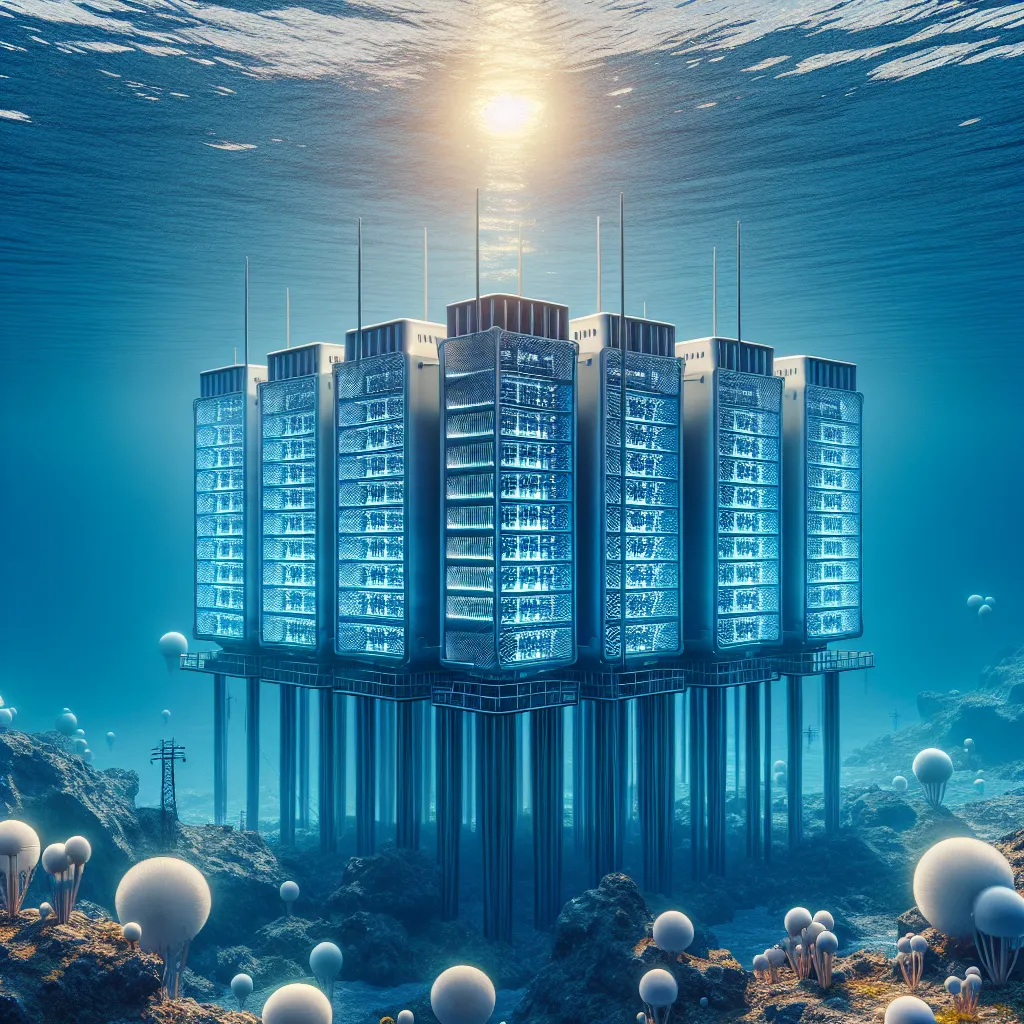
Problem: Land-based data centers are expensive, overheat, and face power shortages. Solution: Build autonomous, submerged data centers 3,000 meters deep — where cold temperatures help natural cooling — powered entirely by Ocean Thermal Energy Conversion (OTEC), which exploits the temperature gradient between surface and deep water. Why now? Subsea data centers are being piloted (Microsoft’s Project Natick), and OTEC prototypes are showing promise. Example: AWS launches a deep-sea data farm off Hawaii’s coast — no land footprint, no grid power, no water usage, fully renewable via ocean thermal gradients.
Description
No additional description provided.
The Pitch
A new frontier in data storage and processing is emerging, aimed at addressing significant challenges faced by traditional land-based data centers. These facilities are known for their high operational costs, susceptibility to overheating, and reliance on stable power supplies, issues that are becoming increasingly difficult to manage as data demands grow exponentially.
The concept revolves around the creation of autonomous, submerged data centers located at depths of 3,000 meters beneath the ocean surface. This innovative approach leverages the naturally cold temperatures found at these depths to provide efficient cooling, a critical requirement for data center operations. Additionally, these submerged data centers are envisioned to be powered by Ocean Thermal Energy Conversion (OTEC) technology. OTEC takes advantage of the temperature difference between warm surface water and cold deep water to generate renewable energy, offering a sustainable solution to the power needs of data centers.
This timing is opportune, as subsea data center projects are beginning to gain traction, highlighted by initiatives like Microsoft’s Project Natick. Similarly, OTEC technology is transitioning from theoretical promise to practical application, with prototypes demonstrating its viability. For instance, a potential project could see a major cloud service provider such as AWS establishing an underwater data farm off the coast of Hawaii. This facility would operate without the constraints of land usage, reliance on grid-based power, or additional water consumption, making it a self-sustaining, environmentally friendly data storage solution.
To transform this concept into a viable product, several key components need to be developed and refined:
1. Autonomous Data Center Design: This involves designing modular and robust infrastructure that can withstand deep-sea conditions while ensuring reliable data processing capabilities.
2. OTEC Power Generation: Developing efficient and scalable OTEC systems capable of providing continuous power to the data centers.
3. Deployment and Maintenance Strategies: Creating methods for safely deploying these data centers and establishing protocols for regular maintenance without extensive human intervention.
To facilitate the launch of a minimum viable product (MVP), contemporary cloud infrastructure and containerization tools such as Kubernetes and Docker can be utilized to streamline development and integration. These technologies enable scalability and seamless control over operations remotely. Partnerships with marine engineering firms and renewable energy companies will be crucial to leverage existing expertise in subsea installations and energy solutions.
The go-to-market (GTM) strategy should focus on targeting environmentally-conscious organizations and industries that process large volumes of data and are looking to reduce their carbon footprint. Additionally, highlighting cost savings on cooling and energy consumption could appeal to enterprise customers seeking more efficient solutions.
The proposed business model could revolve around offering data center services through a subscription model, where pricing is competitive with traditional land-based facilities but with the added value of sustainability and innovation. Collaborations with governmental and non-governmental environmental agencies could also enhance credibility and widen the potential customer base.
By addressing the critical issues faced by traditional data centers and leveraging cutting-edge technology and renewable energy sources, this approach could redefine data storage while paving the way for a more sustainable digital future.