Decentralized Pickleball League for Community Tournaments
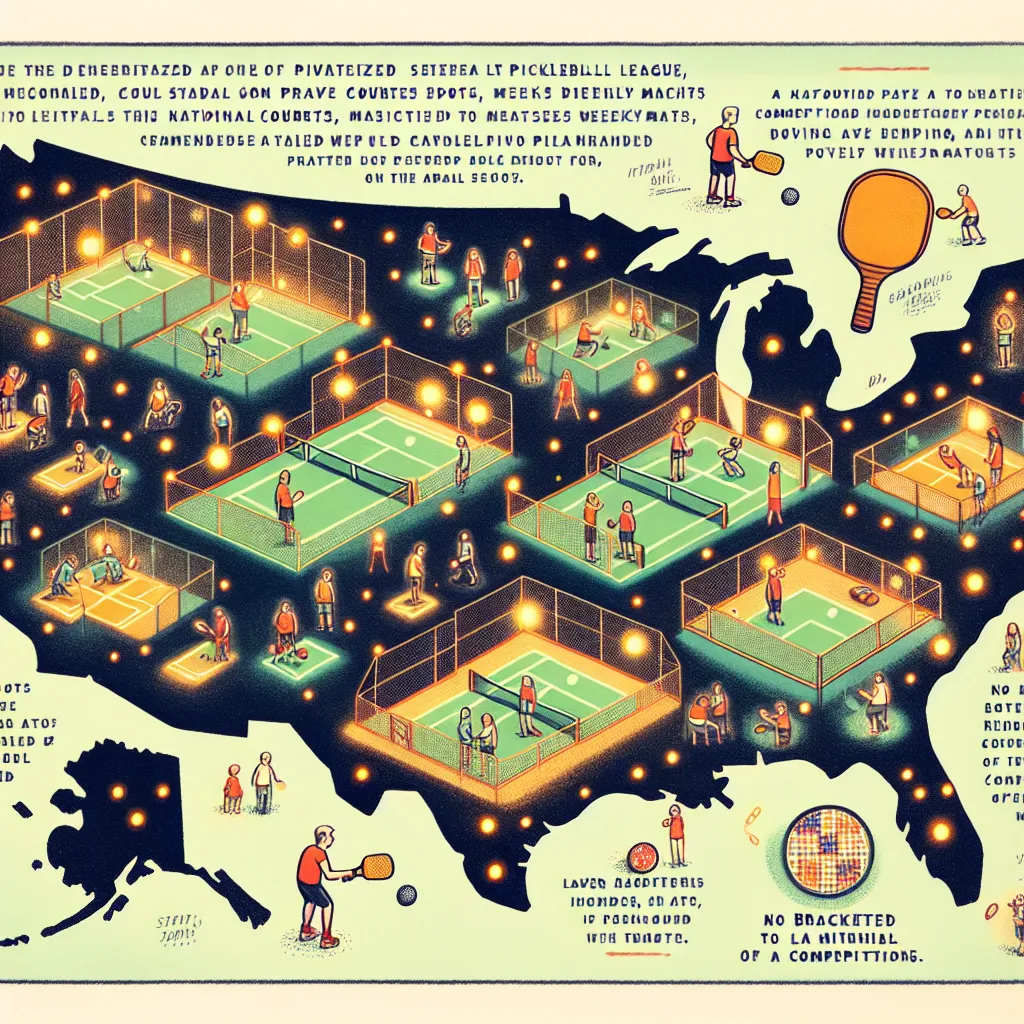
While tennis has long enjoyed organized national leagues under USTA, pickleball lacks a widespread, structured network of regional tournaments—especially one that leverages private or backyard courts. The current model relies heavily on commercial venues and ad hoc local meetups, leaving untapped demand for grassroots-style competitive play. A decentralized league system would allow private court owners to host weekly matches or mini-tournaments, with winners advancing through a bracketed structure to larger regional or national competitions. This approach replicates USTA’s successful formula but lowers the barrier to entry and could create a scalable, community-driven pickleball ecosystem across the country.
Description
No additional description provided.
The Pitch
Pickleball, a rapidly growing sport that combines elements of tennis, badminton, and table tennis, is gaining popularity across various demographics. While tennis boasts well-organized national leagues through governing bodies like the USTA, pickleball does not yet have a similarly widespread, structured network for competitive play. Most existing leagues rely heavily on commercial venues and lack a cohesive national or even regional system. Meanwhile, numerous private and backyard courts remain underutilized, missing the opportunity to foster community engagement and nurture the sport at a grassroots level.
**Identified Problem**
The absence of a structured, accessible competitive framework for pickleball is the primary issue facing enthusiasts and organizers. The current reliance on commercial venues and informal local meetups fails to fully engage potential players, particularly those who own private courts. This gap restricts the development of widespread community leagues and limits the sport's accessibility and growth.
**Proposed Solution**
Introducing a decentralized league system could transform pickleball by leveraging private and backyard courts for organized play. This system would enable private court owners to host weekly matches or mini-tournaments, where participants could compete in a bracketed structure. Winners would advance through regional and national competitions, mimicking the successful model of USTA tennis leagues. This approach lowers the barrier to entry, encourages more people to engage in competitive play, and taps into the existing enthusiasm for the sport.
**Product Details**
The concept involves creating a digital platform where private court owners can easily register their courts for league participation. Players can sign up for tournaments, track matches, and view leaderboards. Key features of the platform include:
1. **Court Registration**: Simple process for registering private or backyard courts as league locations.
2. **Match Scheduling**: Automated scheduling tool to organize matches based on location, skill level, and availability.
3. **Bracketed Tournaments**: Dynamic tournament brackets to manage player progression from local to regional and national levels.
4. **Leaderboard Tracking**: Real-time updates for individual and team standings within the league.
5. **Community Engagement**: Forums and messaging capabilities to encourage communication among players and organizers.
**Tools for MVP Launch**
To effectively launch a minimum viable product, consider the following tools and platforms:
- A website builder like WordPress or Wix for hosting the league platform. - A mobile app development framework such as React Native to create a cross-platform application. - Scheduling and automation software like Calendly for easy match organization. - Leaderboard and tournament management APIs, such as Challonge or Tournament Manager, for building dynamic competition structures. - Online community tools like Discord or Slack to foster player interaction and feedback.
**Go-To-Market Strategy**
1. **Beta Testing and Feedback Gathering**: Launch a beta version of the platform with select pilot communities, allowing for feedback and iteration before a broader release.
2. **Partnerships with Pickleball Associations**: Collaborate with local and regional pickleball organizations to promote the league system and integrate existing players.
3. **Targeted Marketing Campaigns**: Reach potential players through social media ads, local community events, and partnerships with pickleball equipment providers.
4. **Incentives for Early Adopters**: Offer discounted or free entry for early league participants to encourage initial sign-ups and word-of-mouth promotion.
**Business Model**
The business could operate on a freemium model, with basic access available at no cost and premium features available through a subscription. Revenue streams could include:
- Subscription fees for advanced analytics, exclusive content, or enhanced scheduling tools. - Advertising partnerships with sporting goods manufacturers and local businesses. - Event hosting fees for regional and national tournaments on larger scales. - Merchandise sales, including league-branded apparel and equipment.
By building a decentralized league system, the sport of pickleball can reach new heights, serving both existing enthusiasts and attracting new players. This structure fosters a community-driven environment, increasing participation and building a sustainable ecosystem around the sport.