Decentralized Marketplace for Remote Real-World Experiments
Modern human research is centralized, expensive, and locked inside labs. What if anyone could run lightweight studies on real people—remotely, affordably, and targeted by brain function, behavior, or skill? This startup is a decentralized marketplace for running real-world experiments across cognitive, motor, and wellness domains. Researchers, startups, and toolmakers can launch small trials (e.g. “Does this VR app improve coordination in 50–70 year-olds?”), and users with wearables or task access (like Muse, Apple Watch, VR sets, or game controllers) can participate from anywhere. The insight from UCSD—that rewiring happens in specific brain circuits—opens the door to “circuit-aware” targeting. But more broadly, this enables skill optimization, sensory input testing, and cognitive enhancement to be trialed at scale. Why now? Consumer wearables and APIs (OpenBCI, Garmin, Headspace, etc.) make rich data collection possible without a lab. Example: a startup testing a new breathwork protocol can recruit 100 users with smartwatches to measure focus and HRV in days—not months.
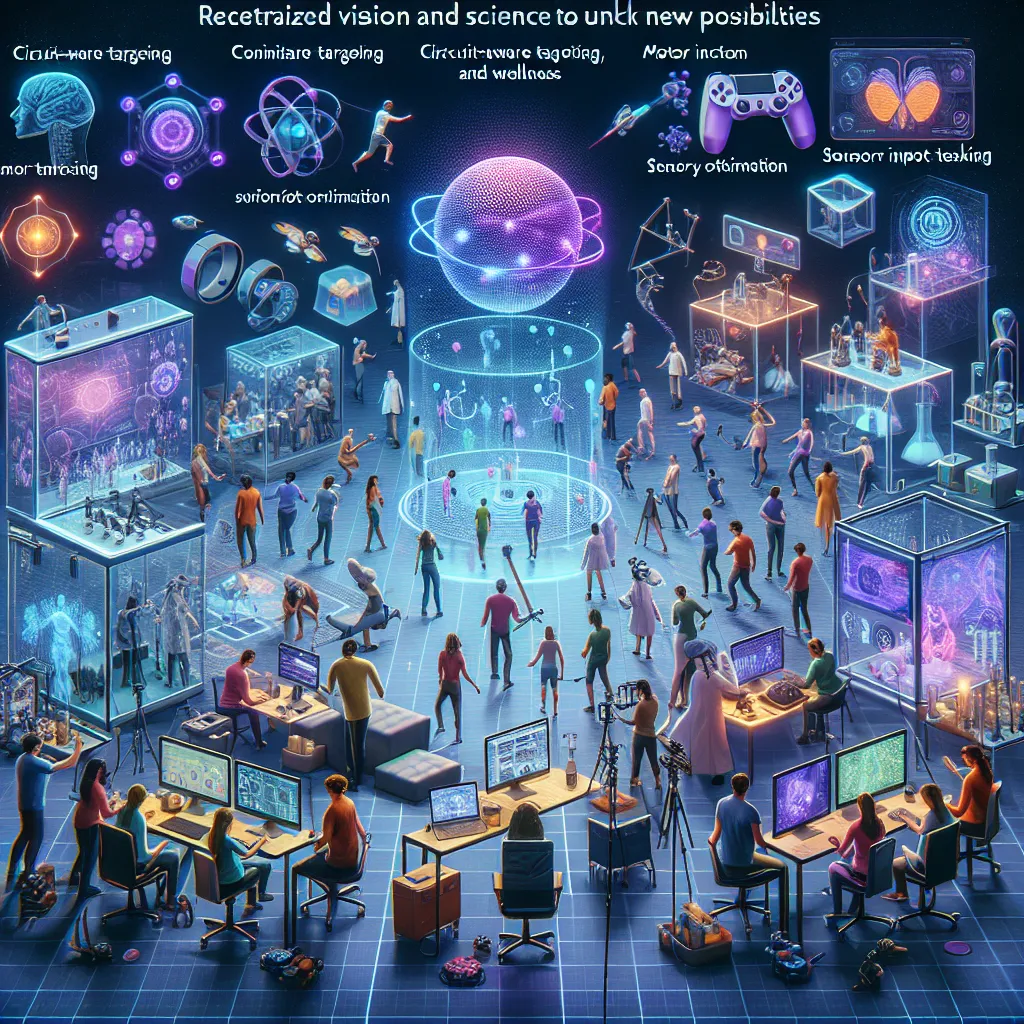
Description
No additional description provided.
The Pitch
In the realm of scientific research, the pursuit of understanding the human mind and body is often confined to the walls of well-funded laboratories and academic institutions. The traditional model of conducting human research is centralized, costly, and limited to a small pool of participants, making it difficult for smaller entities to innovate and explore new frontiers. The emergence of consumer wearables and advanced technologies has presented an opportunity to democratize this space, allowing anyone with a vision for human research to participate in groundbreaking studies.
#### Problem
Currently, human research involves significant logistical and financial challenges. High costs, extended timelines, and restricted access to diverse participant pools hinder the ability to conduct timely and impactful studies. This centralized model not only limits innovation but also slows the progress of understanding and enhancing human potential. As a result, many potentially transformative ideas are left unexplored, stifling opportunities for discovery and application that could benefit society at large.
#### Solution
To address these challenges, we propose the creation of a decentralized marketplace that enables real-world experiments across cognitive, motor, and wellness domains. This platform will connect researchers, startups, and toolmakers with a global pool of participants equipped with various wearables and digital access tools. By leveraging the insight from UCSD and other research institutions, the platform will facilitate circuit-aware targeting, enabling precise interventions and assessments.
#### Product Details
- **Marketplace Platform:** A user-friendly online platform where researchers and participants can connect and engage in studies. - **Participant Pool:** Access to a diverse range of individuals equipped with wearables and task access tools such as Muse, Apple Watch, VR sets, and game controllers. - **Study Creation Tools:** Intuitive tools for researchers to design and launch small-scale trials remotely and affordably. - **Data Collection and Analysis:** Integration with APIs from devices like OpenBCI, Garmin, and Headspace for seamless data gathering and insights generation. - **Dashboard for Results:** A centralized dashboard for real-time tracking and analysis of study outcomes, enabling quick iterations and refinements.
#### Tools for Launching an MVP
- **No-code Platforms:** Utilize tools like Bubble or Webflow to quickly build and iterate the marketplace platform. - **API Integrations:** Leverage platforms like Zapier to connect with wearable APIs and automate data collection processes. - **Cloud Hosting:** Use AWS or Google Cloud for scalable and secure infrastructure to support platform operations and data storage. - **User Experience Design:** Employ Figma for designing a seamless and engaging user interface and experience for both researchers and participants.
#### Go-to-Market Strategy
- **Early Adopters:** Target academic institutions, wellness and health startups, and independent researchers interested in cognitive and motor skill studies. - **Partnerships:** Collaborate with wearable tech companies and content creators to expand the participant pool and enhance data capabilities. - **Community Building:** Create online communities and forums for sharing insights and best practices, fostering collaboration and knowledge exchange. - **Educational Content:** Develop resources and webinars showcasing the platform's potential and successful case studies to attract users. - **Incentives and Rewards:** Offer incentives for early adopters and active participants to encourage engagement and retention.
#### Business Model
- **Subscription Fees:** Implement a tiered subscription model for researchers and organizations based on usage levels and data needs. - **Commission on Transactions:** Charge a small commission on transactions conducted through the marketplace, such as participant recruitment and data access. - **Freemium Model:** Provide basic access and features for free, with options to upgrade for advanced functionalities and analytics.
In conclusion, by creating a decentralized marketplace for human research, we can transform the way studies are conducted, making it accessible, efficient, and impactful. This approach not only addresses current limitations but also fosters innovation and collaboration across borders, ultimately driving progress in understanding and enhancing human capabilities.