Customizable Fast Casual Pasta Restaurant
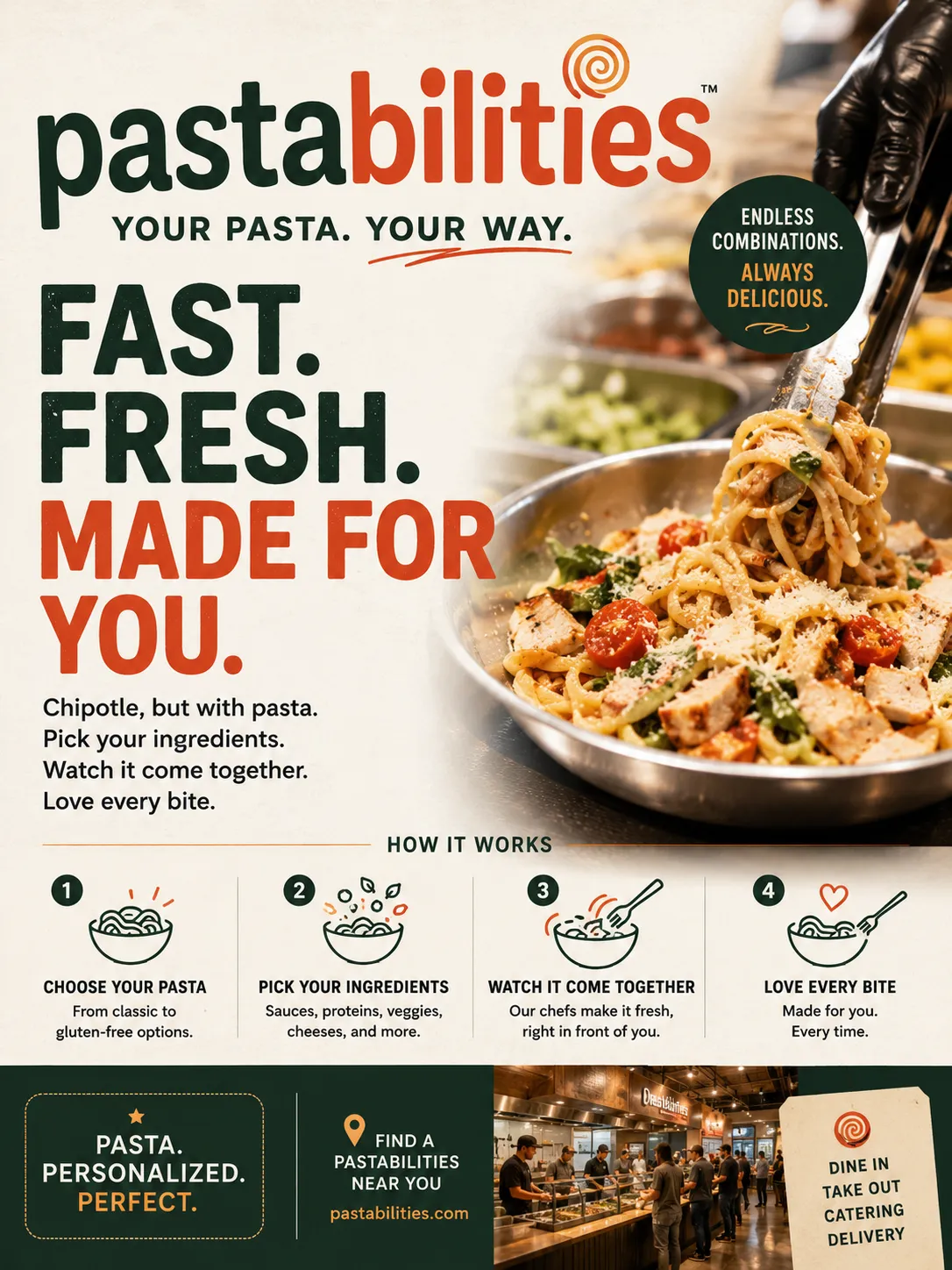
Chipotle figured out that people really like pointing at ingredients and watching someone assemble exactly what they want. Somehow pasta missed the memo. Build Chipotle for pasta. Pick your noodle, sauce, protein, vegetables, cheese, spice level, toppings, then watch the whole thing get tossed together in front of you. Fast enough for lunch, customizable enough to come back three times a week, and significantly better than another sad $18 salad. Mostly, though, build it because **Pastabilities** is too good a name to waste.
Description
No additional description provided.
The Pitch
Pasta is one of the rare foods that is both comfort food and weekday fuel. It can feel indulgent without feeling frivolous, familiar without feeling boring, and substantial without requiring a steakhouse budget. That combination matters because many fast-casual categories have been pushed toward either health performance or guilty pleasure. Pasta sits in the more durable middle: the thing people actually want to eat when they are hungry.
The interesting part is that pasta is already modular by nature, but restaurants rarely present it that way. Noodles, sauces, proteins, vegetables, cheeses, and heat levels create a huge number of combinations from a relatively small inventory. That makes customization feel abundant to the customer while keeping the kitchen operationally simple. A good pasta line could create the emotional experience of choice without the chaos of a menu that tries to be everything.
There is also a texture and theater advantage that most fast lunches do not have. A burrito bowl is assembled; pasta is finished. Seeing sauce cling to noodles, cheese melt, oil gloss, herbs land, and heat rise from the pan makes the meal feel cooked rather than dispensed. That small distinction changes the perceived value. People will forgive a simple meal if it feels freshly completed in front of them.
The repeat behavior could be unusually strong because pasta supports moods better than many categories. The same customer can order spicy rigatoni with sausage on Monday, pesto fusilli with chicken on Wednesday, and a lighter tomato spaghetti on Friday without feeling like they are eating the same lunch. The base product is consistent enough to build habit, but variable enough to avoid fatigue.
The deeper opportunity is that pasta has never really had its modern American fast-casual translation. Pizza became slice shops and fast-fired ovens. Sandwiches became assembly lines. Salads became premium bowls. Pasta remains oddly split between sit-down Italian restaurants, reheated cafeteria trays, and takeout that often arrives tired. A focused pasta concept could occupy the missing space: quick, hot, made-to-order, and emotionally satisfying in a way that feels obvious once someone does it well.