Conversational Dashboards: AI Insights, Chart-Free Navigation
Even with modern dashboards, operators waste time navigating tools to answer simple questions like “Where’s my traffic coming from?” or “What’s our churn this month?” This idea reimagines dashboards as fully conversational interfaces powered by LLMs, where leaders can ask real-time questions about any part of their business and get instant, chart-backed insights. It differs from BI tools by abstracting away the dashboard entirely—replacing filters and charts with natural language. : “Instead of me having to go to our app… I’m by speaking to it, I’m already seeing [the data].” Imagine asking “Summarize this week’s product funnel for Brazil,” and the AI gives a sentence-level insight with optional visuals. This is not just analytics with AI—it’s a new UX paradigm for running companies.
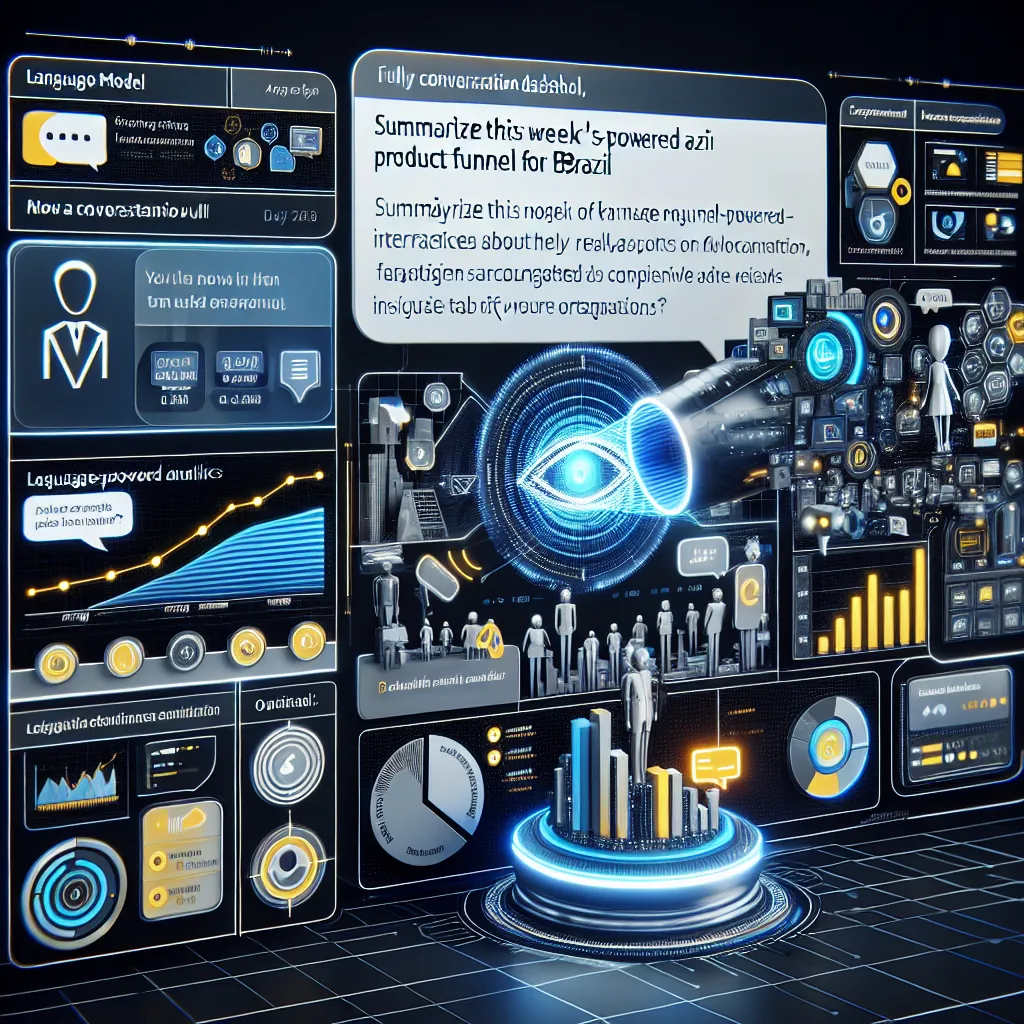
Description
No additional description provided.
The Pitch
Decision-makers often face challenges with obtaining quick, actionable insights from their data. Despite having access to sophisticated business intelligence (BI) tools and dashboards, the complexity and volume of these platforms can sometimes hinder more than help. Executives find themselves bogged down by navigating through layers of interfaces to extract what should be straightforward information, such as understanding traffic origins or calculating the monthly churn rate.
This concept introduces an innovative approach by transforming traditional dashboards into fully conversational interfaces powered by advanced language models. Instead of maneuvering through intricate dashboards and applying filters, users can now interact naturally through conversation. This approach leverages AI to deliver real-time insights, ensuring that leaders can pose any question related to their business and receive immediate, visually-supported answers.
The idea differentiates itself from existing BI tools by eliminating the conventional dashboard experience. Users no longer need to interpret charts and graphs manually; they simply engage in natural language dialogue. This shift not only streamlines obtaining data-driven insights but also enhances user experience, enabling leaders to focus on strategic decision-making rather than operational details.
Imagine an executive asking, Can you summarize this week's product funnel performance in Brazil? The system responds with succinct insights, possibly augmented by visual representations, thus offering a seamless and efficient user experience. This concept proposes not just enhanced analytics with artificial intelligence but a revolutionary user experience model for business operations.
To bring this idea to life, several tools and technologies can be employed to develop an initial version, or MVP. Frameworks like Rasa or Google's Dialogflow can be used to create conversational interfaces tailored to specific business needs. Coupled with language model APIs, such as OpenAI's GPT series, and integrated with existing data warehouses, such as Snowflake or Google's BigQuery, this system can offer robust and responsive insights.
The proposed go-to-market strategy involves targeting industries where data-driven decision-making is critical, such as finance, e-commerce, and SaaS. Initial outreach could focus on decision-makers through industry conferences, webinars, and targeted digital marketing campaigns that highlight the enhanced efficiency and ease-of-use this solution offers.
The business model could be structured around a subscription-based SaaS framework, with tiered pricing based on the number of users and the volume of data processed. Offering a freemium version could capture initial interest and customer feedback, encouraging upgrades to paid tiers for more advanced features and personalized experiences.
Overall, this concept leverages cutting-edge AI to reimagine how businesses interact with data, maximizing both efficiency and user satisfaction. By prioritizing natural language interaction, it presents a transformative pathway for leaders to manage and grow their companies with agility and insight.