Contingent Media Rights Marketplace for Sports Moments
Move beyond licensing clips to derivatives on cultural moments. Rights holders would define events before a competition—"rookie breaks record," "underdog reaches final," "player scores four goals"—and sell contingent commercial rights that only come into existence if the event occurs. Brands, creators and media companies could acquire those rights cheaply beforehand because most will expire worthless. If the unlikely moment happens, the owner suddenly controls scarce commercial inventory around the story everyone wants to use. It would turn unpredictable cultural moments into a new class of contingent media asset.
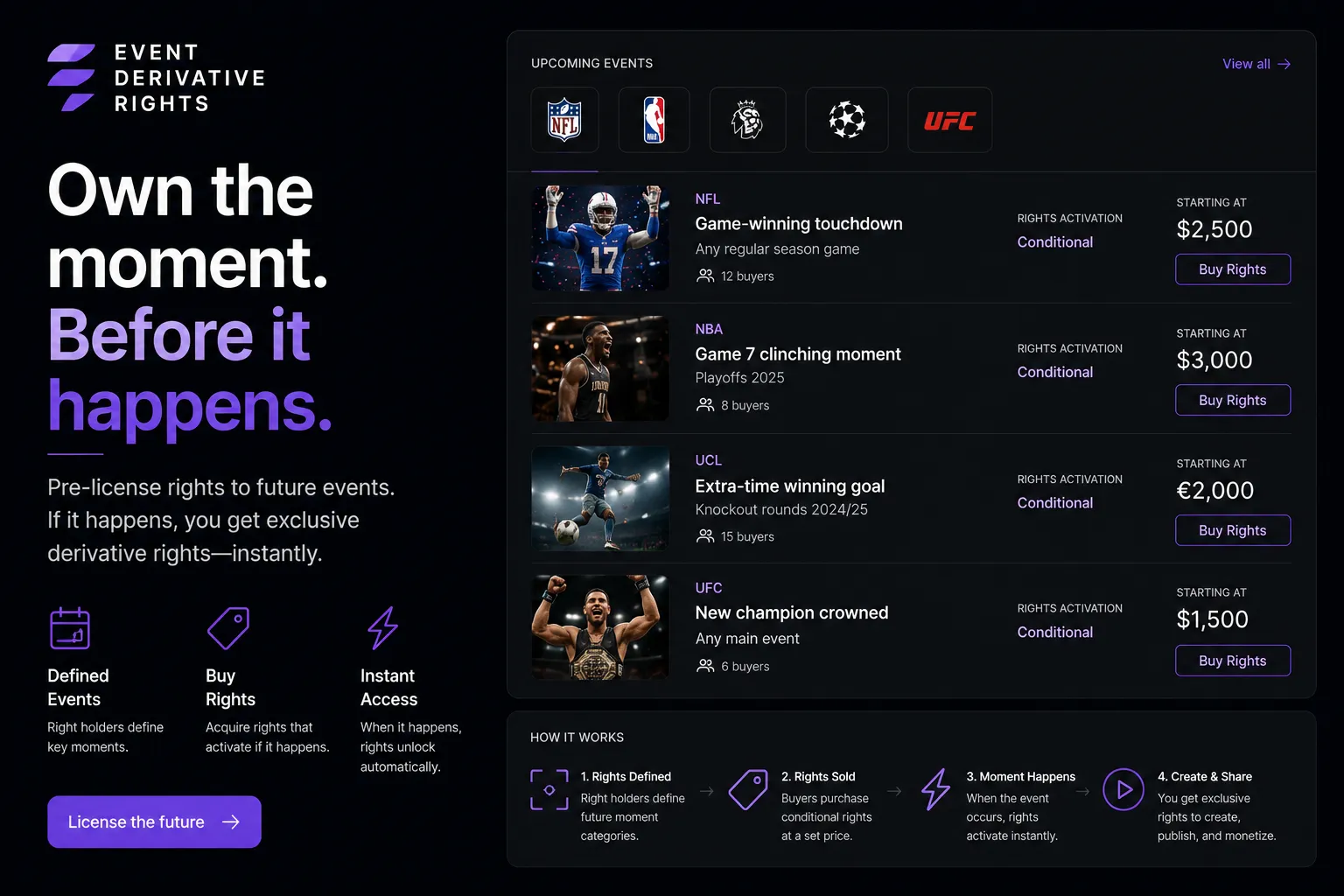
Description
No additional description provided.
The Pitch
Attention is increasingly concentrated in short, violent bursts, while the rights market is still built for slow, predictable media. A season, tournament, or awards show may be licensed months in advance, but the most valuable commercial surface often appears for 48 hours around something nobody could confidently forecast. The current system monetizes the footage after the moment becomes obvious, which means the price already reflects the frenzy. A market for contingent rights would move value discovery to the moment before certainty.
The important shift is that it would let culture be bought as optionality rather than inventory. Most media rights are priced as if use is known: a clip, an image, a sponsorship package, a broadcast slot. But cultural relevance is probabilistic. A brand may not need “basketball content”; it may need the right to participate credibly if a particular player becomes the story of the week. Paying a small amount for many unlikely possibilities is economically different from overpaying once the whole internet is chasing the same reference.
Rights holders would also gain a way to monetize the long tail of things that almost happen. Today, only the realized highlight has obvious value. But the uncertainty before the event is itself valuable because other parties have different beliefs, appetites, and strategic needs. A league, team, label, studio, or creator could sell slices of future cultural relevance without giving away the core asset. The unused rights expiring worthless is not a bug; it is what makes the realized rights feel scarce and powerful.
The buyer’s advantage would come from preparation, not just access. When a moment breaks, speed matters, but legal clearance and creative certainty are usually bottlenecks. Owning the contingent right beforehand means a company can publish while everyone else is asking permission, negotiating fees, or settling for vague allusions. In a world where memes outrun approval chains, pre-cleared commercial relevance is a real edge.
The deeper reason this could matter is that media value is moving from stable audiences to unstable significance. People no longer gather around every scheduled event, but they still gather intensely around the sudden thing that feels historic, funny, unfair, heroic, or strange. A business that lets those moments be anticipated, priced, and owned before they exist would not just sell rights more efficiently. It would create a financial grammar for the way culture actually becomes valuable now.