Consumer Product Leasing Management Platform
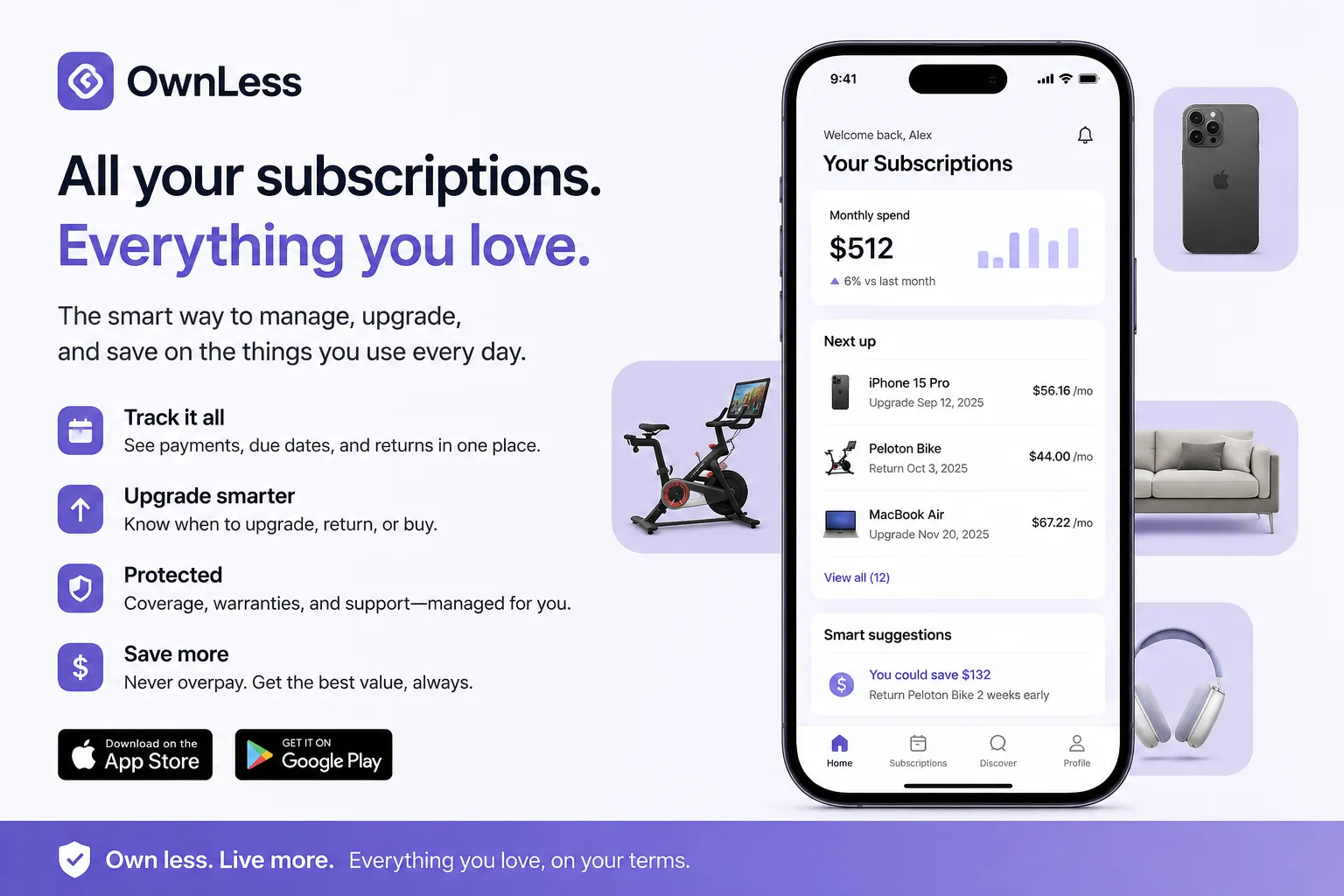
Apple is reportedly preparing a program that would let people lease an iPhone, Mac, or Apple Watch and regularly upgrade instead of buying each device outright. The same model could spread to appliances, furniture, fitness equipment, children’s products, and other expensive goods. A startup could create one place where consumers manage all of these subscriptions, including payments, return dates, damage protection, upgrade options, and whether it is cheaper to keep or return an item. Retailers could also use the platform to launch leasing programs without building their own financing, repair, refurbishment, and resale operations. It would become the dashboard for a future where households subscribe to products instead of owning everything forever.
Description
No additional description provided.
The Pitch
Ownership may stop being a transaction and becomes an operating system. The hard part of product subscriptions is not convincing people that a new phone or sofa can be paid for monthly; it is making the household feel in control of dozens of physical obligations that age, break, expire, depreciate, and need to be sent somewhere. The value is not the subscription itself, but the memory layer around it: what is in the home, what it costs, what condition it is in, what happens next, and what decision should be made before inertia becomes expensive.
The most interesting truth is that physical subscriptions create a new kind of consumer anxiety. Streaming services are annoying when forgotten; a leased washing machine or stroller has logistics, liability, and residual value attached. As more categories move from purchase to access, consumers will need a neutral place that is not tied to a single brand’s desire to keep them paying. A trusted intermediary could become valuable precisely because it tells people when not to renew, when to buy out, and when to swap. That kind of candor is hard for the original seller to offer.
Retailers also have a structural problem that is easy to underestimate: leasing is not just a payment plan. It requires underwriting, identity, servicing, repair routing, refurbishment, reverse logistics, fraud handling, and secondary-market intelligence. Many merchants will want the recurring relationship that Apple can create, but few will have Apple’s operational machinery. A shared platform could make leasing feel native for retailers while hiding the unglamorous infrastructure that determines whether the economics work.
There is also a data advantage that compounds across categories. Knowing how products actually perform after leaving the store—how often they break, when customers return them, what condition they come back in, how resale values change by brand and usage—turns the platform into a pricing brain for the circular economy. That information is much richer than purchase data because it captures the full life of an object, not just the moment someone acquires it.
If this shift happens, the household’s relationship with goods becomes more fluid but also more complex. The winning company would not be the one that makes everything rentable. It would be the one that makes temporary ownership feel orderly, legible, and financially sane.