Condo Special Assessment Insurance and Financing
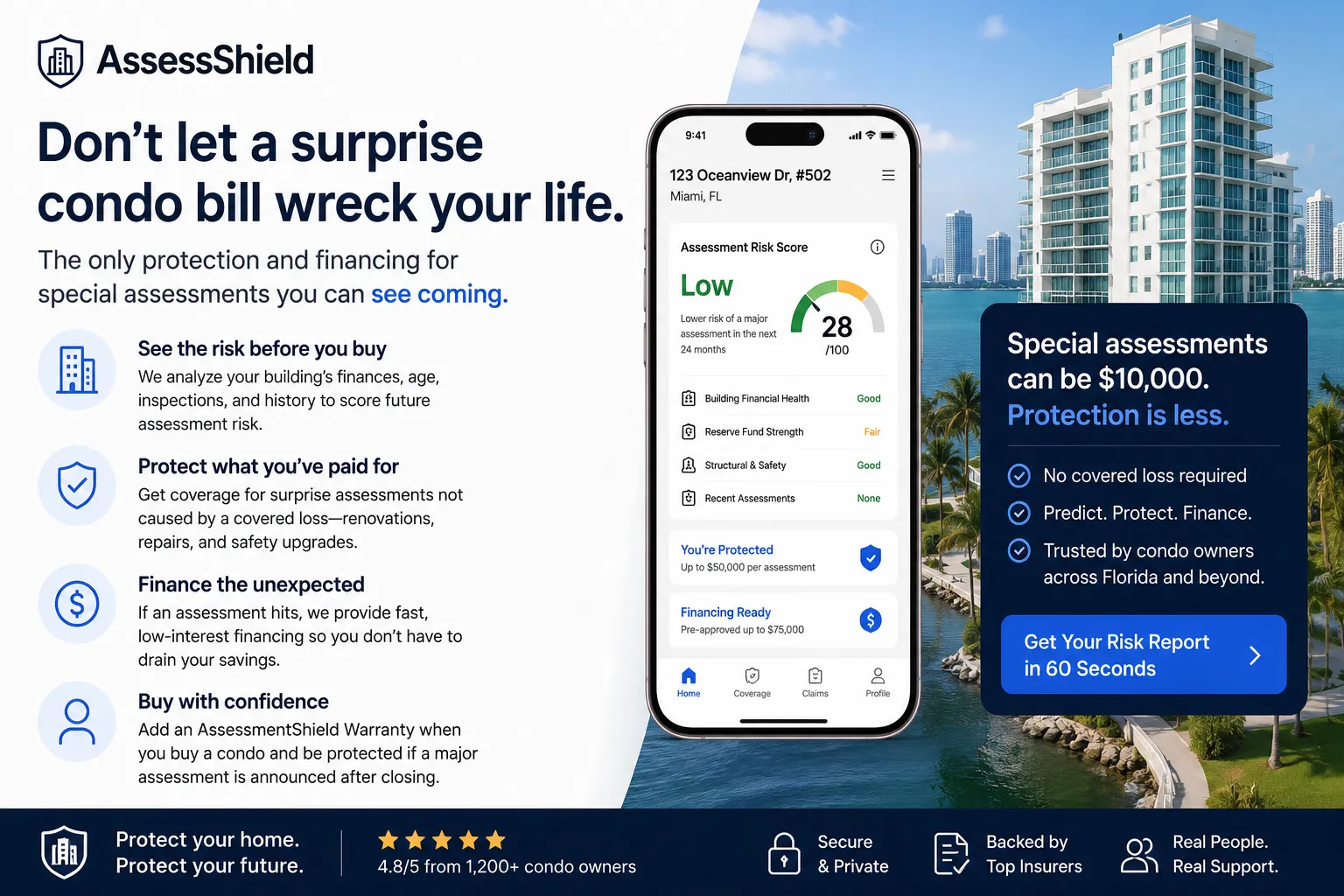
Many condo owners are suddenly being charged tens of thousands of dollars for building repairs, safety upgrades, or underfunded reserve accounts. These assessments can arrive with little warning and are not always fully covered by normal homeowners insurance. A startup could analyze a condo building’s age, finances, inspection history, insurance costs, and planned repairs to predict the likelihood of a major future assessment. Buyers could purchase protection when they buy a condo, while existing owners could receive financing or savings plans based on their building’s risk. The company could become something between an insurance provider, a building-health monitor, and a credit platform for millions of condo owners worried about an unexpected bill.
Description
No additional description provided.
The Pitch
Turn one of the strangest features of condo ownership into something legible: the buyer owns a private apartment, but also inherits a hidden balance sheet, deferred maintenance culture, board competence, local regulation, contractor inflation, and the behavior of dozens or hundreds of neighbors. That shared liability is real, often enormous, and poorly priced at the moment of purchase. The opportunity exists because condo risk is not just property risk; it is governance risk wrapped inside real estate.
The most interesting wedge is that the company would sit where no single existing institution has enough incentive to look. Real estate agents want transactions to close, lenders mostly care about borrower credit and collateral value, insurers focus on covered events, and condo boards often disclose information in inconsistent and defensive ways. A company that specialized in translating building-level fragility into owner-level financial exposure could become the trusted interpreter of a market full of documents that technically exist but are rarely understood.
This would also create a rare data advantage because every quote, inspection, reserve study, claim, loan, repair plan, and assessment outcome would improve the model. The unit of learning is not the individual homeowner but the building, and buildings age in patterns. Once the company can identify which combinations of reserve shortfalls, insurance spikes, engineering reports, and board decisions tend to precede large assessments, it can price and manage a risk that currently feels random to owners but is probably much more predictable than it appears.
The emotional force behind the business is unusually strong because the assessment is a nightmare that violates the promise of homeownership. People budget for mortgages, taxes, and insurance; they do not budget for a surprise bill large enough to resemble a second down payment. Protection against that shock is not merely a financial product. It changes how safe a condo feels as an asset, especially for first-time buyers, retirees, and owners whose wealth is concentrated in one unit.
If the company worked, it could quietly reshape condo markets by making weak buildings more expensive to own and well-run buildings more valuable. Today, two similar units can trade at similar prices even if one sits atop years of neglected maintenance. Better risk pricing would reward competent boards, punish cosmetic over substance, and give buyers a reason to care about the financial health of the building before the bill arrives. That is the deeper business: not just paying for assessments, but making the hidden liabilities of shared ownership visible.