Compact Rentable Mini-ATMs for Small Vendors
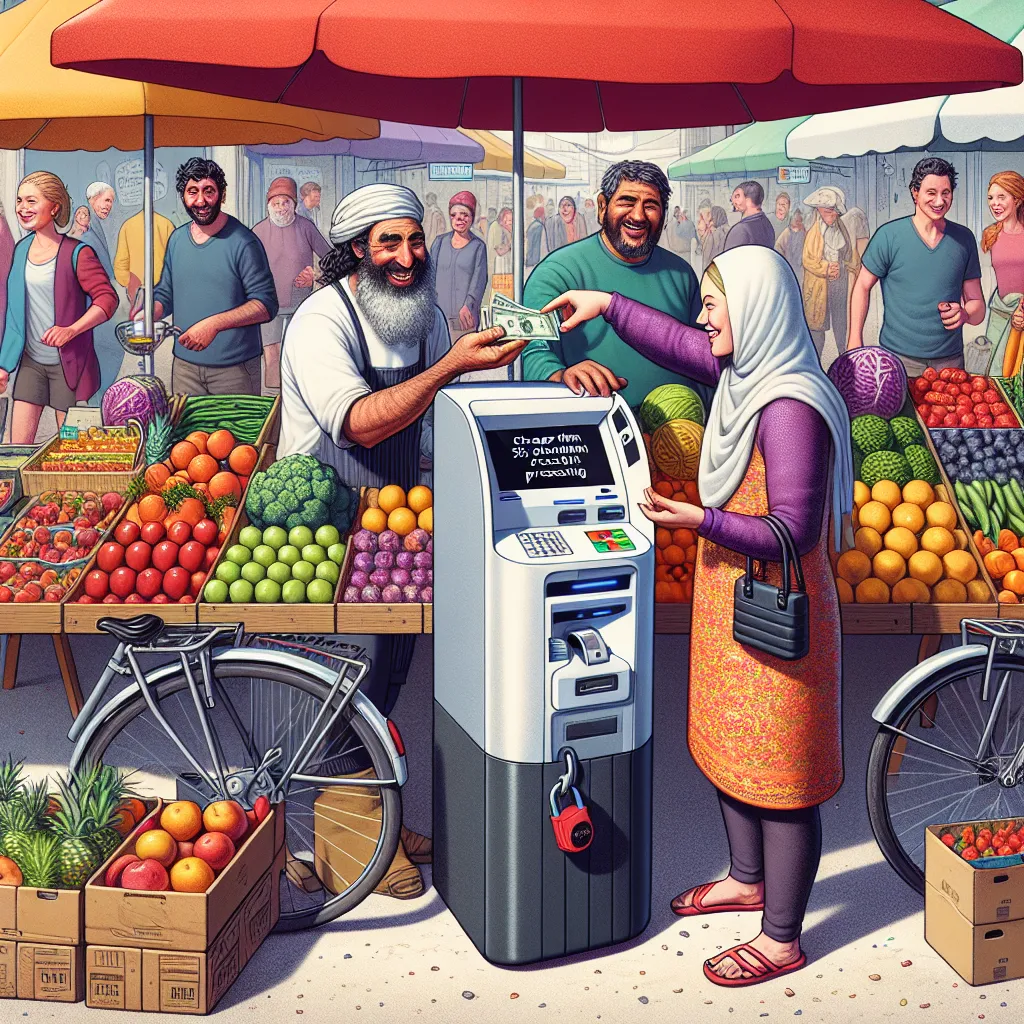
Small vendors and cash-only businesses lose sales when customers don’t carry cash, and traditional ATMs are too bulky and expensive to install. This idea offers compact, rentable mini-ATMs that sit at market booths, giving customers access to cash on-site. Vendors make a cut of the ATM fees, and customers avoid credit card surcharges. For example, a farmer’s stand could install a bike-locked miniATM that dispenses small bills — with a vendor-split ATM fee that’s cheaper than 3% card processing. It’s a win-win for small business liquidity and payment flexibility without relying on Big Finance.
Description
No additional description provided.
The Pitch
In recent years, the retail landscape has undergone significant changes, especially for small vendors and cash-only businesses. These businesses often face the challenge of losing sales when potential customers do not have cash on hand. Traditional ATMs are not a practical solution for them as these machines are often too large, expensive, and cumbersome to install and maintain. This creates a gap in the market for a more flexible and cost-effective solution to facilitate cash transactions.
Imagine a scenario where small vendors, such as those at farmers' markets, craft fairs, or food stalls, can offer customers an easy way to access cash without leaving the site. This concept revolves around portable, rentable mini-ATMs that can be securely placed at market booths or small business locations. These mini-ATMs would be compact, perhaps the size of a small toolbox, and could be secured with something as simple and effective as a bicycle lock.
The core of the solution is to allow vendors to rent these mini-ATMs. By doing so, they provide their customers with an opportunity to withdraw small amounts of cash, facilitating seamless transactions. To make it appealing, the ATMs can charge a nominal fee for cash withdrawals. An attractive aspect of this model is the profit-sharing mechanism, where vendors get a share of the ATM fee revenue. This fee would be competitively lower than typical credit card processing fees, often around three percent, making it an attractive alternative for both vendors and customers.
For instance, a produce stand at a farmers' market could set up one of these mini-ATMs, offering greater payment flexibility to customers who prefer to use cash. With part of the ATM fee coming back to the vendor, this setup enhances the liquidity for small businesses while minimizing reliance on traditional banking systems.
To develop this into a minimum viable product, a combination of reliable hardware and seamless software is essential. The hardware should be compact, durable, and tamper-proof, with a user-friendly interface. On the software side, a robust, secure, and easy-to-use application would manage transactions and ensure seamless connectivity between the mini-ATMs and banking networks. Collaborations with fintech companies specializing in secure payment solutions would be beneficial here.
For a go-to-market strategy, targeting niche markets such as local festivals, farmers' markets, and pop-up events is key. Pilot programs could be launched in collaboration with market organizers or small business associations to demonstrate the product's effectiveness. Marketing efforts should emphasize the convenience, cost-effectiveness, and added revenue stream the product offers to vendors.
With respect to the business model, a rental model combined with a profit-sharing mechanism for transaction fees could be implemented. Vendors pay a small rental fee for the device, while also earning a percentage of each transaction fee collected. This model aligns incentives and encourages vendors to promote the use of the mini-ATM.
Overall, by addressing the needs of small vendors with a practical, revenue-generating solution, this venture could redefine cash accessibility at small marketplaces and events, fostering financial inclusivity and transactional ease.