Compact Deployable Gear for Instant Protection
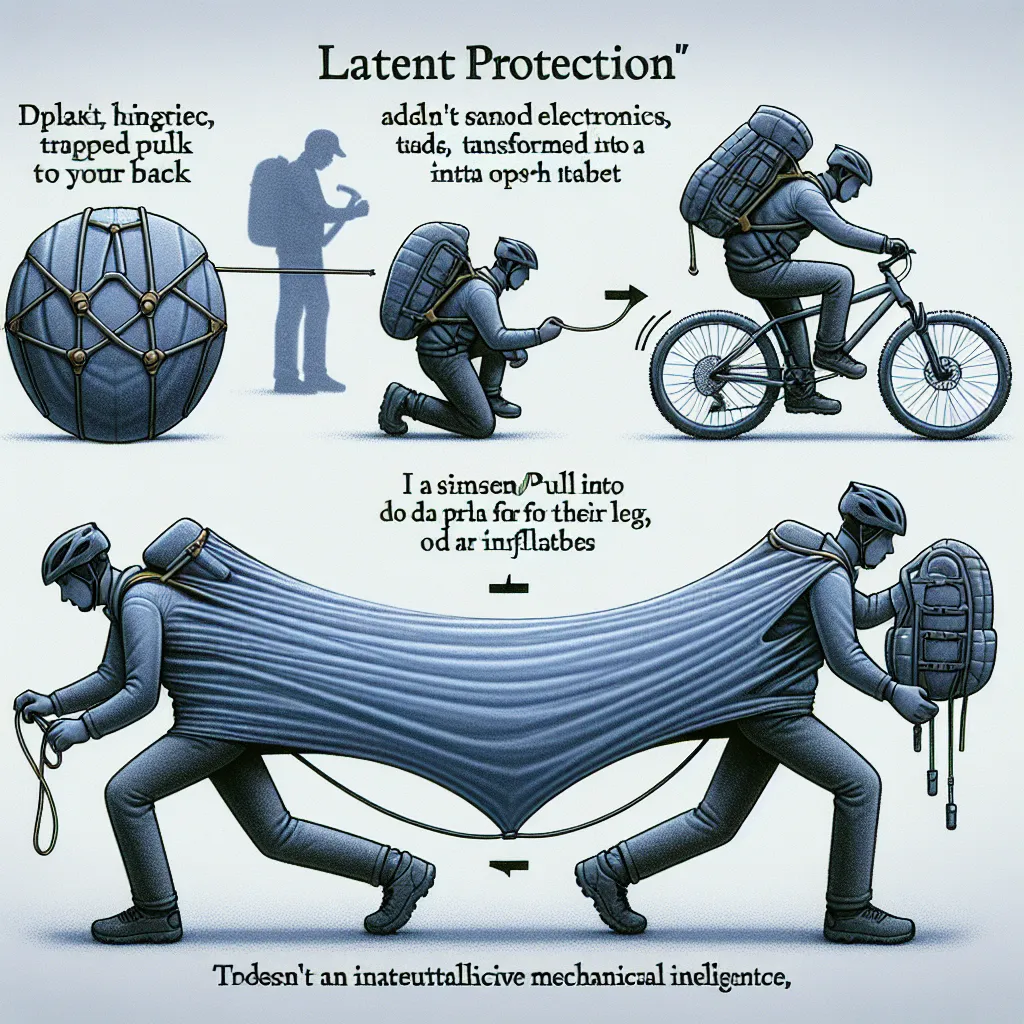
Protective gear has always been a tradeoff between safety and portability. Helmets are bulky, pads are awkward, and people often skip protection because it’s inconvenient. That compromise existed because protective shapes couldn’t compress without losing integrity. With single-pull deployable structures, helmets, pads, shields, and braces can be flat when carried and instantly rigid when needed. A cyclist pulls once and a helmet deploys. A hiker pulls once and a brace or shelter snaps into shape. This creates a new category of “latent protection” — gear that only occupies space when it’s doing its job. This couldn’t exist before because deployment used to require hinges, inflatables, or electronics. Now it’s mechanical intelligence embedded in the material.
Description
No additional description provided.
The Pitch
In the realm of personal safety gear, a persistent challenge has always been finding the balance between protection and convenience. Traditional protective equipment like helmets and pads, though essential, often pose practical challenges due to their bulky nature. This has led to a lack of compliance, with individuals opting to forego safety measures due to convenience concerns. The core of this problem lies in the inability of protective forms to compress without losing structural integrity.
A breakthrough in material science has emerged, addressing this long-standing issue. By leveraging single-pull deployable structures, a new era of protective gear has been introduced. This advancement allows helmets, pads, shields, and braces to be stored in a flat state and transform into a fully rigid structure with a simple pull. For example, a cyclist can carry a compact helmet that instantly assumes its protective form with a single motion, or a hiker can deploy a supportive brace or temporary shelter with ease. This innovation gives rise to the concept of latent protection — safety gear that occupies space only when activated.
Historically, deploying protective structures required complex mechanisms such as hinges, inflatables, or electronic components, making them cumbersome and less reliable. However, the introduction of mechanical intelligence directly into the material itself enables these structures to maintain integrity and offer reliable protection without the need for external support systems.
To bring this revolutionary product to market, the following strategies and tools can be considered:
1. **Product Development Tools**: - Utilize 3D modeling software to design and simulate the deployable structures, ensuring optimal performance and user-friendliness. - Engage advanced materials engineering tools to integrate mechanical intelligence within the materials.
2. **Minimum Viable Product (MVP) Launch**: - Develop prototypes of key products such as a cyclist helmet and a hiker brace. - Conduct thorough testing to ensure safety standards are met. - Collaborate with focus groups for user feedback and iterative improvements.
3. **Go-to-Market Strategy (GTM)**: - Identify target markets, including cyclists, hikers, and other outdoor enthusiasts, emphasizing the convenience and innovation of latent protection gear. - Establish partnerships with outdoor and sports retailers for distribution. - Implement a marketing campaign highlighting the problem-solving nature of the products through social media, online ads, and demonstrations at relevant events.
4. **Business Model**: - Adopt a direct-to-consumer online sales approach to leverage wider reach and customer engagement. - Explore subscription models or bundles offering accessories or maintenance plans to enhance value. - Consider strategic partnerships with insurance companies or safety advocacy groups to promote the adoption of deployable protective gear.
By focusing on the core principles of solving a significant safety issue with innovative material technology, this new category of protective gear has the potential to transform the industry. The strategic implementation of this solution will not only enhance individual safety but also create new standards for convenience and portability in personal protective equipment.