Color-Changing Medical Surfaces for Immediate Feedback
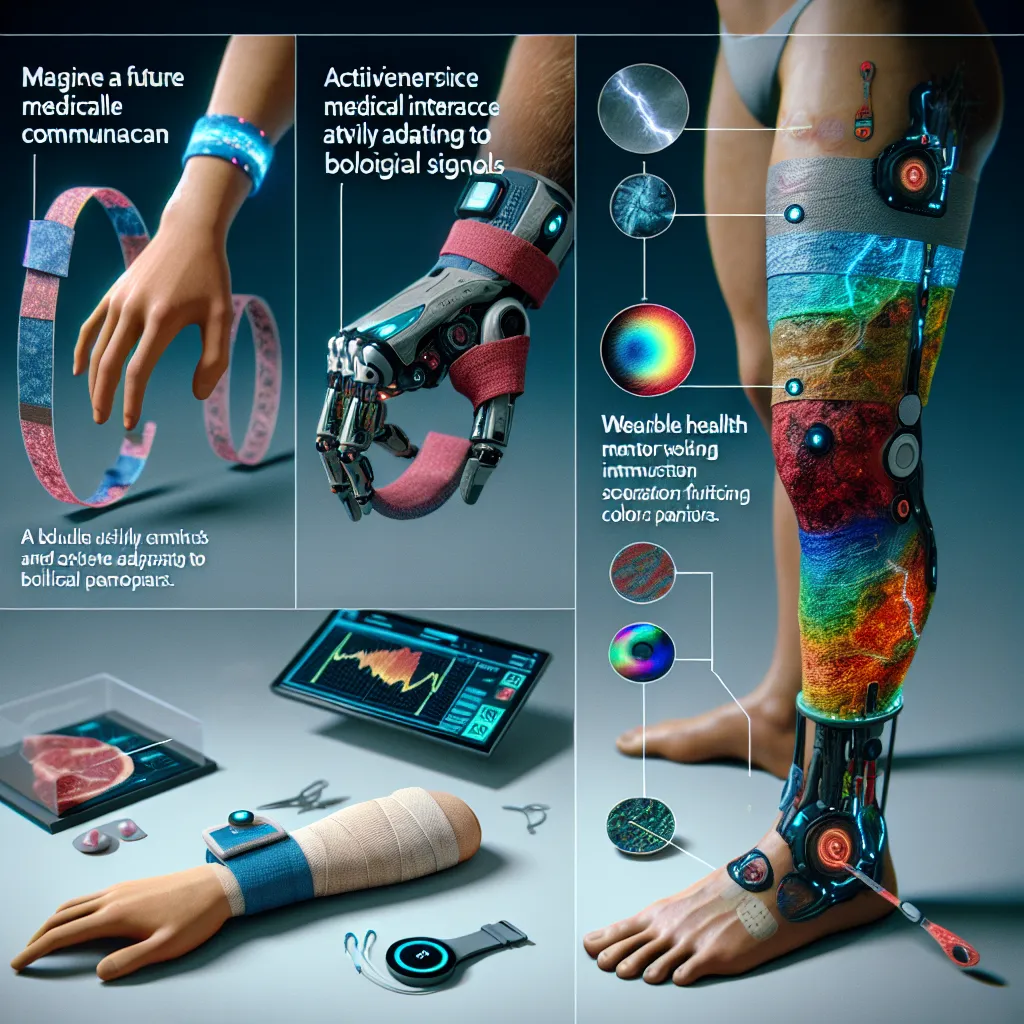
Medical interfaces today communicate health data through numbers on screens, requiring interpretation and attention. Bandages, prosthetics, and wearables remain passive objects even as healthcare moves toward continuous monitoring. This concept turns medical surfaces into active communicators by allowing them to change color and texture in response to biological signals. Inflammation, infection, circulation, or pressure issues become visible and tactile, reducing reliance on alerts and dashboards. The idea works now because healthcare is shifting toward home monitoring, where subtle signals matter more than clinical precision. Imagine a wound dressing that slowly changes color and texture as healing progresses — or warns caregivers visually before symptoms become serious.
Description
No additional description provided.
The Pitch
In today's healthcare landscape, communication of health data often relies on digital displays presenting numbers and metrics that require careful interpretation. Traditional medical devices like bandages, prosthetics, and wearables are typically passive, even as the field increasingly adopts continuous monitoring techniques. Here, we explore a novel concept: transforming medical surfaces into active communicators by enabling them to change color and texture in response to biological signals. This transformation allows for immediate, intuitive understanding of conditions such as inflammation, infection, circulation, or pressure imbalances, thus minimizing dependence on alert notifications and data dashboards.
The timing is ideal for such innovation due to the healthcare industry's pivot towards home-based monitoring. In these settings, subtle cues often carry more significance than precise clinical measurements. Envision a wound dressing that gradually alters its color and texture as healing occurs, or one that provides visual warnings to caregivers before symptoms escalate to a serious stage.
To bring this concept to fruition, we start with the development of a prototype medical surface. This initial product involves integrating advanced materials science with cutting-edge sensor technology. The surface accommodates embedded sensors that detect biological signals such as temperature, moisture, and chemical changes in the skin. These sensors send data to a responsive layer capable of altering its properties based on incoming information. The result is a real-time, visible indicator on the surface itself, offering immediate feedback to users.
To build and launch this concept as a Minimum Viable Product (MVP), several tools and strategies are recommended:
1. **Materials Selection**: Collaborate with experts in smart materials and polymers to identify suitable compounds that can visibly react to different stimuli.
2. **Sensor Integration**: Partner with tech companies specializing in miniaturized sensors to ensure seamless integration without compromising comfort or usability.
3. **Rapid Prototyping**: Utilize 3D printing and rapid prototyping facilities to develop and iterate on designs quickly.
4. **User Testing**: Conduct tests with potential users and healthcare providers to gather feedback on functionality and usability.
5. **Regulatory Pathways**: Engage with regulatory consultants early to navigate health and safety approvals, ensuring the product meets all necessary standards.
6. **GTM Strategy**: - **Target Audience**: Focus initially on home healthcare providers and patients managing chronic conditions or post-operative care. - **Partnerships**: Collaborate with healthcare institutions and telemedicine platforms to reach a broader audience and add credibility. - **Awareness Campaigns**: Leverage digital marketing, educational content, and pilot programs to highlight the benefits of this technology.
7. **Business Model**: - Offer subscription-based services for continuous use and updates. - Provide tiered pricing based on device capabilities and monitoring features. - Explore licensing agreements with medical equipment manufacturers for broader distribution.
This approach not only embraces innovation but also addresses a critical gap in the evolving landscape of healthcare monitoring, making vital health information more accessible and actionable for all users.