Color-Changing Bandages Reveal Healing Progress
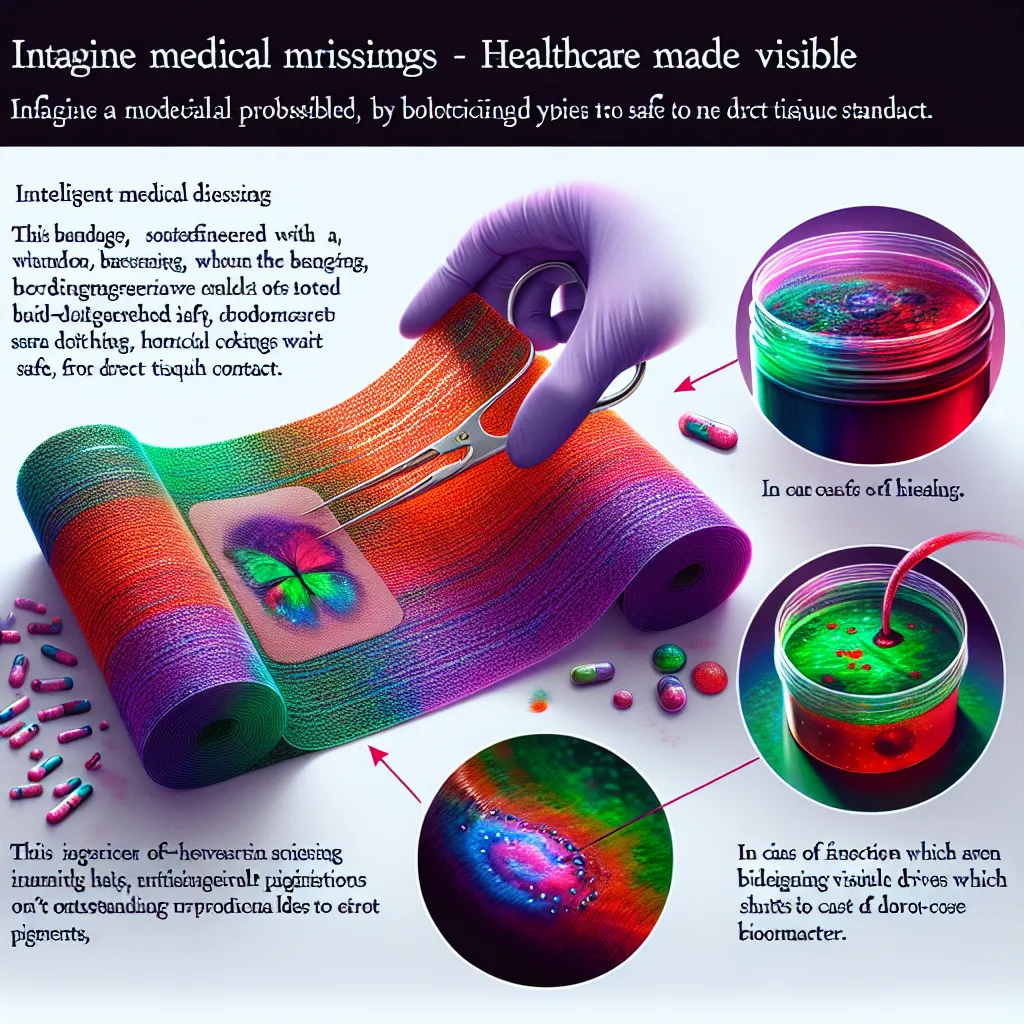
The biggest problem in wound care is invisible progress. Patients don’t know if a wound is healing or infected until it worsens. What if a bandage could tell you? Using bioengineered xanthommatin that changes color in response to pH or oxygen levels, medical dressings could shift from purple to green as healing occurs, or red when infection begins. UCSD’s bacterial production method makes biologically safe pigments possible at medical grade. Why now: synthetic dyes can’t safely touch tissue, but this natural pigment can. Hospitals, telehealth kits, and home care devices could all use this as a low-cost, visual biomarker—healthcare made visible.
Description
No additional description provided.
The Pitch
Wounds can be deceptively problematic. Patients often remain unaware of an infection or stalled healing process until the situation significantly worsens. Addressing this invisibility in wound progress can transform patient outcomes, allowing for timely interventions and ultimately improved healthcare experiences.
The crux of the problem lies in the current limitations of wound care technology. Traditional bandages and dressings provide essential protection but fail to offer real-time insight into the healing process. Patients, caregivers, and healthcare professionals face the challenge of relying on visual inspections or delayed laboratory tests to assess a wound’s progression.
Imagine a world where bandages could visually indicate the healing status. Leveraging the unique properties of bioengineered xanthommatin, we present a groundbreaking solution—medical dressings capable of changing color in response to health indicators such as pH or oxygen levels. As a wound heals, these dressings transition from purple to green. Conversely, a shift to red signals a potential infection, alerting necessary medical attention.
This innovative approach is made possible through UC San Diego's sophisticated bacterial production method, which harnesses biologically safe pigments at a medical-grade purity. Unlike synthetic dyes, these natural pigments do not pose risks when in contact with human tissue, making them ideal for medical applications.
The implementation of color-changing bandages represents a transformative leap in wound care, offering a clear and immediate visual biomarker of a wound’s status. This technology is particularly beneficial for various settings, including hospitals, telehealth services, and home care devices. By providing a low-cost and user-friendly solution, healthcare is made visible and accessible, reducing the need for intrusive monitoring methods.
To make this vision a reality, several enabling tools and strategies can be employed. Prototyping kits, such as 3D printers and bioink formulations, can aid in rapid development and testing of these smart dressings. Open-source bioengineering software and platforms can facilitate collaborative research and refinement.
Launching this as a Minimum Viable Product involves a strategic go-to-market approach:
1. Begin by partnering with select hospitals and clinics to conduct pilot studies, demonstrating the efficacy and safety of the product. 2. Collect and analyze feedback to refine the product and address any concerns or needs identified by healthcare professionals. 3. Develop strategic alliances with telehealth companies to integrate these bandages into remote monitoring systems, adding value to their service offerings. 4. Engage in awareness campaigns targeting healthcare providers and patients to highlight the advantages of visible wound care. 5. Roll out a phased distribution strategy starting with institutional adoption, gradually expanding to retail and online markets for home care applications.
The business model can be structured around a subscription-based service offering, where hospitals and home care providers receive regular supplies aligned with their patient turnover. Alternatively, a direct sales model can cater to individual consumers seeking advanced wound care solutions.
In conclusion, color-changing bandages represent not only a technological advancement but a paradigm shift in patient care—making healing visible, mitigating risks, and improving health outcomes in an intuitive, accessible manner.