College Sports Transfer Market Intelligence Platform
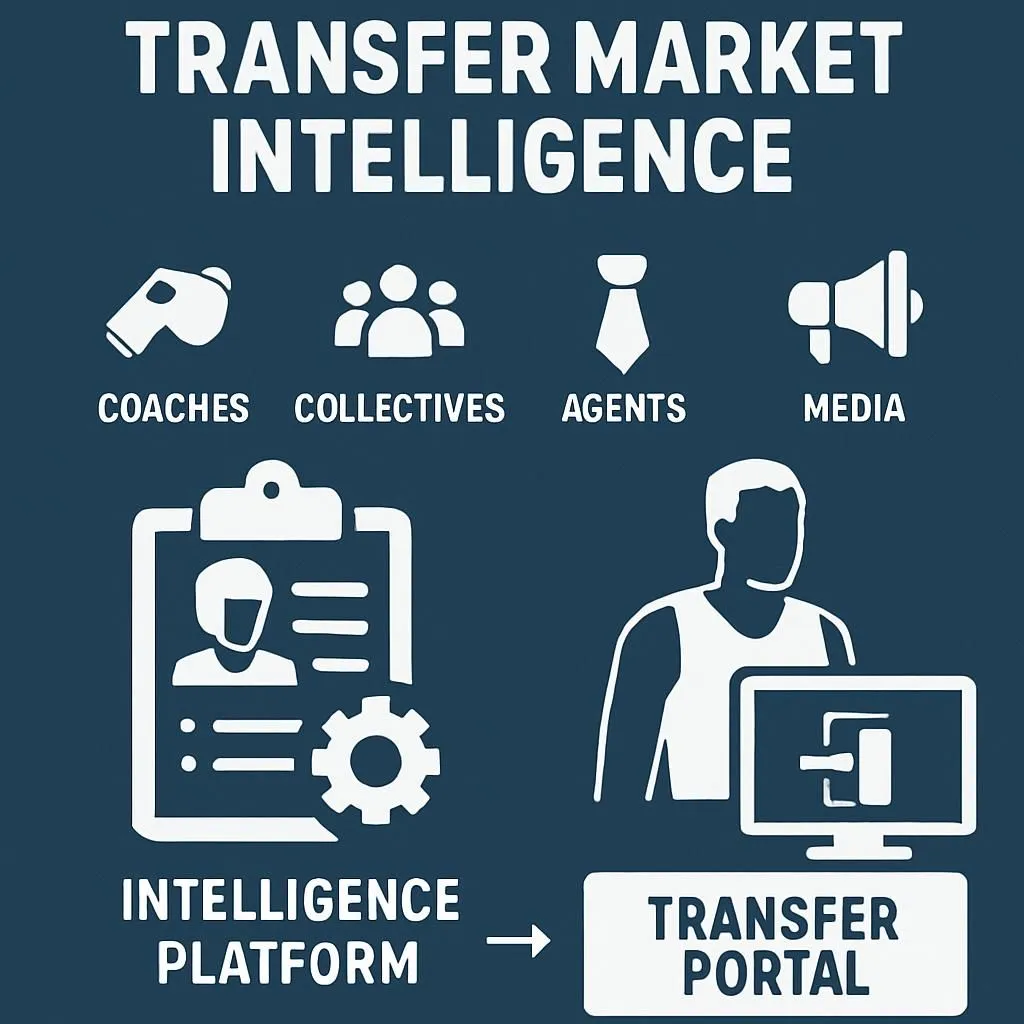
College sports have become a year-round roster management game, with coaches, collectives, agents, and media all trying to predict who is staying, transferring, appealing eligibility decisions, or entering the portal. Today this information is fragmented across lawsuits, NCAA rulings, social media, and insider networks. A Transfer Market Intelligence Platform would aggregate eligibility data, NIL valuations, transfer history, legal filings, roster projections, and recruiting information into a single system. Customers would pay for real-time intelligence that helps them make better roster and recruiting decisions. The opportunity exists because roster uncertainty has never been higher and millions of dollars in NIL spending now depend on accurate information. For example, a football program could use the platform to identify that three linebackers at a rival school may become unexpectedly eligible for another season due to ongoing litigation and adjust recruiting plans accordingly.
Description
No additional description provided.
The Pitch
College sports used to reward programs that evaluated talent well. Now it also rewards programs that interpret uncertainty well. The most valuable player in the market is often not the best athlete available, but the athlete whose eligibility, leverage, and likely movement are misunderstood by everyone else. A business that turns those ambiguities into organized intelligence would sit at a newly important layer of the sport: not scouting the player’s ability, but mapping the probability that the player is actually obtainable, affordable, and allowed to compete.
The compelling part is that roster information has become financially consequential before it has become institutionally reliable. NIL turned speculation into budget risk. A school that misreads whether a quarterback is returning may overspend on insurance at one position while missing a real need elsewhere. A collective that pays based on stale assumptions can distort an entire roster. In a market where one misallocated seven-figure decision can change a season, paying for better information is not a luxury; it is a way to avoid being the last serious actor still operating on rumors.
This is also a rare data problem where the source material is public enough to collect but messy enough to be valuable once structured. Eligibility waivers, court cases, depth charts, coaching comments, recruiting visits, agent behavior, and social signals each mean little in isolation. The value emerges when they are connected across time. The business is less about owning secret information than building the memory the market lacks. College sports has endless chatter, but very little institutional recall.
The strongest version of the company would benefit from the fact that uncertainty compounds across rivals. A program does not only need to understand its own roster; it needs to anticipate the contingency plans of dozens of others. If one school keeps an extra senior because of a ruling, a recruit may decommit, a transfer target may lose leverage, and a competing collective may redirect money. The market is interconnected, but today most participants see only their corner of it.
What makes the idea especially durable is that the chaos is unlikely to reverse. Even if rules change, the central condition remains: athletes have more mobility, more bargaining power, and more legal avenues than the old system was built to handle. The schools that adapt will treat roster intelligence like financial intelligence. The ones that do not will keep discovering that the most expensive surprises happen before the season starts.