Clothing with Built-In Sneeze Inserts
People are taught to sneeze into the inside of their elbow, but doing so often leaves shirts, jackets, and sweaters dirty or damp for the rest of the day. SneezeGuard Apparel redesigns clothing by adding discreet absorbent or washable inserts inside the elbow, giving people a hygienic place to sneeze without ruining their clothing. Premium versions could use removable liners, antimicrobial materials, or washable inserts that snap into place, while future designs could incorporate cleaning or sanitizing mechanisms directly into outerwear. As consumers increasingly embrace purpose-built apparel for health, travel, and convenience, there's room for functional clothing that solves small but universally frustrating daily problems. Instead of changing shirts after a bad allergy attack, you simply sneeze into the built-in insert, remove or clean it later, and continue your day without a second thought.
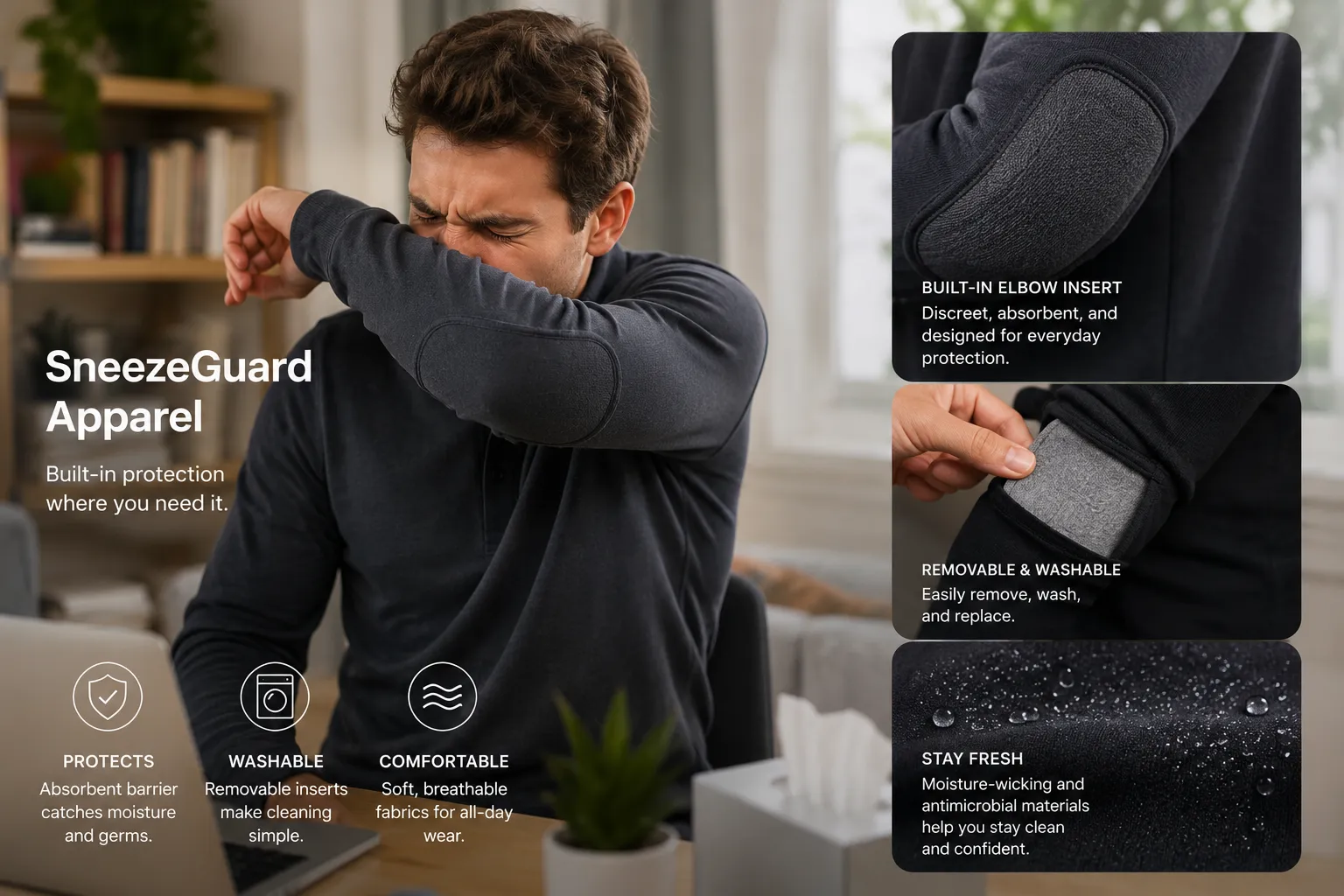
Description
No additional description provided.
The Pitch
Public health advice often assumes the body can be trained into cleanliness, yet the built environment rarely helps. Clothing is already the surface closest to the face during a sneeze; the unusual insight is that the garment can become part of the hygiene system rather than an accidental casualty of it.
The business also sits in the category of “tiny embarrassments with enormous frequency.” A ruined sleeve is not a dramatic problem, which is precisely why it has been ignored. But allergies, colds, commuting, classrooms, offices, and travel create millions of moments where people choose between being hygienic and feeling gross for the rest of the day. Products that remove a small recurring discomfort can become surprisingly durable because the relief is immediate, physical, and easy to understand.
There is also an interesting social permission layer. People are far more willing to adopt health-related behaviors when the tool is invisible. Masks, tissues, sanitizers, and wipes all require some public act of preparation or display. A redesigned sleeve lets someone do the “right” thing without announcing sickness, anxiety, or messiness. The value is not just absorption; it is making hygiene feel normal, private, and unremarkable.
The strongest version of the company would not be novelty apparel. It would be a quiet component standard, like moisture-wicking fabric, hidden pockets, or stain-resistant coatings: something that eventually feels obvious in kids’ clothing, commuter jackets, uniforms, travel wear, and allergy-season staples. The idea becomes more powerful if consumers stop thinking of it as a sneeze product and start thinking of it as one of those small functional upgrades that makes clothing better adapted to real bodies.
What makes the opportunity unusually interesting is that the product benefits both the wearer and everyone nearby. Most clothing innovations are inward-facing: comfort, style, warmth, storage. This one improves the wearer’s day while also reducing the social cost of being visibly ill or unhygienic around others. That combination—private utility with public courtesy—is rare in apparel, and it gives the product a reason to exist beyond fashion.