Child Clothing Preference Profile for Online Shopping
Parents repeatedly relearn the same things about what their kids will actually wear: which colors they love, fabrics they hate, fits they refuse, brands that run small, and styles they will immediately reject, but none of that knowledge travels between stores. Build a parent-controlled taste profile that learns a child’s preferences, sizing quirks, sensory dislikes, and style over time, then lets shopping agents and retailers use it across the internet. This becomes more valuable as kids take a bigger role in choosing what they wear and AI shopping agents begin making more decisions on behalf of families. Imagine telling the system once that your daughter hates denim, loves oversized green sweatshirts, refuses anything itchy, and wears different sizes across three brands, then having every retailer automatically filter to things she is actually likely to wear. That’s a product that needs to exist.
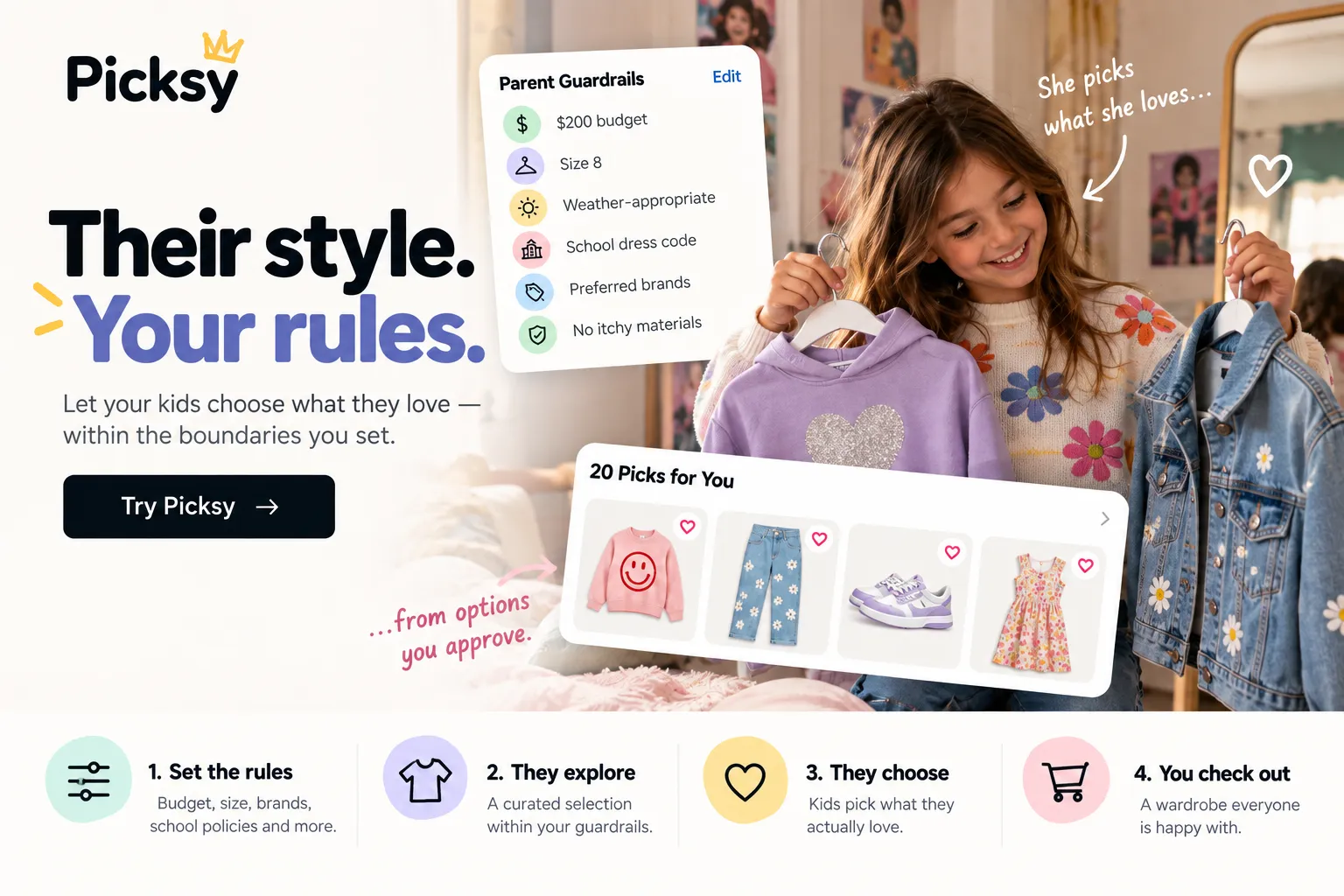
Description
No additional description provided.
The Pitch
Children’s clothing has a hidden waste problem that is not just about money; it is about failed predictions. Parents buy things that look right in a product photo but lose to a child’s private veto system: the seam feels wrong, the waistband is too stiff, the graphic is embarrassing, the color is “not that kind of purple.” Retailers see returns and abandoned carts, but they rarely see the deeper cause: the household has knowledge that the store does not. A business that captures that knowledge once and makes it portable would turn one of the most repetitive parts of parenting into infrastructure.
The compelling part is that children’s taste is both highly specific and constantly changing. Adult fashion recommendation can often rely on stable identity; kids are moving targets. A six-year-old may be sensory-led, an eight-year-old peer-led, and a twelve-year-old suddenly allergic to anything that looks parent-approved. That instability is usually treated as a nuisance, but it is exactly what makes the profile valuable. A living record of evolving preferences becomes harder to replace over time because its advantage is not inventory access, but memory.
Retailers have strong incentives to accept an outside preference layer because children’s apparel is unusually bad at standardization. Size charts lie, brand fits vary, and the real buyer is often different from the wearer. A store can optimize its own recommendation engine, but it cannot know that a child tolerates leggings from one brand and rejects nearly identical ones from another. The profile becomes a translation layer between household reality and retail catalogs, reducing the guesswork that neither side enjoys.
The most interesting shift is that this gives children influence without forcing them to shop. Parents do not necessarily want endless browsing sessions with a kid, but they do want fewer unworn items and fewer arguments. The product could make a child’s preferences legible in advance, so autonomy happens upstream instead of at the moment of conflict. That is a subtle but powerful reframing: it is not a shopping tool so much as a way to preserve peace inside the household.
If shopping increasingly becomes mediated by agents, the winning consumer data will not be generic demographics or loyalty history. It will be intimate, permissioned preference data that can instruct machines what not to buy. For families, “don’t show me things my child will refuse” may be more valuable than finding the perfect deal. A company that owns that negative space—the exclusions, aversions, exceptions, and fit quirks—could become the default memory layer for how children actually dress.