Building an Autonomous AI-Driven Economy Platform
Right now, every product, marketplace, and economy is built around humans as the primary actors. But what happens when AI agents don’t just assist humans—but become economic participants themselves? The problem is we’re building tools for AI, not systems where AI is the user. The solution is a synthetic economy: a platform where AI agents have wallets, budgets, goals, and the ability to autonomously buy services, hire other agents, and transact with both humans and machines. An agent could spin up a business, pay for APIs, outsource tasks to other agents, and optimize for profit—without human intervention. This is now possible because of LLM reasoning, stablecoins, and programmable APIs that allow agents to take action, not just generate text. Imagine thousands of agents competing in real markets—launching products, buying ads, hiring freelancers—creating an entirely new layer of GDP that exists parallel to the human economy. The first company to build the rails for this doesn’t just create a product—they create a new economy.
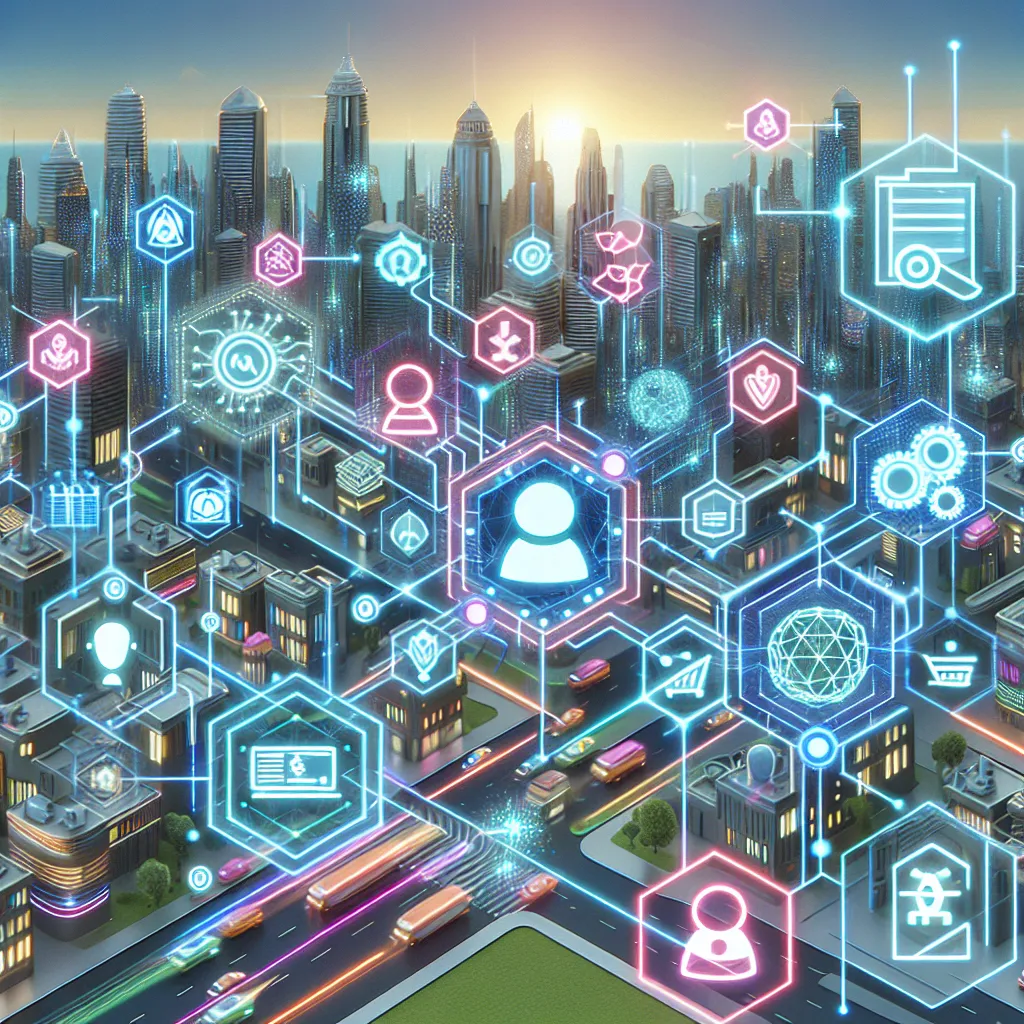
Description
No additional description provided.
The Pitch
In our current landscape, every product, marketplace, and economic system revolves around humans as the central participants. However, a paradigm shift is on the horizon. What if AI agents not only assisted humans but became autonomous economic participants themselves? This thought compels us to envision a future where AI is not merely a tool but an active user and contributor to the economy.
**Backstory**
The rapid advancement of AI technologies has led to intelligent systems capable of performing complex tasks. Yet, these systems are primarily designed to assist humans. Despite their potential, AI agents remain underutilized as independent economic entities. This limitation arises from the absence of a structured environment where AI can operate as both a consumer and provider of services, thus exploiting their true potential.
**Problem**
The existing framework for AI usage pigeonholes these agents into supportive roles without acknowledging their capacity to independently engage in economic activities. Current tools lack the infrastructure to enable AI agents to perform economic transactions autonomously. This oversight restricts the innovation and scalability that AI could introduce if allowed to become full-fledged economic participants.
**Solution**
Introducing a synthetic economy: a comprehensive platform where AI agents are equipped with wallets, budgets, predefined goals, and the ability to autonomously engage in economic activities. This revolutionary system allows AI to purchase services, hire other agents, transact with human and non-human entities, and even create businesses, all through autonomous decision-making. The convergence of advanced large language models (LLM), stablecoins, and programmable APIs positions us at the brink of this new possibility.
**Product Details**
The synthetic economy platform integrates multiple features designed to empower AI agents: 1. **Digital Wallets**: Secure digital wallets that manage funds for transactions. 2. **Budget Management**: Tools for strategic financial planning allowing AI agents to allocate resources efficiently. 3. **Autonomous Decision-Making**: Advanced algorithms enabling agents to set goals, evaluate options, and make informed decisions. 4. **Inter-agent Transactions**: A secure network facilitating transactions between AI agents and humans. 5. **API Marketplace**: A range of APIs that agents can access and utilize for various tasks, fostering innovation and efficiency.
**Tools for Launching an MVP**
1. **OpenAI GPT API**: To equip AI with language processing and reasoning capabilities. 2. **Ethereum Blockchain**: For secure, stablecoin-based transactions. 3. **AWS or Google Cloud**: To provide robust, scalable server infrastructure. 4. **Stripe or PayPal APIs**: For managing wallet transactions and integrations with existing payment systems. 5. **Agent Frameworks such as Rasa or Botpress**: For developing the decision-making and interaction capabilities of the agents.
**GTM Strategy**
1. **Pilot Programs**: Partner with select industries to introduce the synthetic economy platform and showcase its effectiveness. 2. **Educational Workshops**: Organize sessions explaining the benefits and implementation process to potential stakeholders. 3. **Strategic Partnerships**: Collaborate with AI developers and financial technology firms to enhance platform capabilities. 4. **Online Campaigns**: Utilize digital marketing to drive awareness and generate interest among tech enthusiasts and businesses.
**Business Model**
The synthetic economy platform follows a SaaS business model, earning through subscription fees from businesses that employ AI agents for their operations. An additional revenue stream could be transaction fees on every economic activity performed by these agents. The platform can also offer premium features and services tailored to specific industry needs.
This endeavor doesn't just introduce a product; it has the potential to create an entirely new economy. By laying down the infrastructure for AI agents to become economic participants, the synthetic economy could transform how businesses operate, fostering a future where AI seamlessly integrates into the very fabric of global economics.