Brainwave-Responsive Homes: Enhancing Comfort and Focus
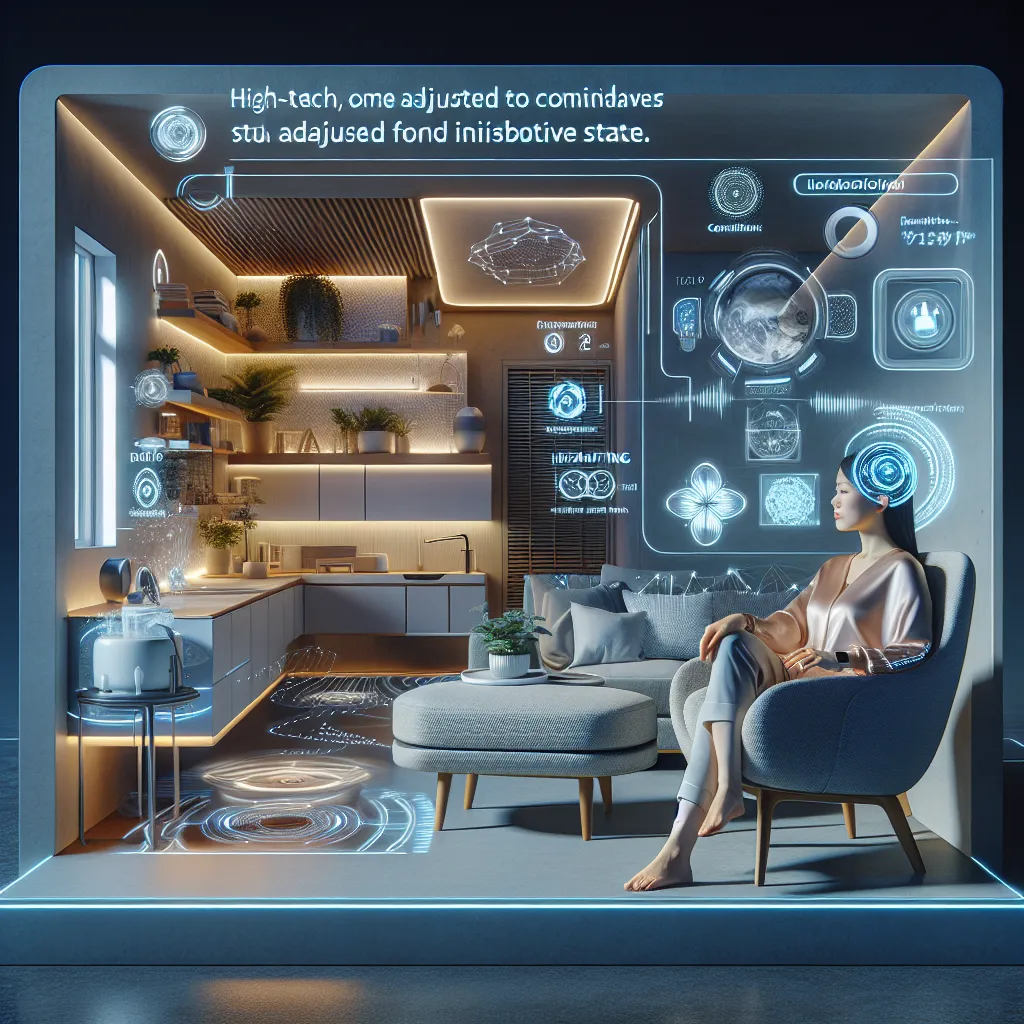
Modern smart homes respond to voice commands and motion sensors, but they remain oblivious to residents’ real-time cognitive states like stress, fatigue, or deep focus. As BCIs advance, homes could become truly intelligent by adapting environments based on brain signals. A platform that integrates with BCI devices could passively read emotional or cognitive states and adjust lights, sounds, temperature, and even scent to optimize comfort, focus, or relaxation. This transforms a smart home from reactive to anticipatory. The opportunity is emerging now because brainwave-reading devices are becoming small, accurate, and increasingly consumer-friendly. Imagine a home that automatically dims the lights and reduces ambient noise when it senses mental fatigue, or adjusts thermostat settings to counteract cognitive stress — a brain-optimized sanctuary that makes wellness passive.
Description
No additional description provided.
The Pitch
In the evolving landscape of smart home technology, a new frontier is emerging: the integration of brain-computer interfaces (BCIs) to create truly intelligent environments. While modern smart homes can respond to voice commands and motion sensors, they remain largely unaware of the residents' real-time cognitive states, such as stress, fatigue, or deep focus. This disconnect presents both a challenge and an opportunity to redefine how homes interact with their inhabitants.
**Backstory**
As BCIs advance, the potential to transform homes from reactive to proactive environments becomes increasingly feasible. Traditional smart homes primarily operate based on predefined commands and basic sensor inputs, leaving a gap in their ability to adapt contextually to the inhabitants' mental and emotional states. However, the current advancements in BCI technology make it possible to bridge this gap. Devices that can accurately read brainwaves are becoming portable and consumer-friendly, paving the way for new applications that enhance daily living experiences.
**Problem**
The main challenge lies in the smart home’s inability to sense and react to the cognitive and emotional states of its residents. Existing smart systems lack the capability to adapt to variations in mental stress, fatigue, or concentration levels. This limits the home environment's potential to support wellness and productivity optimally.
**Solution**
Imagine a platform that seamlessly integrates with BCI devices to passively monitor emotional and cognitive states. By interpreting brain signals, this platform could dynamically adjust a home’s lighting, sound, temperature, and even scent to enhance comfort, focus, or relaxation. Such a system would transform homes into anticipatory spaces that intuitively foster mental and emotional well-being.
**Product Details**
The proposed solution involves developing a software platform that interfaces with existing BCI devices. The platform will:
1. Collect and interpret brainwave data in real-time. 2. Integrate with smart home systems to adjust environmental settings based on cognitive state. 3. Provide customizable settings for users to prioritize comfort, focus, relaxation, or other desired states. 4. Ensure robust data privacy and security to protect sensitive user information.
**Tools for MVP Launch**
To launch this as a Minimum Viable Product (MVP), the following tools and platforms can be utilized:
1. BCI devices capable of tracking brainwave activities. 2. Smart home integration platforms such as IoT frameworks (e.g., SmartThings, Home Assistant). 3. Cloud computing services to process and analyze brain data. 4. Machine learning algorithms for accurate interpretation of cognitive and emotional states. 5. Mobile or web-based application for user interaction and settings management.
**GTM Strategy**
1. **Early Adoption:** Target early adopters within the tech-savvy and wellness-focused consumer sectors. 2. **Partnerships:** Collaborate with BCI manufacturers and smart home tech companies to expand reach and improve product offerings. 3. **Demonstrations:** Host events or online webinars to showcase the technology's benefits and functionalities. 4. **Content Marketing:** Develop insightful content to educate potential customers on the benefits of brain-optimized smart homes.
**Business Model**
1. **Subscription Service:** Offer a tiered subscription model for different levels of service, including basic, premium, and enterprise plans. 2. **Freemium Model:** Provide a limited version of the product for free, with paid upgrades for advanced features. 3. **Partnership Revenues:** Establish revenue-sharing agreements with IoT and BCI partners. 4. **Data Insights:** Offer anonymized user insights for research purposes to universities or wellness companies, ensuring all data sharing adheres to privacy laws.
By harnessing the advancements in BCI technology, a new era of smart home experiences can be unlocked, where homes not only respond to commands but also anticipate and cater to the residents’ mental and emotional needs. This brain-optimized sanctuary would make wellness a passive, yet integral, aspect of everyday living.