Brain-Integrated Light Cues for Enhanced Focus
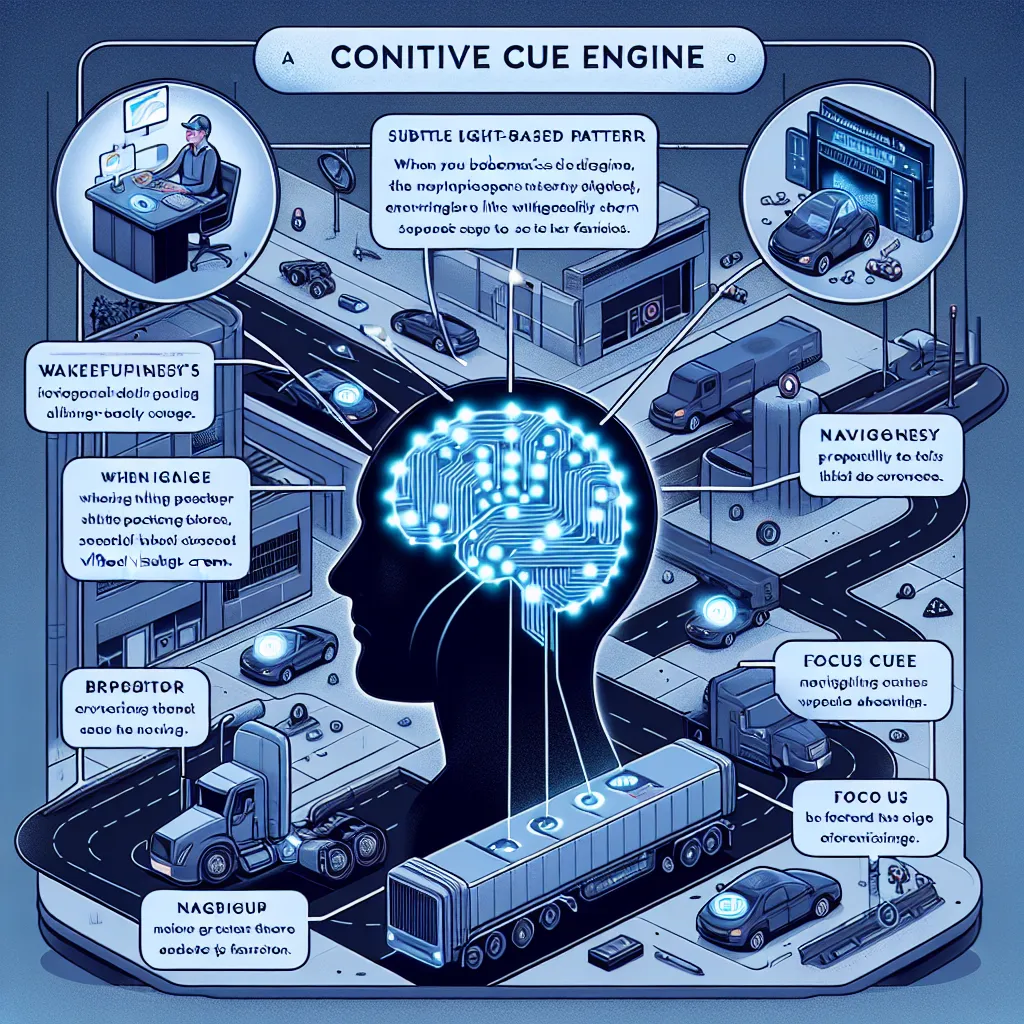
Brains constantly miss signals that would help—fatigue creeping in, posture slumping, GPS instructions getting drowned out in noise. A Cognitive Cue Engine uses subtle light-based notifications trained into the cortex: a navigation cue that “points” you left, an alertness cue when your biometrics dip, or a focus cue when your mind wanders. No screens, no sounds, no vibrations—just direct neural nudges you learn to interpret. Why now? The research shows that mammals rapidly adapt to artificial neural inputs, meaning “notification languages” can be learned as naturally as muscle memory. Example: long-haul drivers receive a rising “wakefulness pattern” when their eyelid-tracking camera detects fatigue, preventing micro-sleep without audio alarms.
Description
No additional description provided.
The Pitch
In today's fast-paced world, attention is a precious commodity. With our minds constantly bombarded by countless distractions, it’s all too easy to miss critical signals that could enhance our day-to-day experiences. Whether it's the fatigue that silently creeps in during long hours, a slumped posture compromising our physical health, or GPS instructions that get swallowed by surrounding noise, our cognitive processes often struggle to prioritize and respond effectively to such signals.
Enter the Cognitive Cue Engine, a revolutionary concept that transforms how we receive and process notifications by leveraging subtle, light-based cues directly trained into our neural pathways. Imagine seamless, screen-free, and sound-free navigation cues that point you left or right, or a gentle alertness nudge when your biometric data indicate diminishing concentration. This innovative approach uses direct neural nudges that individuals gradually learn to interpret intuitively, akin to muscle memory.
The Cognitive Cue Engine capitalizes on recent breakthroughs in neuroscience, highlighting how mammals, including humans, can rapidly adapt to artificial neural inputs. This makes it possible to develop notification languages that are as naturally embedded in our cognition as any learned habit or reflex. For instance, consider long-haul drivers who receive an escalating wakefulness pattern cue through a discreet wearable as an eyelid-tracking camera detects fatigue—effectively warding off microsleep episodes without relying on intrusive audio alarms.
**Problem** In a hyperconnected world, traditional methods of delivering notifications—auditory alerts, visual screens, and vibrations—can often be more disruptive than helpful. These methods can break focus, cause stress, and in many scenarios like driving, pose safety risks. A more seamless, less intrusive way to receive and process critical signals is necessary.
**Solution** The Cognitive Cue Engine proposes to replace traditional notifications with personalized, light-based cues that interact directly with the user’s neural pathways. By learning to understand these cues, users enhance their cognitive responses and interactions with their environment, leading to increased focus, safety, and efficiency.
**Product Details** - **Development Platform**: Utilize a combination of EEG-based neural feedback systems and biometric sensors to deliver personalized cues. - **Wearable Device**: A discreet accessory, such as glasses or a headband, that integrates seamlessly into daily life. - **Software Interface**: An easy-to-use app that allows users to customize their cue settings and monitor their cognitive metrics. - **Machine Learning**: Employ machine learning algorithms to continually refine and adapt cues based on individual responses and preferences. - **Safety Features**: Real-time tracking of fatigue, attention patterns, or posture to prompt immediate reaction without distraction.
**Tools for MVP Launch** 1. **Hardware Prototyping Kits**: Use platforms like Arduino or Raspberry Pi to experiment with wearable device designs. 2. **AI Frameworks**: Leverage TensorFlow or PyTorch for developing the machine learning models that drive the adaptation of cues. 3. **Biometric Sensors**: Incorporate readily available sensors to measure EEG signals and other relevant biometrics. 4. **App Development**: Build the app interface using universal mobile development tools like React Native or Flutter.
**Go-to-Market Strategy** - **Target Early Adopters**: Approach niche markets such as long-haul drivers, remote workers, or athletes who would benefit immediately from enhanced alertness and focus. - **Strategic Partnerships**: Collaborate with automotive companies, health tech firms, or mindfulness apps for co-branded solutions. - **Technology Demonstrations**: Conduct live demonstrations at tech conferences and expos to highlight the unique advantages of the product. - **Influencer Collaborations**: Engage with influencers in the productivity and technology space to drive organic interest and awareness.
**Business Model** - **Direct-to-Consumer Sales**: Sell the wearable and app subscription directly through an online platform. - **B2B Partnerships**: Offer customized solutions for businesses looking to enhance employee productivity or safety. - **Subscription Service**: Provide premium features and personalized support through a subscription-based model.
The Cognitive Cue Engine represents the forefront of cognitive augmentation technology, providing an unprecedented level of integration between human cognition and digital inputs. By intuitively guiding users without the drawbacks of traditional notifications, this invention promises to redefine how we interact with the world around us, setting a new standard in cognitive communication.