Bot Marketplace Empowering Affordable Autonomous Deliveries
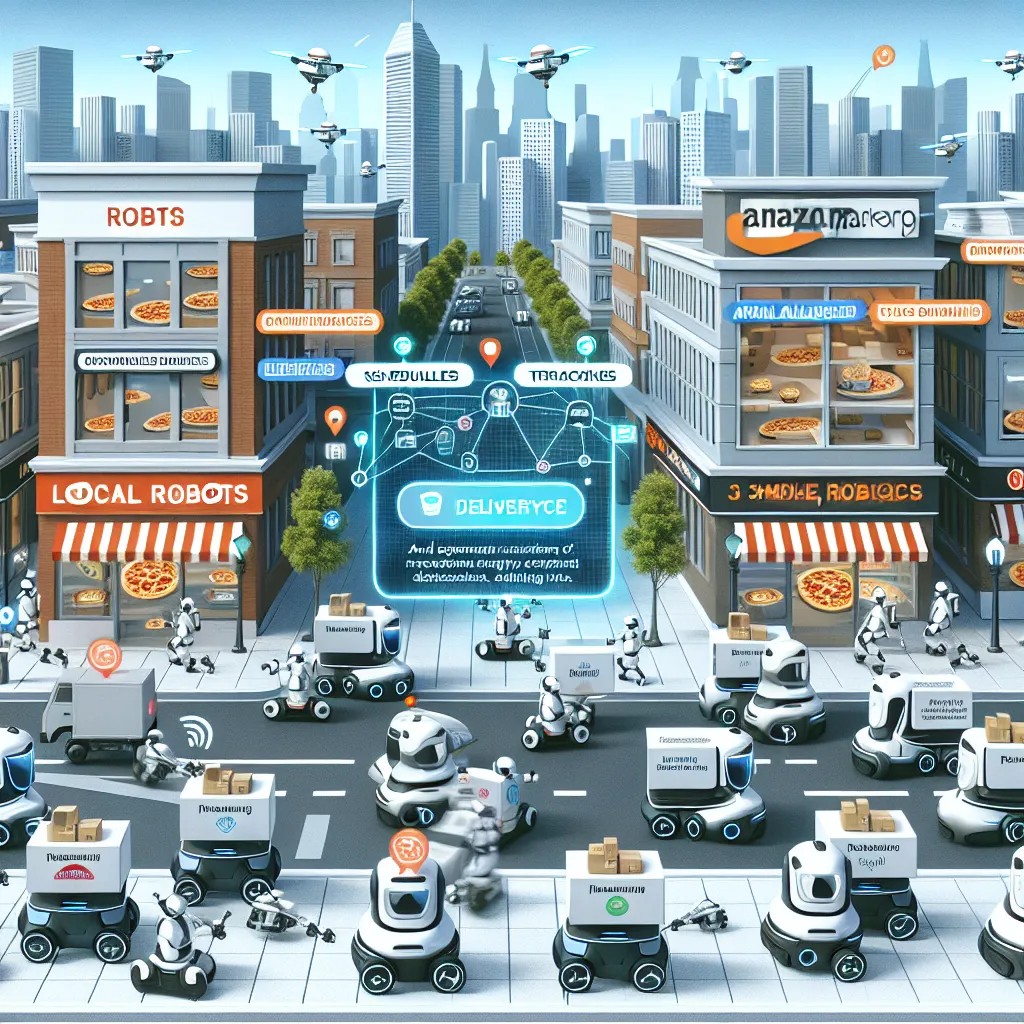
While autonomous delivery robots from companies like Starship or Kiwibot exist, they operate in walled gardens or pilot programs. Small businesses, franchises, and local retailers have no way to tap into this infrastructure affordably. This startup builds a platform—a “bot marketplace”—where any business can schedule and manage autonomous last-mile deliveries using a fleet of available sidewalk or road bots. Think Uber for robot delivery. The system dynamically matches available bots in a given zone to incoming delivery requests, handles escrow, tracking, and fallback to human couriers if needed. The marketplace makes bots accessible to businesses without needing to own or maintain them. For example, a local pizza chain could request five deliveries in a 3-mile radius on Friday night, and the system assigns bots in real-time. As labor costs rise and consumer expectations demand instant delivery, this model offers scale, flexibility, and automation—unlocking bot-powered logistics as a service.
Description
No additional description provided.
The Pitch
In recent years, the landscape of delivery services has evolved significantly, with advancements in autonomous technology paving the way for innovative solutions. However, despite the progress demonstrated by companies like Starship and Kiwibot, their autonomous delivery robots largely operate within limited settings, leaving many small businesses, franchises, and local retailers without access to this cutting-edge infrastructure. These businesses face significant challenges in incorporating such technology into their operations affordably and effectively.
This gap presents a unique opportunity to develop a transformative platform—a bot marketplace—that democratizes access to autonomous last-mile delivery services. This platform aims to empower businesses of all sizes to integrate robot delivery fleets into their logistics operations seamlessly.
The problem at hand is the prohibitive cost and logistical complexity faced by smaller enterprises in adopting autonomous delivery solutions. Most existing options require businesses to invest heavily in obtaining and maintaining their own fleet of delivery robots. Such an investment is not feasible for many small businesses and local retailers, who operate on tight margins and cannot afford the upfront costs and ongoing maintenance of an autonomous fleet.
The proposed solution is a marketplace platform that functions as an Uber-like service for robotic deliveries. This platform allows businesses to schedule and manage deliveries using an on-demand network of available sidewalk or road robots. The system dynamically matches delivery requests to robots available within a specific geographical zone, automating the logistics process and thereby reducing the hassle of managing deliveries manually.
The product details include a user-friendly interface that allows businesses to input delivery requests, specifying parameters such as destination and delivery time. The system utilizes algorithms to identify and assign suitable robots to each request, ensuring efficient use of resources and timely deliveries. Additionally, the platform incorporates features for real-time tracking of deliveries and handles escrow to ensure secure transactions. In cases where autonomous delivery is not feasible, perhaps due to unforeseen obstacles, the system can fall back on human couriers to ensure fulfillment.
Launching this as a Minimum Viable Product (MVP) involves utilizing existing robotic fleets available from operators willing to partner with this marketplace. By collaborating with these operators, the platform can aggregate available bots in various locations, creating a robust network ready to serve businesses' delivery needs without the need to own any hardware. A pilot program targeting a specific region with a moderate density of local businesses can serve as a testing ground to iterate on the service and address any operational challenges.
The go-to-market strategy focuses on regions where demand for delivery services is high, such as urban centers or college towns. Marketing efforts will emphasize the cost savings and operational flexibility offered by using robots instead of traditional delivery means. Strategic partnerships with regional business associations and local influencers can accelerate adoption and build credibility.
The business model is based on a revenue-sharing scheme, where businesses pay a fee per delivery made using the marketplace. An additional subscription model could be explored for businesses that require high-volume deliveries regularly, offering them premium features and lower per-delivery costs. Ensuring competitive pricing compared to traditional delivery options will be key to encouraging widespread adoption.
In conclusion, this innovative bot marketplace has the potential to revolutionize last-mile delivery by providing easy access to autonomous solutions for businesses of all sizes. By solving current barriers to adoption and offering a flexible, cost-effective service, it opens up new opportunities for efficiency and scalability in local business logistics.