Blockchain Trust Layer for Autonomous AI Auditing
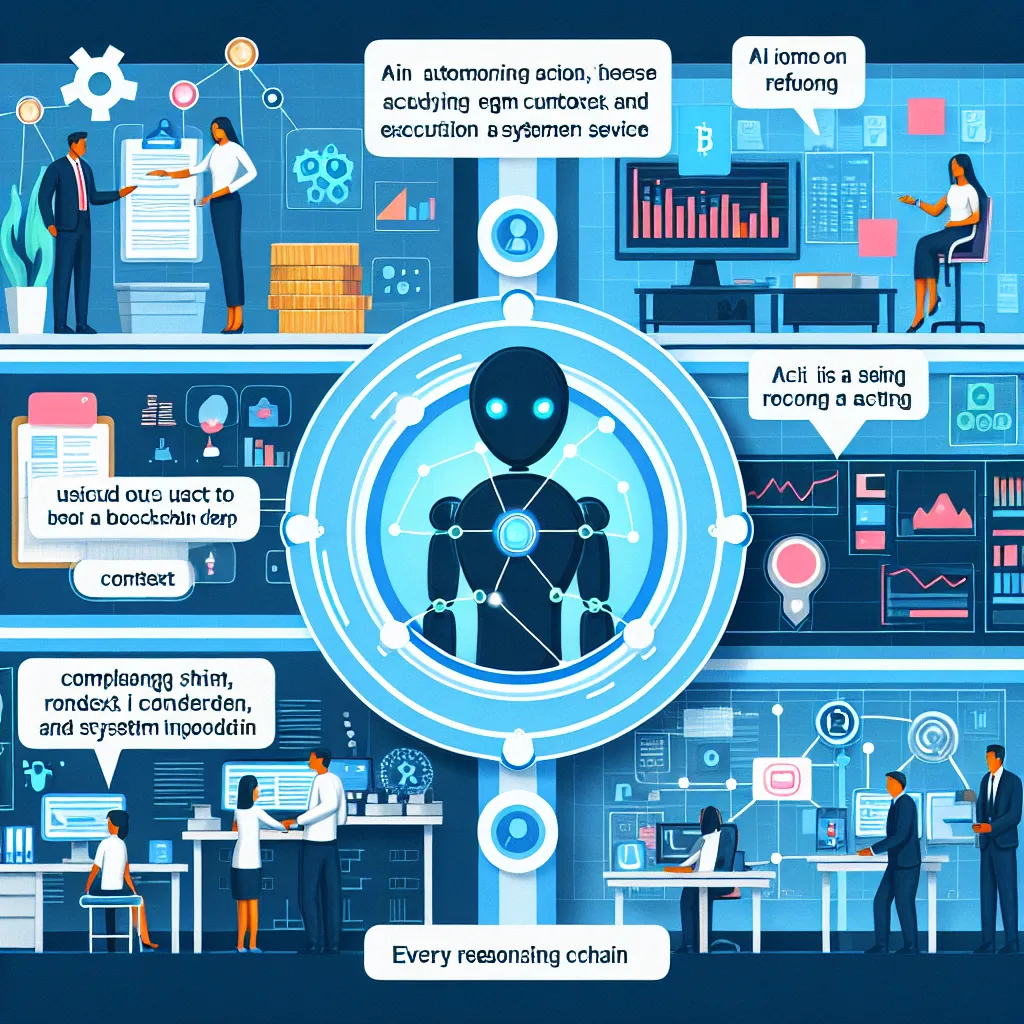
As companies deploy autonomous agents across workflows—from finance to customer service—they face a growing challenge: how do you audit what an agent did and why? This startup creates a blockchain-based trust layer for agentic AI. Every action taken by an AI agent—from sending an email to executing a trade—is logged immutably, along with its reasoning chain, prompt context, and system inputs. It brings observability and legal defensibility to autonomous workflows, particularly in finance, healthcare, and logistics. Blending trends in digital trust, agentic AI, and blockchain, it gives companies visibility and accountability as machines take on more decision-making power. For example, when a fintech’s AI assistant issues a customer refund, the compliance team can trace the action to a specific user prompt, data input, and confidence threshold—instantly and with zero ambiguity.
Description
No additional description provided.
The Pitch
In an era where AI and autonomous agents are becoming integral parts of business operations, companies are increasingly deploying these agents across various workflows, ranging from finance to customer service. However, a significant challenge that arises with this growing reliance on AI is the need for transparency and accountability: how can businesses effectively audit the actions of an AI agent and understand its decision-making process?
This challenge presents an opportunity for innovation. The proposed solution is a blockchain-based trust layer specifically designed for agentic AI. This system logs every action taken by an AI agent immutably on the blockchain, recording details such as the reasoning chain, prompt context, and system inputs. The goal is to provide observability and legal defensibility to workflows that are increasingly operated by autonomous agents.
This solution becomes particularly crucial in industries like finance, healthcare, and logistics, where the implications of AI decisions can be significant. By integrating a digital trust mechanism with agentic AI and blockchain, businesses gain enhanced visibility and accountability, which is critical as they entrust machines with more decision-making responsibilities.
For example, consider a fintech company whose AI assistant processes customer refunds. With the proposed solution, the compliance team can seamlessly trace the AI's actions back to a user prompt, a specific data input, and the confidence threshold applied during the decision-making process. This tracing can be done instantaneously and without ambiguity, offering both reassurance and compliance.
To build this solution, several tools and technologies would be beneficial. Smart contracts on blockchain platforms like Ethereum can ensure the immutability of records. AI explainability tools can be integrated to elucidate the decision-making pathways of the agents. Additionally, machine learning operations platforms can assist in monitoring and managing the AI lifecycle.
An MVP (Minimum Viable Product) could be launched that focuses on a specific use case, such as auditing AI decisions in customer service for financial institutions. Collaborating with a small group of early adopters can help refine the product based on real-world needs and feedback.
The Go-To-Market (GTM) strategy should center around industries with high regulatory compliance and a pressing need for digital trust, such as finance, healthcare, and logistics. Building partnerships with industry players, attending sector-specific conferences, and leveraging thought leadership articles can help increase visibility and credibility in the target markets.
The business model could involve a subscription-based pricing strategy, where companies pay a recurring fee for access to the trust layer service. This model ensures a steady revenue stream while providing clients with continuous updates and support. Offering tiered pricing based on transaction volume or the complexity of AI actions could accommodate businesses of varying sizes.
In conclusion, as businesses continue to integrate autonomous agents into their workflows, the need for a system that provides transparency and accountability becomes ever more critical. By creating a blockchain-based trust layer, companies can gain the visibility they need to confidently leverage AI, while also meeting legal and compliance requirements.