Biotech-Brewed Psychedelics for Mental Health Treatments
Psychedelic compounds like LSD and psilocybin are gaining traction for mental health treatments, but scalable, sustainable production remains a major hurdle. Traditional synthesis methods are costly and environmentally taxing. Using Periglandula clandestina’s natural ability to produce ergot alkaloids offers a biological alternative. A startup could engineer fermentation systems using this fungus or modify microbes with its biosynthetic genes to produce pharmaceutical-grade psychedelics at scale. The resurgence of interest in psychedelics for depression, PTSD, and anxiety — combined with biotech advances — makes this the perfect time. Example: a company like “BrightBio Labs” could create FDA-compliant biosynthetic LSD for research and clinical use, dramatically lowering costs and expanding access.
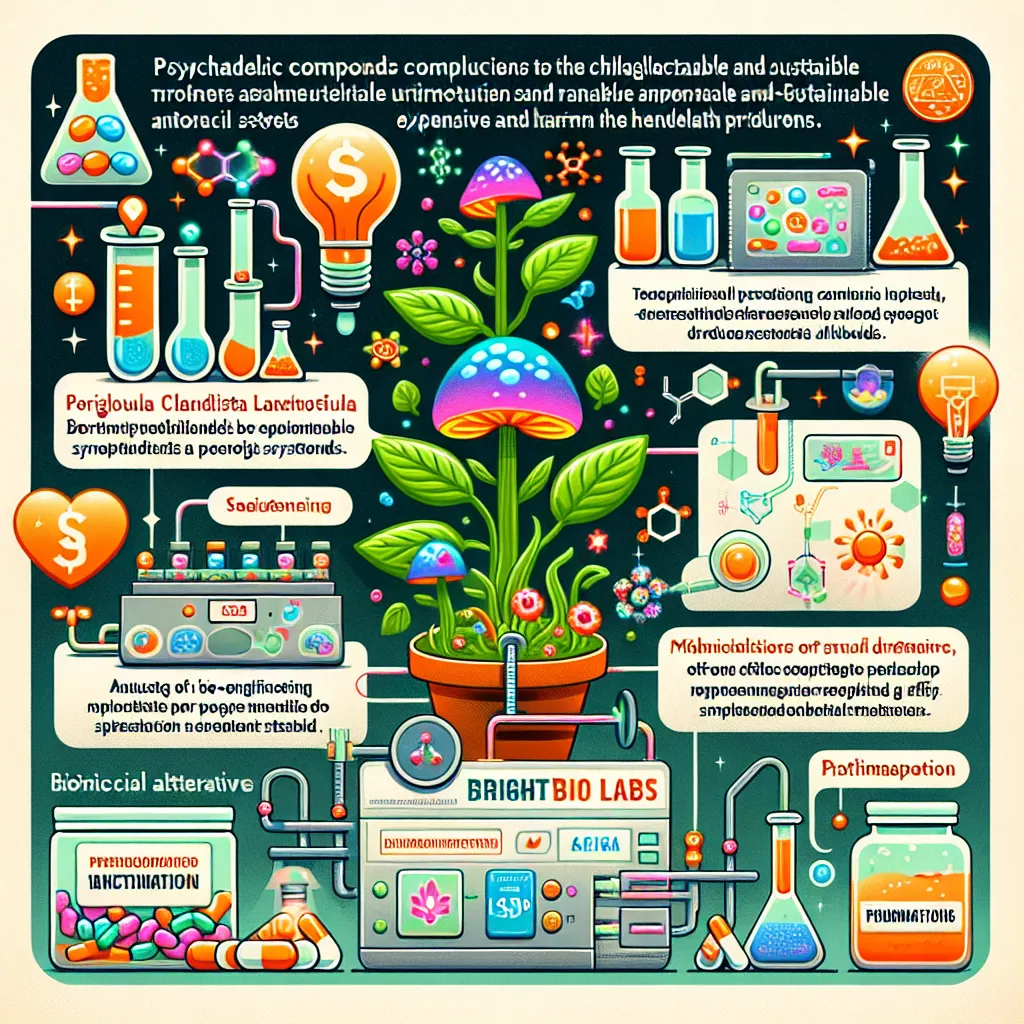
Description
No additional description provided.
The Pitch
As research into psychedelic compounds such as LSD and psilocybin gains momentum for mental health treatments, the challenge of scalable and sustainable production becomes increasingly apparent. Currently, traditional methods of synthesis are not only costly but also have significant environmental impacts. A promising solution lies in the natural abilities of Periglandula clandestina, a fungus capable of producing ergot alkaloids. This presents a unique opportunity for a startup to leverage biotechnology to develop more efficient and sustainable production methods.
**Backstory**
Recent years have witnessed a resurgence of interest in using psychedelics to treat mental health conditions such as depression, PTSD, and anxiety. However, the high cost of production and limited access remain barriers to widespread utilization. Advances in biotechnology provide new avenues for exploration, making the current landscape fertile ground for innovation in this field.
**The Problem**
The main obstacles in the production of pharmaceutical-grade psychedelics are the high costs and environmental impact of existing synthesis methods. Traditional chemical synthesis is resource-intensive and often requires harsh chemicals, making it unsustainable in the long run. This creates a significant barrier to making these therapies more accessible and affordable for patients who could benefit from them.
**The Solution**
The solution lies in harnessing the power of biotechnology to develop scalable, eco-friendly production processes. By either engineering fermentation systems using Periglandula clandestina or modifying microbes with its biosynthetic genes, it is possible to produce high-quality psychedelic compounds at scale. This approach not only reduces costs but also minimizes the environmental footprint, facilitating broader access to these potentially life-changing treatments.
**Product Details**
A company, for instance, BrightBio Labs, could develop a framework to produce biosynthetic LSD and other psychedelic compounds. The process would involve:
1. Utilizing advanced fermentation technology with engineered microbes or fungi. 2. Ensuring production meets FDA compliance for research and clinical applications. 3. Creating a scalable system that enables mass production at reduced cost.
**Tools for Easy Launch as an MVP**
To successfully launch a Minimum Viable Product, the following tools and resources could be leveraged:
- Bioreactors for controlled fermentation processes - Genetic engineering software for microbial or fungal manipulation - Partnerships with academic institutions for research and development - Access to grants and investment from biotech-focused venture capitalists
**GTM Strategy**
The go-to-market strategy would involve:
- Collaborating with research institutions and mental health clinics for trials and studies - Establishing partnerships with pharmaceutical companies for distribution and co-development - Engaging with regulatory bodies early to ensure compliance - Marketing the sustainability and cost-effectiveness of the product to capture interest from both investors and customers
**Business Model**
The business model could focus on dual revenue streams:
1. Licensing the production technology to established pharmaceutical companies. 2. Direct sales of compounds for research and clinical trials, providing a more affordable option to scientific and medical communities.
**Conclusion**
The convergence of increased demand for mental health solutions and advancements in biotechnology creates a ripe opportunity to transform the psychedelic compound production landscape. By utilizing sustainable and scalable methods, a startup like BrightBio Labs could play a pivotal role in democratizing access to these innovative treatments, ultimately contributing to a healthier future.