Biohybrid Micro-Robots Revolutionize Minimally Invasive Surgery
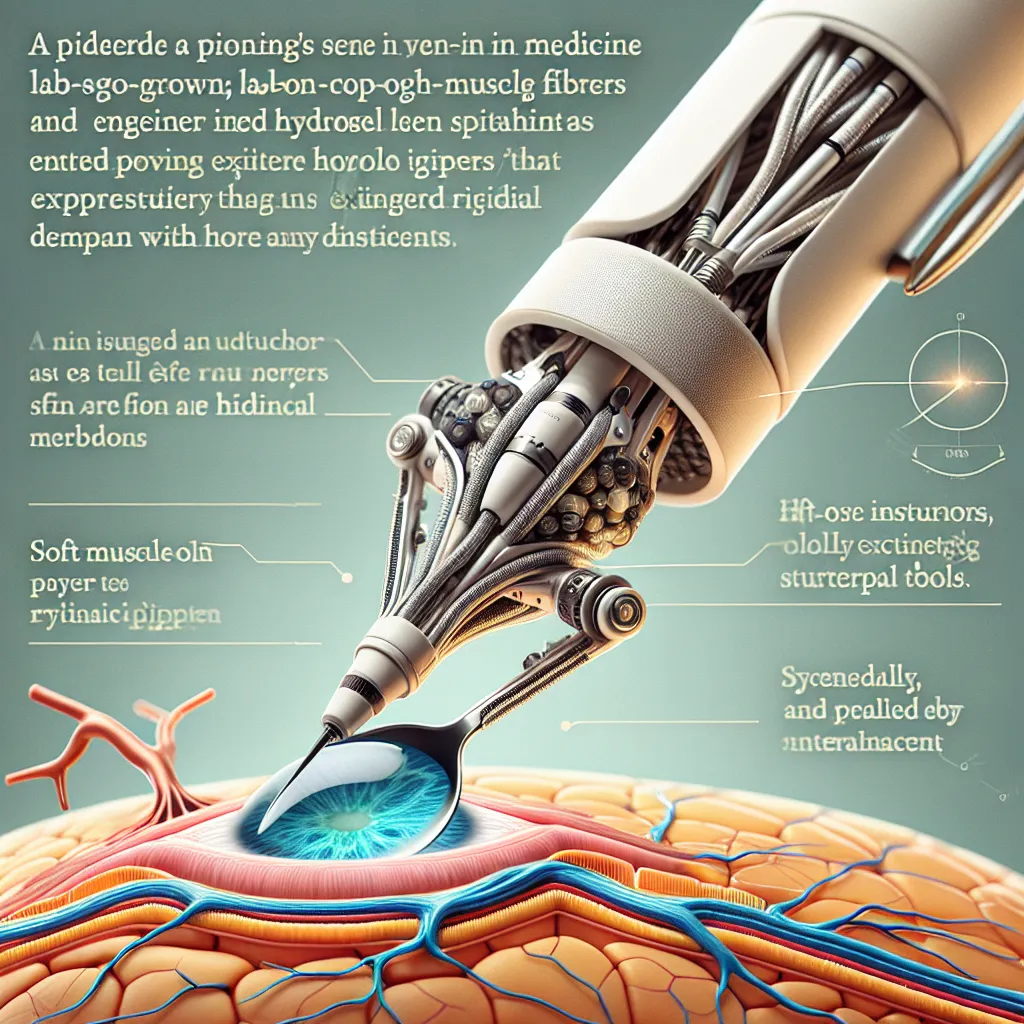
Minimally invasive surgery still relies on rigid metal tools that can’t adapt to soft tissue, leading to higher risk when surgeons operate on tiny, delicate structures. A new class of micro-robots powered by lab-grown muscle fibers and MIT’s artificial hydrogel tendons would give surgeons ultra-precise, soft, and biologically “natural” movement at microscopic scales. The tendon breakthrough increases force and responsiveness by up to 30×, making biohybrid surgical instruments suddenly viable at a time when healthcare systems are pushing for safer, smaller, and less invasive interventions. Imagine a retinal surgeon guiding a pen-sized robot whose muscle-tendon gripper can peel a membrane thinner than a strand of hair without tearing anything — a level of finesse no rigid tool can match today.
Description
No additional description provided.
The Pitch
The field of minimally invasive surgery (MIS) has made significant strides in recent years, but it still faces limitations due to the rigidity of traditional metal tools. These instruments, while effective in many cases, often lack the adaptability required for safe interaction with soft tissues, especially when operating on minuscule and delicate structures. This document outlines a visionary approach to addressing this challenge through the development of a new class of micro-robots. Empowered by lab-grown muscle fibers and advanced artificial hydrogel tendons developed by MIT, these biohybrid surgical instruments promise unprecedented precision and adaptability.
Background: Traditional surgical tools are primarily made from rigid materials, which are not ideal for navigating or manipulating delicate tissues without causing potential harm. Surgeons performing operations on tiny structures, such as retinal membranes or intricate neural networks, often find it extremely challenging to execute tasks with the finesse and precision required. As medical advancements push towards ever-smaller and less invasive procedures, the demand for more sophisticated, flexible, and responsive tools continues to grow.
Problem: The rigidity of existing surgical tools limits their effectiveness in minimally invasive procedures. Rigid instruments pose a higher risk of injury to soft tissues, making intricate surgeries more challenging and potentially risking patient outcomes. The lack of adaptability and the potential for human error are significant hurdles that need addressing for the continual evolution of MIS.
Solution: The integration of biohybrid technology into surgical instruments offers a novel solution to this problem. By developing micro-robots powered by lab-grown muscle fibers and novel artificial hydrogel tendons, we can achieve ultra-precise movements that mimic natural biological actions. This approach enhances precision, safety, and adaptability, allowing surgeons to perform complex tasks with minimal risk of tissue damage.
Product Details: - Micro-Robotic Design: These biohybrid robots are engineered at microscopic scales to navigate and operate within confined spaces, offering unparalleled precision. - Muscle Fiber Actuation: Lab-grown muscle fibers provide soft, natural movement, enabling the instruments to replicate the intricate motions of human muscles. - Hydrogel Tendons: Utilizing MIT's cutting-edge artificial hydrogel tendons, these instruments exhibit increased force and responsiveness, enhancing control by up to thirty times compared to current methodologies. - Versatile Gripping Mechanism: The muscle-tendon hybrid gripper can manipulate incredibly fragile tissues, such as retinal membranes, with the delicacy required to prevent tearing or other damage.
Tools for MVP Launch: - Collaboration with biomedical research institutions to prototype and refine the biohybrid technology. - Partnerships with leading surgical equipment manufacturers for production expertise. - Utilization of rapid prototyping tools such as 3D printing for initial product iterations. - Cloud-based simulation software to validate design efficacy and improve instrument response.
Go-To-Market Strategy: - Pilot programs with top-tier hospitals and surgical centers focusing on minimally invasive procedures. - Partnerships with key opinion leaders in surgical innovation to advocate for adoption. - Demonstrations and presentations at major surgical and medical technology conferences. - Development of comprehensive training materials and workshops for surgeons to familiarize them with the new technology.
Business Model: - Initially adopt a B2B sales model targeting hospitals, surgical centers, and medical schools for distribution and training. - Offer a subscription-based model for maintenance and ongoing software updates ensuring continual optimization of the instruments. - Explore licensing opportunities with medical device manufacturers to expand market reach and production capability.
By integrating the latest advancements in biohybrid technology, this initiative aims to redefine the landscape of minimally invasive surgery, leading to safer, more precise, and ultimately more successful patient outcomes.