BiasBlock: Correct AI Hiring Bias Effortlessly
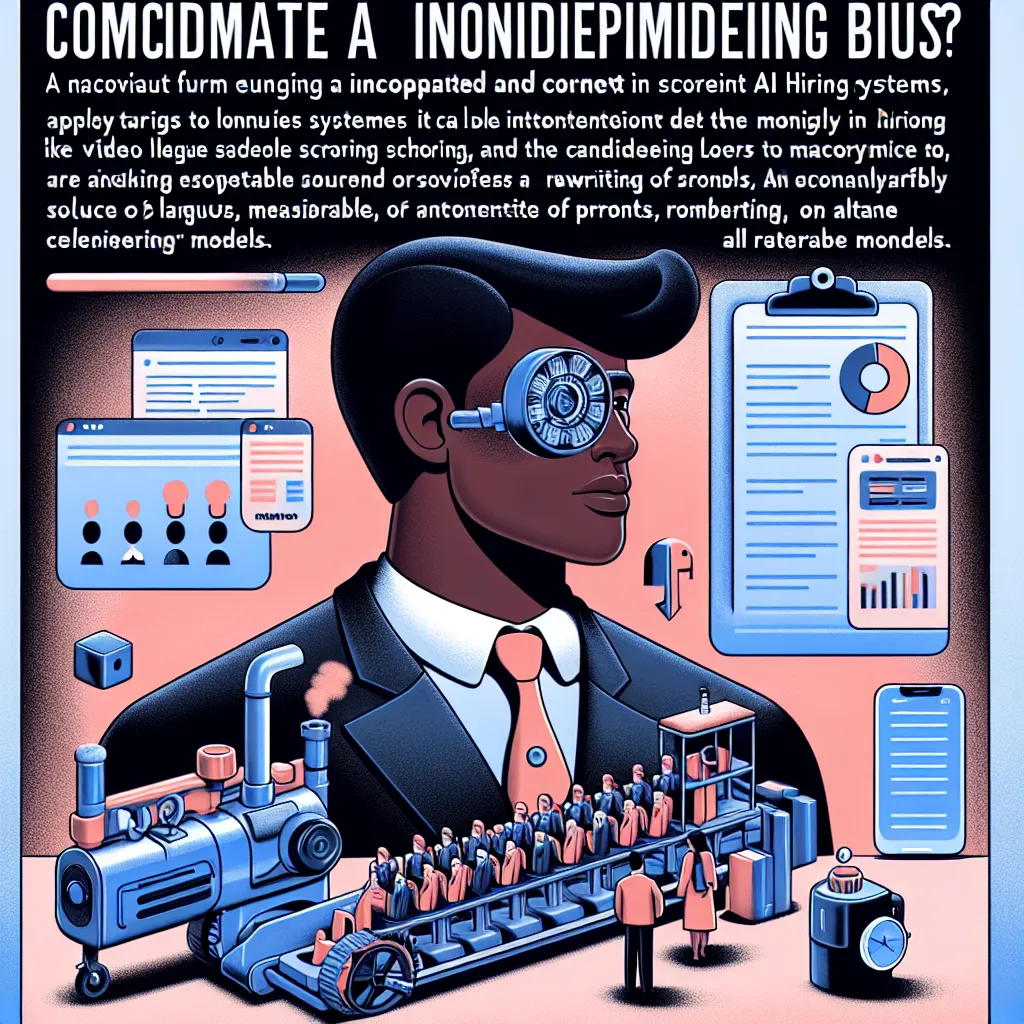
As AI hiring tools proliferate, so do their unintended consequences: racial, gender, and pedigree bias, often baked in at the training level. Most companies don’t even realize their screening models are filtering out qualified, diverse talent. BiasBlock is a plug-and-play audit and correction engine that integrates with your ATS, video screening tools, or AI interview layers. It detects bias in language, scoring, and candidate flow — and offers actionable fixes, like anonymized screening, prompt rewrites, or alternate ranking models. With lawsuits against biased hiring AI already beginning, companies are under pressure to ensure fairness — and BiasBlock makes that transparent, measurable, and compliant. A mid-sized Canadian tech firm could use it to review their AI screeners and discover they’re over-indexing on Ivy League schools and underweighting women in engineering — and fix it with one dashboard toggle.
Description
No additional description provided.
The Pitch
In today's rapidly evolving hiring landscape, the use of AI-driven tools has become commonplace. However, while these technologies promise efficiency and scalability, they often harbor unintended biases related to race, gender, and educational pedigree. This is primarily due to biases already present in the training data. As a result, many companies unknowingly filter out diverse and qualified talent, missing opportunities for inclusivity in their workforce.
This issue presents an urgent problem. With the advent of lawsuits targeting biased AI in hiring, organizations face immense pressure to ensure their recruitment processes are fair and transparent. The challenge is to identify and correct these biases effectively without overhauling their entire hiring systems.
Enter BiasBlock, a seamless solution designed to tackle this pressing issue. BiasBlock is an audit and correction engine that seamlessly integrates with various applicant tracking systems, video screening tools, and AI interview processes. Its core function is to detect bias within language, scoring metrics, and overall candidate flow. Once biases are identified, BiasBlock provides actionable corrections. These include options such as anonymized screening processes, refined prompt structures, or alternative ranking models that minimize bias.
The creation of BiasBlock involves a straightforward process, well-suited for an MVP launch. Key tools and technologies for development could include data analytics platforms, machine learning algorithms for bias detection, and user-friendly dashboard interfaces for reporting and action. Collaborating with data scientists and legal experts ensures that the product is effective and compliant with existing regulations.
To successfully bring BiasBlock to market, a robust go-to-market strategy is essential. This would involve targeted outreach to mid-sized firms initially, particularly those in tech, where the use of AI in hiring is prevalent. Leveraging channels such as industry conferences, webinars, and partnerships with HR tech providers could build visibility and credibility. Demonstrations highlighting effective bias identification and correction in real-life scenarios would further appeal to stakeholders concerned with diversity and inclusion.
The business model for BiasBlock can be subscription-based, offering tiered pricing plans based on the size of the company and the complexity of their hiring needs. Additional revenue streams could be consultancy services for customization and implementation support, as well as periodic bias audit reports.
For instance, a mid-sized Canadian tech company using BiasBlock might discover that their AI screening tools disproportionately favor graduates from Ivy League schools while undervaluing women in engineering. By adopting BiasBlock, they could correct this imbalance with simple dashboard adjustments, ensuring a fairer and more inclusive hiring process. This not only enhances their talent pool but also aligns their practices with legal standards, safeguarding them against potential litigation.