Battery-Heated Utensils for Warm Meals
Hot meals often become lukewarm after only a few bites, especially when eating slowly, outdoors, or while working. Microwaving food repeatedly hurts texture and interrupts the meal. Heated Smart Utensils keep every bite warm by incorporating safe battery-powered heating elements into forks, spoons, and knives that gently warm food as it's being eaten. Rather than reheating an entire plate, each bite stays at the ideal temperature from plate to mouth. As battery technology, compact heating elements, and portable electronics continue improving, consumers are increasingly willing to pay for products that make everyday experiences more enjoyable. Imagine taking twenty minutes to eat leftover pasta while working and having the final bite taste just as warm as the first.
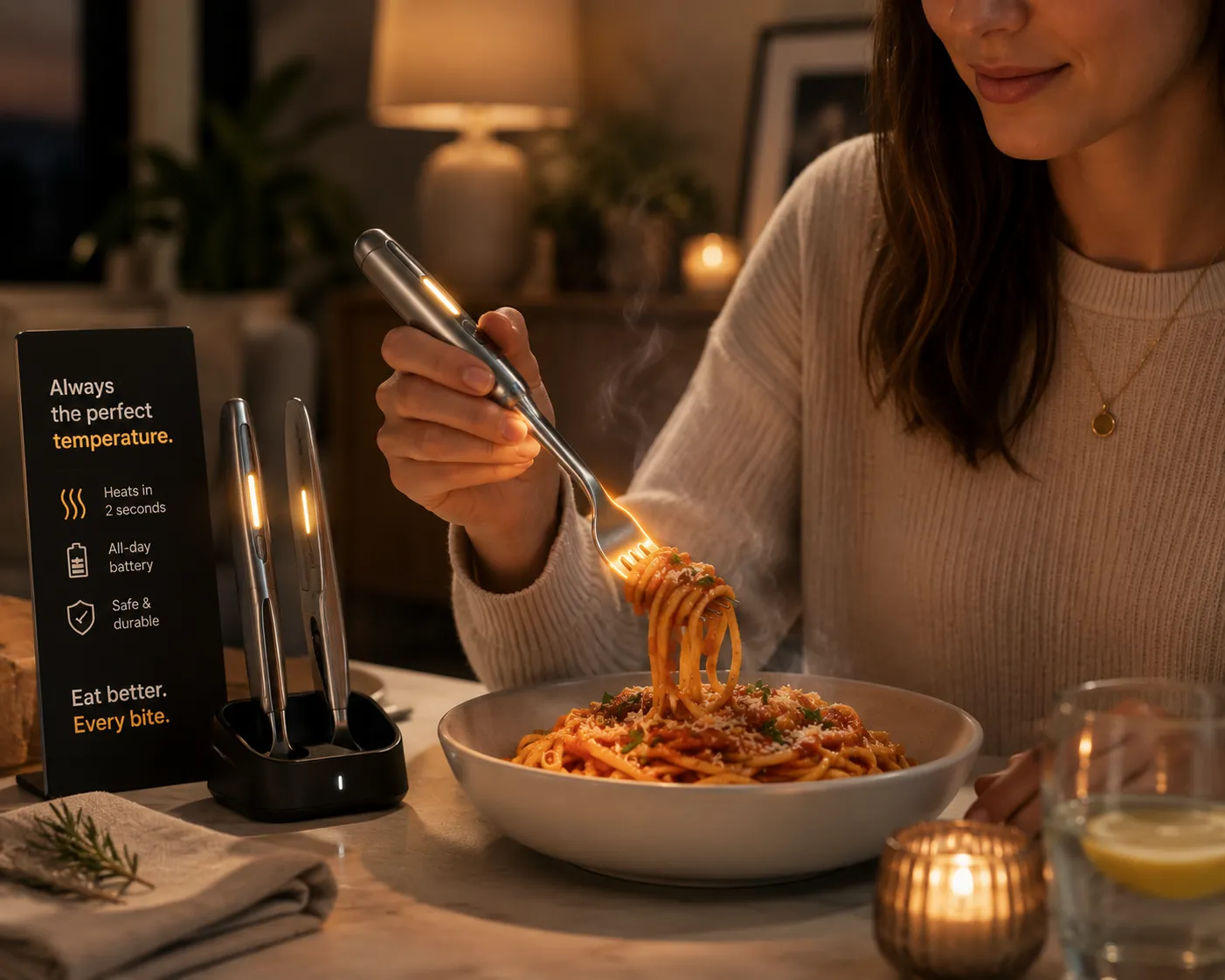
Description
No additional description provided.
The Pitch
Many people no longer eat meals in the tidy conditions meals were designed for. They eat at desks, in cars, on porches, between calls, while feeding children, or after being interrupted three times. The plate assumes attention. The utensil would adapt to distraction.
The interesting shift is that it moves heat from the kitchen appliance to the eating interface. Most food technology treats warmth as something managed before consumption: oven, stove, microwave, delivery bag. But the moment that matters is not when the food leaves the heat source; it is when it reaches the mouth. A utensil is unusually close to that moment, which makes it a precise place to intervene. Instead of blasting a whole dish to compensate for future cooling, it can preserve the experience bite by bite.
This also works because temperature has an outsized effect on perceived quality. A mediocre meal served hot often feels acceptable; a good meal gone cold can feel disappointing. Warmth carries signals of freshness, care, and comfort that are not purely rational. If a product can make ordinary leftovers, meal prep, takeout, and slow meals feel materially better without asking people to change what they eat, it is improving a daily ritual rather than inventing a new one.
The category would likely live in the same emotional territory as weighted blankets, high-end mugs, milk frothers, and noise-canceling headphones: products that seem unnecessary until they quietly improve a repeated discomfort. The frequency matters. This is not solving a rare inconvenience; meals cool every day, and the irritation is most visible to people with the least ceremony around eating. A small upgrade attached to a familiar object can become habit-forming precisely because it disappears into use.
The best version of the company would understand that the utensil is not competing with the microwave. It is competing with resignation: accepting that the last half of a meal is worse than the first. Businesses become durable when they reveal that a compromise people considered normal was actually optional. Here, the non-obvious truth is that “hot food” is not a kitchen state; it is a sequence of moments, and each one can be designed.