Backyard Funhouse: Transforming Yards into Pickleball Courts
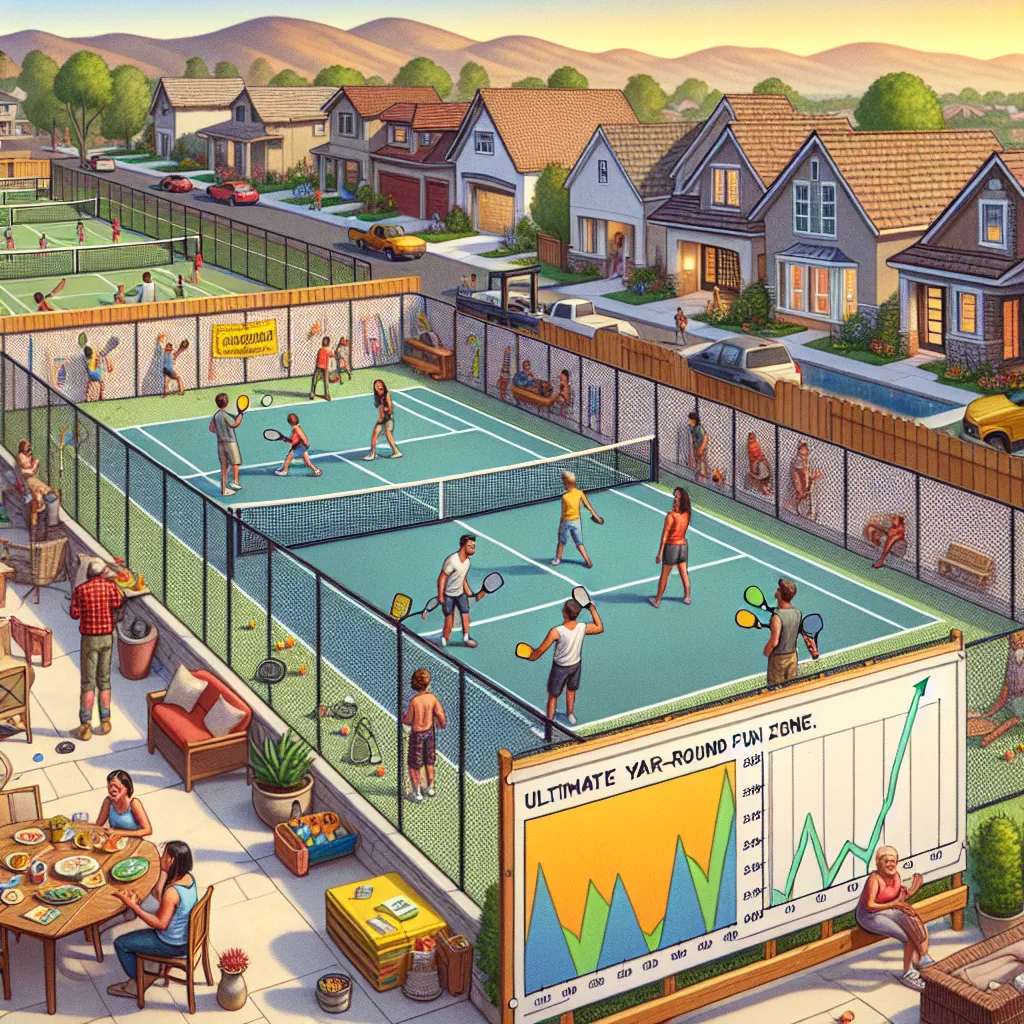
Every block now has that one backyard — the one with the pickleball court where the kids always end up. Installing those courts costs $40–60K, but demand is surging as families swap pools for “year-round fun.” Backyard Funhouse turns that demand into cash flow by coordinating local subcontractors to pour concrete, lay tiles, and add fencing, marking up projects 30–50%. The psychology is mimetic: neighbors copy neighbors, and “keeping up” becomes free marketing. With Google Trends showing “sport court” up triple digits, the backyard has become America’s newest status symbol — and a six-figure local hustle.
Description
No additional description provided.
The Pitch
In recent years, a noticeable trend has emerged in neighborhoods across the country. The backyard, once a simple patch of grass, has transformed into a status symbol and a hub for family entertainment. At the forefront of this transformation is the pickleball court, rapidly becoming a staple in modern backyards. This shift represents a golden opportunity for entrepreneurs looking to capitalize on a growing demand for customized backyard spaces.
**The Backstory**
Traditionally, backyards were designed for simplicity: a lawn, perhaps a deck, and maybe a pool for those who could afford it. However, priorities have shifted as families look for activities that offer year-round enjoyment without leaving home. The rise in the popularity of sports like pickleball has led to an increased demand for personalized backyard courts. These custom installations not only provide entertainment but also become a centerpiece for social gatherings and neighborhood envy.
**The Problem**
The main barrier for homeowners interested in installing these backyard courts is the cost and complexity of the process. Typical installations can range from 40 to 60 thousand dollars, involving multiple contractors and logistical challenges. Many potential customers are deterred by the perceived hassle of coordinating various subcontractors, from concrete pourers to tile layers and fencing experts.
**The Solution**
Enter Backyard Funhouse, a business designed to streamline the court installation process. By acting as a central coordinator, Backyard Funhouse simplifies the journey for homeowners. By managing relationships with local subcontractors, the company can offer a seamless, turnkey experience. Through strategic partnerships and efficient project management, Backyard Funhouse allows families to transform their backyards with minimal stress.
**Product Details**
Backyard Funhouse offers a range of customizable court options, from basic pickleball setups to multi-use sport courts. The process begins with a consultation to understand the homeowner's desires and requirements. Once a plan is established, the company coordinates with subcontractors to handle all aspects of construction, from concrete pouring to fencing installation. Customers can expect a high-quality court installed in a fraction of the time it would take to navigate the process independently.
**Tools for Launch**
To make launching Backyard Funhouse as a Minimum Viable Product (MVP) seamless, consider the following tools:
1. **Project Management Software**: Tools like Trello or Asana can help coordinate tasks and timelines with subcontractors.
2. **Customer Relationship Management (CRM) System**: Platforms like HubSpot or Salesforce can track customer inquiries and manage client interactions.
3. **Design Software**: Use design tools like SketchUp or AutoCAD to create visual mockups of court layouts for clients.
4. **Local Contractor Network**: Establish connections with reliable local subcontractors to ensure quality and timeliness.
**Go-to-Market Strategy (GTM)**
1. **Local Marketing**: Utilize geo-targeted online ads and community flyers to reach potential customers in specific neighborhoods.
2. **Partnerships**: Collaborate with local sports clubs and schools to offer demos or sponsor events, increasing visibility.
3. **Social Proof**: Leverage existing installations for testimonials and visual content. Encourage satisfied clients to share their experiences on social media.
4. **Referral Program**: Implement a referral program, incentivizing existing customers to recommend Backyard Funhouse to friends and neighbors.
**Business Model**
Backyard Funhouse operates on a markup model, adding a 30 to 50 percent margin to each project. This covers the cost of coordination and management while ensuring profitability. Additionally, consider offering maintenance packages or seasonal upgrades as ancillary revenue streams.
In conclusion, Backyard Funhouse presents a promising venture for those looking to capitalize on a burgeoning industry. By addressing the pain points of cost and complexity, this business not only meets the demand for backyard transformation but also creates a profitable and scalable model. Whether you're an entrepreneur seeking a new opportunity or a neighborhood visionary ready to bring joy and status to local backyards, the time to dive into this market is now.