AutopilotDAO: AI-Driven Fully Autonomous Businesses
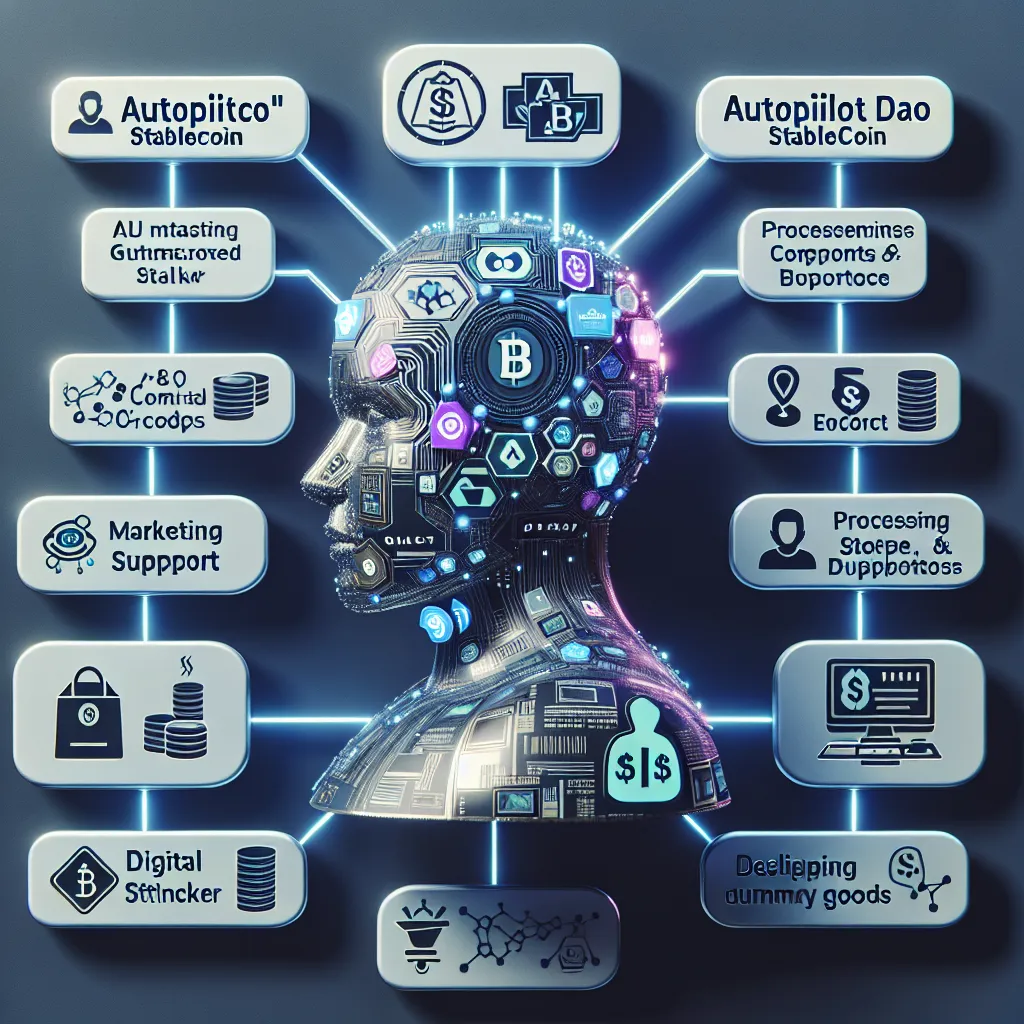
Most businesses today still rely on humans to operate—even when AI can generate content, answer questions, fulfill digital orders, and move money. The biggest bottleneck isn’t capability, it’s coordination: there’s no system where AI agents can truly run an entire company end-to-end. Enter AutopilotDAO—a fully autonomous business built from AI agents, smart contracts, and stablecoins. No CEO. No employees. Just software. Each agent handles a role—marketing, support, fulfillment—and they coordinate via onchain protocols and spend from a USDC treasury with predefined rules. Token holders vote on strategy and reinvestment, but day-to-day execution is fully automated. For example, someone launches “StickerCo,” a digital sticker shop. AI agents design stickers, market them on TikTok, process sales, fulfill digital goods, and use profits to expand—all without human involvement. As Coinbase builds rails for agentic commerce, AutopilotDAO imagines a future where entire companies are run by bots, not bosses.
Description
No additional description provided.
The Pitch
In today's rapidly evolving digital landscape, businesses are still predominantly human-operated despite the capabilities of advanced AI systems. While AI can generate content, respond to inquiries, handle digital transactions, and manage finances, the main challenge is not the ability but coordination. There is a noticeable absence of a system where AI agents can autonomously manage a company entirely. This is where AutopilotDAO comes into play—an innovative concept that imagines a fully autonomous business framework built using AI agents, smart contracts, and stablecoins. It removes the conventional hierarchy of CEOs and employees, replacing them with software solutions.
The main issue lies in the coordination of AI's capabilities to enable seamless, end-to-end management of businesses. Currently, AI solutions operate in silos, each capable of specific tasks but lacking integration for comprehensive business operation. These disconnected systems necessitate human oversight and decision-making to bridge gaps, which introduces inefficiencies and increases operational costs.
AutopilotDAO addresses this challenge by creating a decentralized and automated business model. It leverages AI agents to fulfill various business roles, such as marketing, customer support, and fulfillment, all coordinated through blockchain protocols. Financial transactions and budget allocations are managed using a USDC treasury with predefined rules, eliminating the need for manual intervention.
In this model, token holders assume a governance role, voting on strategic directions, and reinvestment plans, while day-to-day operations are wholly automated. For example, a business owner could launch StickerCo, a digital sticker store managed entirely by AI agents. These agents would handle design, marketing through platforms like TikTok, sales processing, digital product fulfillment, and use profits for scaling the business—all without any human participation. As companies like Coinbase develop the infrastructure for AI-driven commerce, AutopilotDAO envisions a future where businesses are managed by algorithms rather than individuals.
For anyone interested in building a Minimal Viable Product leveraging this paradigm, there are some essential tools and strategies to consider:
1. AI Development Platforms: Utilize platforms like OpenAI or Google AI to develop and deploy sophisticated AI agents capable of managing specific business tasks.
2. Blockchain Technologies: Integrate blockchain for transparent and secure financial transactions and operations management through platforms like Ethereum using smart contracts.
3. Stablecoin Utilities: Employ stablecoins such as USDC to ensure a steady value in transactions and treasury management within the business.
4. Coordination Protocols: Implement coordination protocols and frameworks such as Multi-agent Systems (MAS) to enable seamless interaction and task allocation among various AI agents.
The Go-to-Market (GTM) strategy for launching such an autonomous business could focus on niche markets initially, targeting tech-savvy consumers and businesses that are early adopters of AI and blockchain technologies. Building partnerships with blockchain service providers and AI platforms will be crucial for rapid deployment and scalability. Moreover, emphasis on community engagement through token holder participation can drive loyalty and trust in the system.
The business model rests on leveraging efficiency and scalability. By reducing the dependency on human labor, operational costs can be minimized. Revenue can be generated through the sale of digital goods and services, transaction fees, or subscription models for premium offerings. Furthermore, reinvestment of profits facilitated by the governance of token holders can continuously enhance the AI agents' capabilities and expand the business reach.
In conclusion, AutopilotDAO represents a radical shift in how businesses could operate, moving toward a future where AI systems autonomously manage companies. This approach not only streamlines operations but also democratizes business management by empowering decentralized participation and decision-making.