Autonomous Vehicle Crash Data Clearinghouse
Every autonomous vehicle company, regulator, taxi group, and researcher seems to have a different answer to the same basic question: are self-driving cars actually safer? The problem is not necessarily a lack of incidents, but a lack of neutral, comparable data. A startup should build the independent crash clearinghouse for autonomous transportation, combining police reports, vehicle telemetry, insurance claims, road conditions, video, and fault analysis into one standardized database. As autonomous vehicles enter more cities, billions of dollars in regulation, insurance, litigation, and public trust will depend on knowing what actually happened rather than whose press release sounds most convincing. Imagine a city considering whether to approve Waymo using the platform to compare its serious-injury rate against taxis, rideshare drivers, and human-operated vehicles traveling on the same streets under the same conditions.
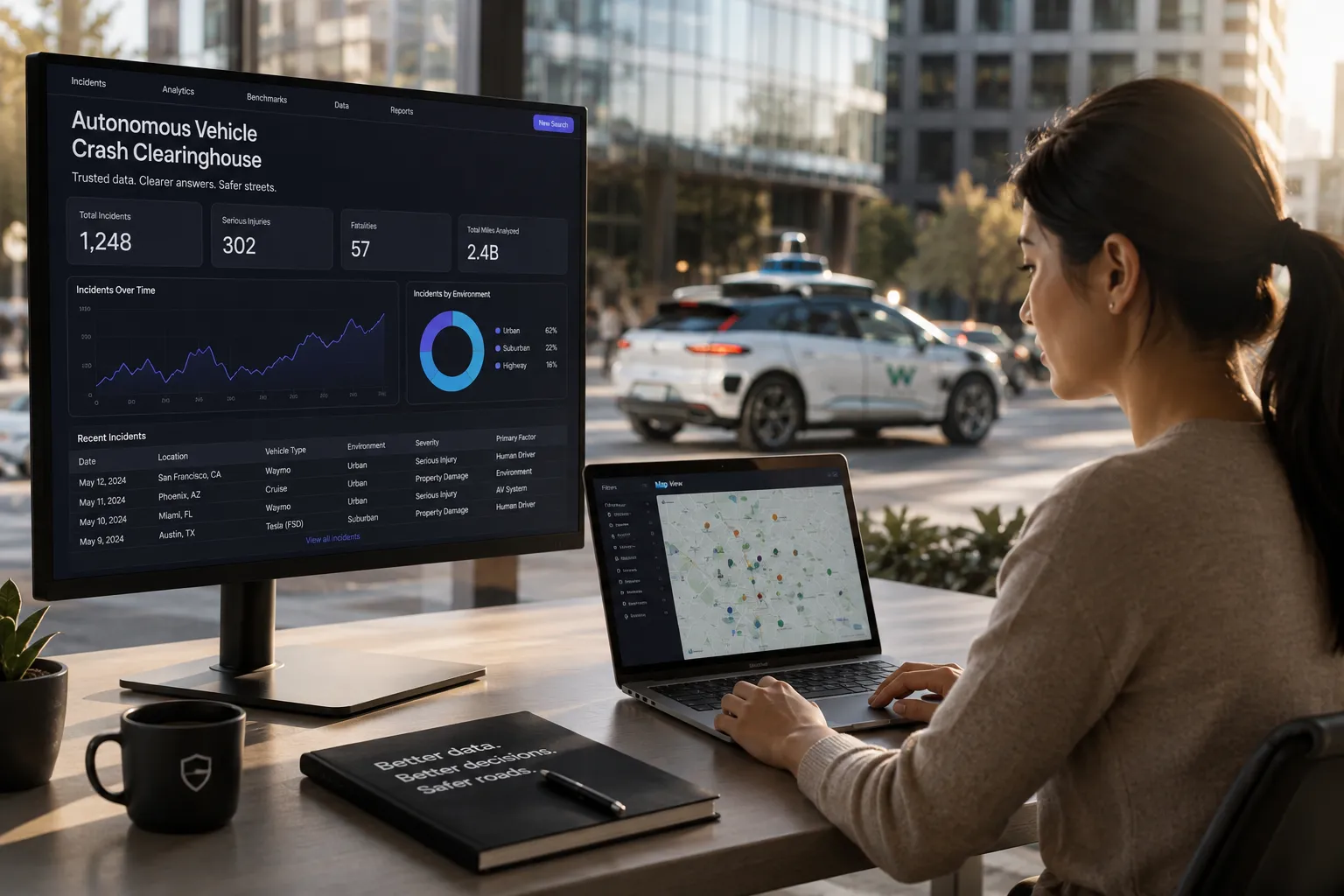
Description
No additional description provided.
The Pitch
Autonomous driving safety is not a single company’s internal metric; it is a public fact that no one currently owns. The more important the technology becomes, the less credible it is for its safety record to be measured by the people deploying it, attacking it, or regulating it from incomplete evidence. A neutral clearinghouse would sit in the gap between corporate self-reporting and anecdotal fear, turning messy accidents into shared infrastructure for judgment.
The valuable insight is that crashes are not just legal events; they are data events with many partial witnesses. Police reports capture one version, insurers another, vehicles another, road sensors another, and video yet another. Today those fragments are usually assembled only after something goes wrong badly enough to justify an investigation or lawsuit. A business that standardizes them before they become arguments would make every future decision less improvisational. Its power would come less from collecting “more data” than from making different kinds of evidence speak the same language.
The market would also have unusual durability because trust in autonomy will not be settled once. It will have to be renegotiated city by city, weather pattern by weather pattern, vehicle model by vehicle model, and edge case by edge case. A system that appears safe in Phoenix may not deserve the same assumptions in Boston snow, near school zones, or during construction detours. The need is not a one-time certification stamp but a living reference layer for a technology whose risk profile changes whenever software, maps, sensors, or streets change.
The strongest businesses often emerge where everyone needs the answer but no single participant can be trusted to provide it. Car companies, cities, insurers, plaintiff lawyers, fleet operators, and researchers would all disagree about conclusions, but they would benefit from arguing over the same underlying record. That creates a rare kind of neutrality advantage: the company becomes more useful precisely because its customers have conflicting interests.
If autonomous vehicles become normal, the question will shift from whether they are impressive to whether they are accountable. The company that defines the factual record of autonomous crashes could become as important to transportation as credit bureaus are to lending or reference labs are to medicine: mostly invisible, deeply relied upon, and hard to replace once its definitions become the ones everyone uses.