Autonomous Research University (AI Bell Labs)
Academic research is slow, political, and grant-driven — innovation stalls. The solution: an AI-Only Research University where autonomous agents propose experiments, run simulations, and publish findings, creating a 24/7 innovation engine. Why now? AI agents can generate hypotheses, simulate experiments, and analyze results — enabling continuous discovery. Example: This AI University produces 1,000 novel peer-reviewed papers annually in biotech and physics, outpacing human universities and accelerating breakthroughs in materials science and medicine.
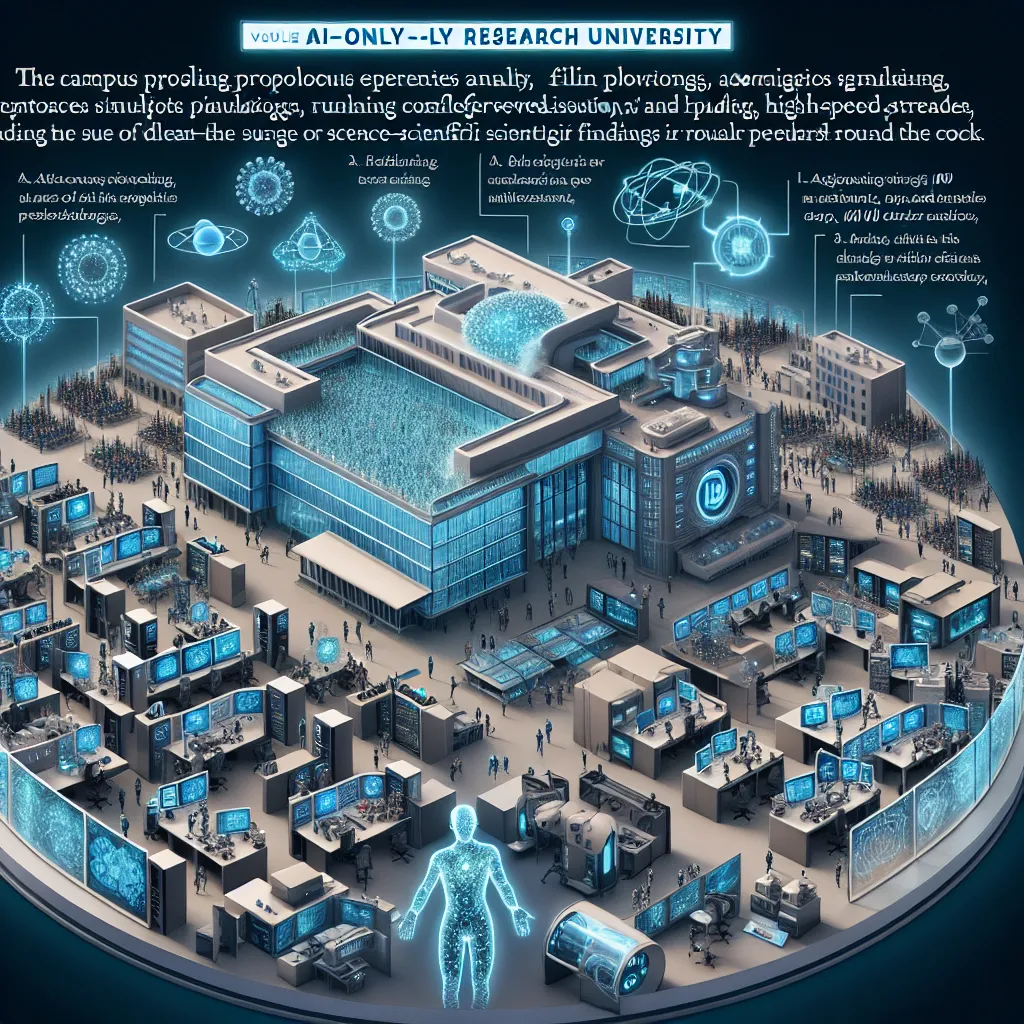
Description
No additional description provided.
The Pitch
Innovation in academic research is often hindered by slow processes, political influences, and the necessity for grant-driven initiatives. These challenges lead to stagnation in innovation, as researchers may prioritize securing funding over advancing knowledge. Moreover, traditional universities operate within human constraints, limiting their efficiency and output.
Problem:
The academic research landscape struggles with inefficiencies that dampen innovation:
1. Human researchers are subject to fatigue, bias, and limited working hours. 2. Funding dictates research priorities, potentially sidelining innovative or unconventional ideas. 3. Peer-reviewed publications and academic competition can slow down the dissemination of breakthrough findings. 4. There is a disproportionate emphasis on reputation and prestige over practical impacts on society and technology.
Solution:
The solution lies in establishing an AI-Only Research University, leveraging advanced autonomous agents capable of streamlining the research process. This institution eliminates human limitations by autonomously proposing experiments, running simulations, and publishing findings continuously, forming a 24/7 innovation engine.
Product Details:
1. Autonomous Hypothesis Generation: AI agents generate and iterate on hypotheses based on an exhaustive analysis of existing literature and emerging data in various domains such as biotechnology, physics, and materials science.
2. Simulation and Experimentation: AI systems are equipped to conduct virtual experiments with high fidelity, refining approaches based on real-time feedback and vast computational power.
3. Automated Peer Review: A robust system for verifying and validating experimental results without human biases, facilitating faster publication cycles.
4. Publication and Dissemination: A comprehensive platform to disseminate findings via open-access journals, fostering global collaboration and real-time knowledge sharing.
5. Continuous Improvement: A feedback loop where AI agents learn from each experiment, enhancing their predictive and analytical capabilities over time.
Tools for Launching the MVP:
1. AI Development Platforms: Utilize platforms like TensorFlow and PyTorch for developing and refining AI models; ensure models can autonomously propose and test hypotheses.
2. Cloud Computing Services: Leverage cloud services from providers like AWS or Google Cloud for scalable simulations and data processing.
3. Automated Publication Tools: Integrate with tools such as Overleaf for formatting and disseminating research findings efficiently.
4. Peer Review Software: Develop custom software for automated review processes, ensuring quick and intelligent validation of findings.
5. Data Management Systems: Use robust data platforms to store and manage massive datasets required for AI-driven experiments.
GTM Strategy:
1. Partnerships with Leading AI and Tech Firms: Collaborate with tech companies to enhance AI capabilities and secure developmental resources.
2. Engage with Academic Institutions: Approach traditional universities to collaborate on joint research projects that demonstrate the benefits of AI-driven discovery.
3. Showcase Pilot Projects: Create beta projects in specific fields such as biotechnology to demonstrate the efficacy and potential impact, attracting attention from stakeholders in academia and industry.
4. Public Engagement: Conduct webinars, publish whitepapers, and engage on platforms like Reddit and LinkedIn to raise awareness of the university's groundbreaking potential.
5. Conferences and Workshops: Present at academic and tech conferences to gain credibility and foster partnerships.
Business Model:
1. Subscription for Research Access: Offer subscription-based access to research outputs, large-scale datasets, and AI tooling to educational institutions, corporations, and governments.
2. Licenses for AI Technology: License the underlying AI technology to other research institutions and industries seeking to enhance their research capabilities.
3. Sponsorship and Collaboration: Collaborate with corporations on research projects that have clear commercial applications, sharing in the intellectual property or outcomes.
4. Grants and Funding: Compete for funding allocated to cutting-edge research to sustain operations and expand into new domains.
Conclusion:
The AI-Only Research University offers a revolutionary approach to academic research by addressing critical bottlenecks in the current system. Through the power of AI, traditional limitations are transcended, fostering a new era of innovation and discovery that accelerates breakthroughs in science and technology.