Autonomous Digital Community Management
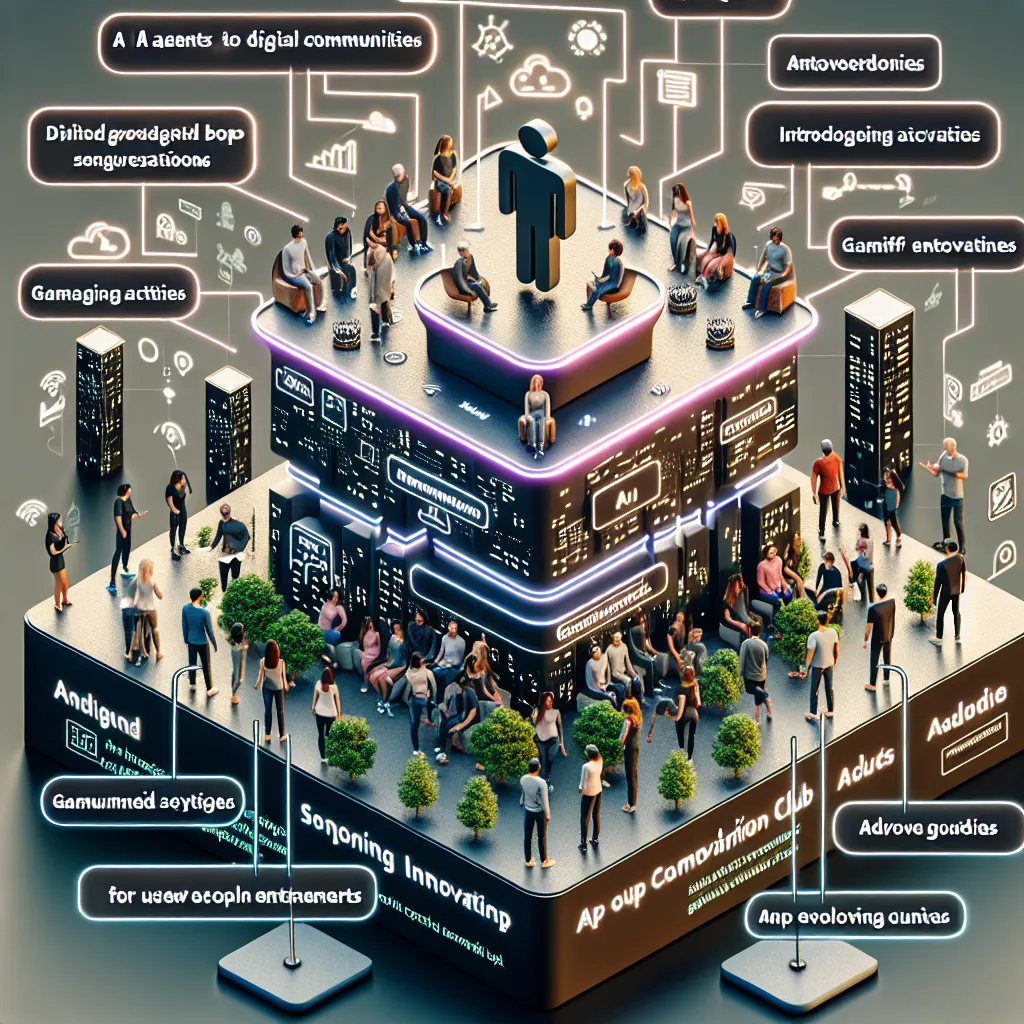
Building online communities is labor-intensive and error-prone. A startup could develop AI agents that autonomously launch, nurture, and scale branded digital communities. They would moderate, introduce rituals, gamify interactions, and adapt community guidelines based on sentiment — all without human managers. Riding on the community-centric trend, this tool would make fandoms and loyalty programs self-growing ecosystems. For example, a tech gadget brand could launch a pop-up innovation club where members earn points for idea contributions, run entirely by AI from onboarding to engagement.
Description
No additional description provided.
The Pitch
Creating and managing online communities is often a complex and time-consuming task, riddled with potential pitfalls and manual errors. However, the increasing trend towards community-centric engagement presents a unique opportunity for innovation. The concept is to develop an innovative platform that leverages AI agents to autonomously establish, manage, and scale branded digital communities. These AI agents would be designed to handle tasks such as moderation, introducing community rituals, gamifying interactions, and adapting community guidelines based on member sentiment, all without the need for human oversight.
Backstory: With the surge in digital interactions and the shifting focus towards community-driven marketing, businesses are seeking efficient ways to engage their audience meaningfully. Traditional methods of community management often require significant human resources and can be prone to oversight. Recognizing this gap, the idea is to harness AI to transform community management into a seamless and automated process.
Problem: Building and nurturing online communities are resource-intensive operations that demand constant attention from community managers. These tasks include moderating discussions, preventing conflicts, initiating engaging activities, and ensuring community guidelines are followed. The manual approach not only consumes time and effort but also limits the scalability and responsiveness of communities.
Solution: The solution lies in developing AI agents tasked with the streamlined management of online communities. These agents would operate autonomously, employing natural language processing and sentiment analysis to monitor interactions, resolve disputes, and ensure a healthy community atmosphere. By introducing scheduled rituals and gamified elements, these AI agents can drive sustained engagement and loyalty among community members. The use of this technology would empower brands to create self-sustaining communities that thrive on member participation and interaction.
Product Details: The proposed platform would offer an intuitive dashboard for brands to set up and launch their digital communities. Users could define initial parameters such as community guidelines, desired rituals, and interaction themes. The AI agents then take over, functioning as community managers to moderate discussions, reward member contributions through gamification, and adapt guidelines based on sentiment analysis. The platform would provide real-time analytics to track community growth and engagement, with suggestions for enhancements based on AI-driven insights.
Tools for Launch: - AI and machine learning frameworks for natural language processing and sentiment analysis - Gamification SDKs to integrate interactive elements within the community - Cloud-based platforms for hosting and managing online communities - Analytics tools for real-time monitoring and reporting
Go-To-Market (GTM) Strategy: The GTM strategy would focus on targeting brands that heavily rely on community engagement, such as tech companies, entertainment franchises, and lifestyle brands. By demonstrating case studies and success stories from early adopters, the platform's effectiveness can be showcased. Collaborations with industry influencers and thought leaders would further help in gaining traction. Educational webinars and workshops could be used to introduce the concept and its benefits to potential clients.
Business Model: The business model would adopt a subscription-based pricing strategy, offering tiered packages based on the features and level of customization desired by the client. Additional revenue streams could include premium add-ons like advanced analytics, custom AI configurations, and dedicated support services. A freemium model could be implemented to attract small businesses and startups, allowing them to experience basic features before opting for advanced capabilities. This approach would enable scalable growth, driving customer acquisition while establishing a steady revenue stream.