Autonomous Defense Platforms: From Inception to Implementation
Autonomous defense platforms represent the next phase of military innovation, driven by the need for scalable, strategic deterrents without human risk. The backstory stems from modern warfare's shift to asymmetric, high-tech engagements where speed and autonomy are critical. The problem is that human-operated systems are slow, costly, and vulnerable—military forces need faster, adaptive tools. The solution is a suite of autonomous machines: trench-digging robots, stealth drones, AI-guided tanks, and subs, plus smart landmines that can differentiate civilians from combatants. As noted: "Autonomous subs, autonomous tanks, autonomous trench digging machines." and "Smart landmines that can tell if someone is a civilian." These systems could change defense logistics and battlefield ethics—imagine a warzone where mines deactivate for fleeing civilians but arm for tanks. Though pieces of this exist in R&D, a comprehensive platform integrating these capabilities remains to be built. The opportunity lies in creating intelligent, rules-based machines that scale military power while reducing unintended harm.
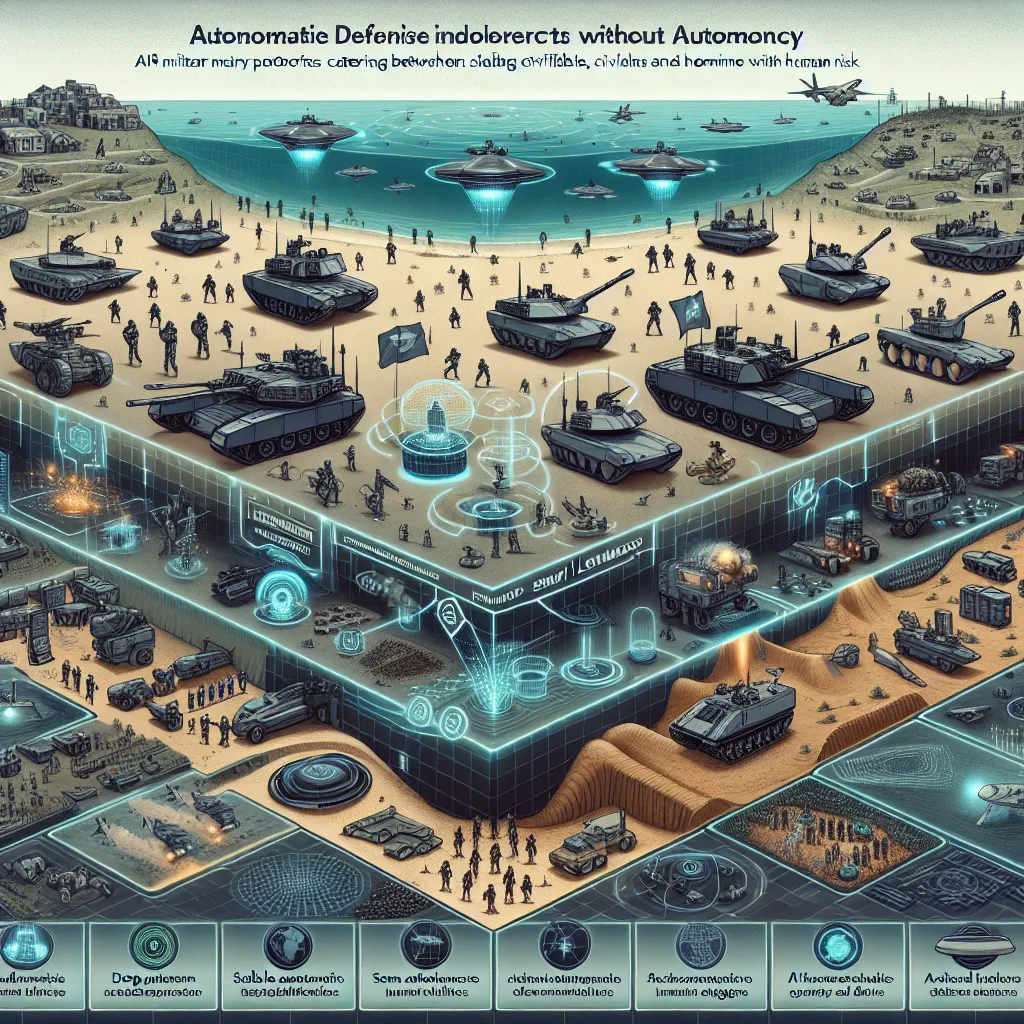
Description
No additional description provided.
The Pitch
The evolution of modern warfare demands a shift towards more scalable and technologically advanced systems. The current landscape is prominently marked by asymmetric warfare, where rapid response and minimal human risk are paramount. This document outlines a comprehensive approach for an entrepreneur interested in developing autonomous defense platforms, leveraging advanced technologies to meet modern military needs.
**Backstory**
Historical military engagements heavily relied on human-operated systems, which are increasingly becoming ineffective against modern threats that are dynamic and tech-driven. The backlash from human casualties, the financial burden of extensive training and deployment, and the slow reaction time of manned platforms highlight significant vulnerabilities in defense tactics.
**Problem Statement**
Traditional defense systems are fraught with challenges such as high costs, slow response times, and significant human risk. In conflicts characterized by guerilla tactics and remote attacks, these systems fail to offer the agility and precision required.
**Proposed Solution**
Developing a suite of interconnected autonomous defense platforms comprising: - **Trench-Digging Robots:** For rapid fortification in volatile zones. - **Stealth Drones:** Capable of surveillance without detection. - **AI-Guided Tanks and Submarines:** To enhance frontline offensives with minimal human intervention. - **Smart Landmines:** That can differentiate between civilians and combatants, thus minimizing collateral damage and preserving ethical standards in warfare scenarios.
These platforms would be governed by robust AI systems with strict adherence to predefined rules of engagement, ensuring ethical considerations are met while enhancing combat effectiveness and strategic deterrence.
**Product Details**
1. **Autonomous Trench-Digging Machines:** These robots will use AI to quickly analyze the terrain and strategically dig trenches or bunkers that provide safety and strategic advantages to allied forces.
2. **Stealth Drones:** Equipped with advanced cloaking technology, these drones can perform reconnaissance missions without being detected by enemy radar.
3. **AI-Guided Tanks and Submarines:** Integrating AI to navigate and make tactical decisions based on real-time data, reducing the need for human input and risk.
4. **Smart Landmines:** These landmines will incorporate friend-or-foe recognition technology to avoid unintended civilian casualties, only activating when a legitimate threat is detected.
**Tools for MVP Development**
- **Simulation Software:** Utilize virtual environments to test the AI algorithms and mechanical functionalities without initial physical prototypes. - **AI Development Platforms:** Tools like TensorFlow and PyTorch to develop and train AI models. - **Rapid Prototyping Tools:** 3D printing and CAD software for designing and refining physical components.
**Go-To-Market Strategy**
1. **Collaboration with Defense Contractors:** Leveraging their networks and resources can facilitate quicker adoption and integration into national military services.
2. **Pilot Programs:** Implement trial-based deployments in controlled environments to showcase capabilities and refine systems.
3. **Partnerships with Allied Nations:** Engage in strategic partnerships with countries sharing similar defense interests to expand market reach and obtain feedback.
**Business Model**
The venture can operate on a B2G (business-to-government) model, where revenue is generated through contracts from defense departments for product development, sales, and aftermarket services. The inclusion of subscription models for ongoing software updates and maintenance can ensure a steady revenue stream while keeping the platforms up-to-date with the latest technological advancements.
**Conclusion**
The proposition of autonomous defense platforms addresses critical needs in modern military strategies by enhancing responsiveness, reducing human casualties, and cutting operational costs. The entrepreneurial journey from concept through development, piloting, and commercialization will involve deep collaboration with defense stakeholders, adherence to ethical standards, and a strong focus on technological innovation. This venture not only promises substantial business returns but also the potential to redefine military engagements across the globe.