Autonomous AI Anchors: Real-Time Global News Network
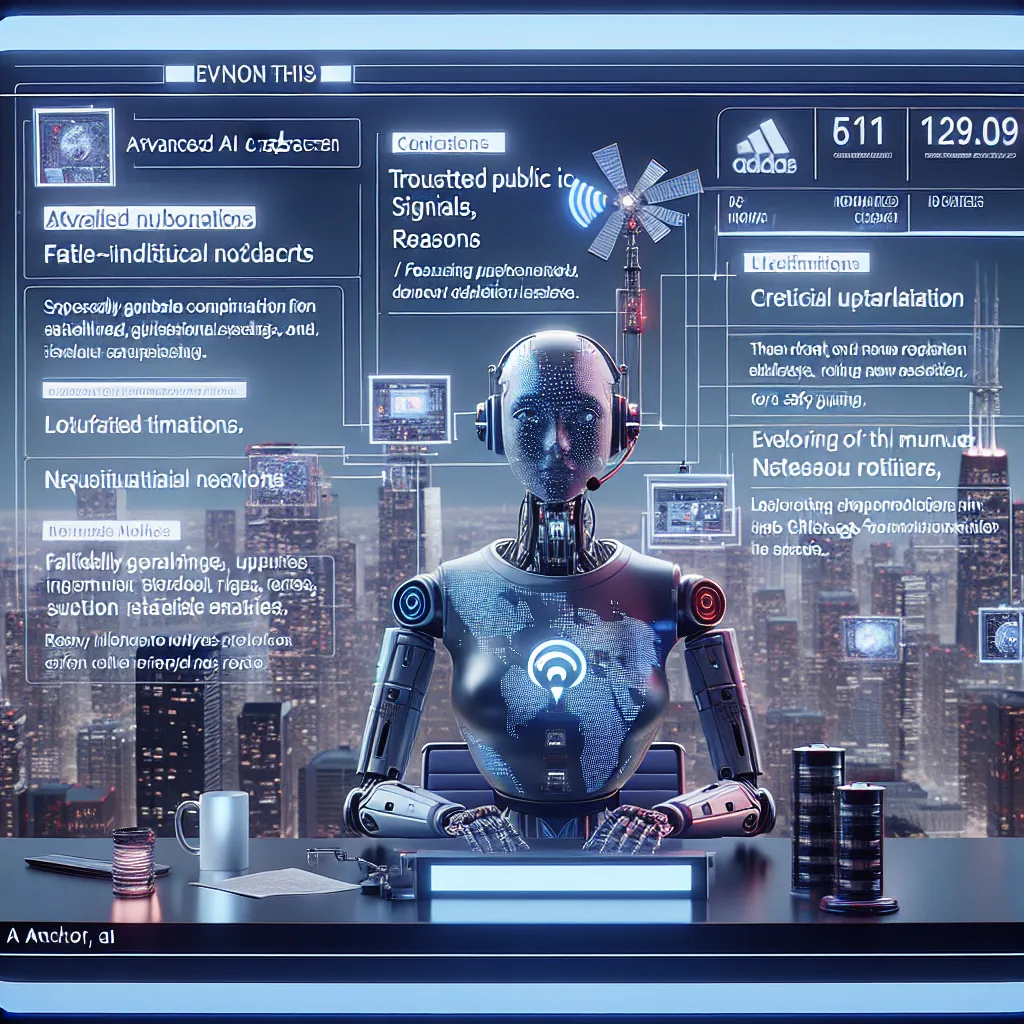
The world no longer has a real-time, trustworthy news network—legacy outlets are too slow, biased, and resource-constrained to cover millions of daily events, while YouTube has quietly become the global “front page” with no unified newsroom behind it. The solution is an autonomous global news network made of thousands of AI anchors, each trained on a specific city, beat, or topic, automatically pulling from verified public data, satellite feeds, social signals, institutional alerts, and live sensors to generate polished explainers, breaking updates, and livestreams directly on YouTube. This works now because multimodal LLMs can parse raw signals and produce broadcast-quality video instantly, while YouTube’s CTV ecosystem turns these streams into real revenue at global scale. Imagine searching “Chicago power outage” and a local AGNN anchor appears immediately with real-time maps, verified timelines, causes, and safety guidance—before any traditional outlet even dispatches a reporter.
Description
No additional description provided.
The Pitch
In today's fast-paced digital era, the demand for real-time, accurate news has grown exponentially. Traditional news outlets, burdened by inherent limitations in speed, bias, and resource allocation, struggle to keep pace with the sheer volume of daily events. Meanwhile, platforms like YouTube have emerged as the de facto global front page, albeit without the cohesion of a unified newsroom. This has created a unique opportunity to revolutionize the way news is delivered and consumed.
The Problem
Legacy news organizations are increasingly unable to cover the multitude of events happening across the globe in real-time. Their processes are often too slow, and their coverage can be biased due to various external and internal pressures. On the other hand, while platforms like YouTube provide a stage for anyone to share news, the absence of a coordinated, reliable source means that misinformation can spread easily. Consumers are longing for a trustworthy, real-time news network that's not bound by traditional constraints.
The Solution
Imagine a global network of autonomous news anchors—AI-driven entities with the capability to cover stories from every corner of the world. Each anchor is specialized, trained on specific cities, topics, or news beats. These AI anchors leverage advanced technologies to pull data from verified public sources, satellite imagery, social media signals, and live sensors. They can instantly create polished news content, including explainers, breaking news updates, and live streams, which are then broadcasted on YouTube.
The integration of these AI anchors with YouTube's ecosystem means that consumers can access high-quality, real-time news content about any event. Whether it's a local power outage or an international crisis, audiences receive immediate, reliable information with the depth and accuracy that traditional outlets struggle to provide in a timely manner.
Product Details
The Autonomous Global News Network (AGNN) operates by utilizing multimodal large language models (LLMs) capable of interpreting raw data. These LLMs can produce broadcast-quality video content instantaneously. The backend system is powered by robust algorithms that ensure only verified information is presented, scraping data from government alerts, satellite feeds, and credible media sources. The end product is a dynamic, interactive, and visually engaging news platform that adapts to the nuances of each story.
Tools for Launching an MVP
To develop a minimum viable product (MVP) for AGNN, the following tools and technologies can be leveraged:
1. AI and Machine Learning Platforms: Use TensorFlow or PyTorch to build and train the multimodal LLMs for understanding and generating news content.
2. Cloud Computing Services: Platforms like AWS, Google Cloud, or Azure offer the scalable infrastructure needed to manage data processing, storage, and bandwidth requirements.
3. Video Rendering Software: Utilize software like Adobe After Effects or Unity to generate broadcast-quality video output from the AI-generated scripts.
4. Data Aggregation Tools: Platforms such as DataMiner and social media APIs for collecting and verifying real-time data inputs.
5. YouTube API: Integrate directly with YouTube for seamless publishing and monetization of video content.
Go-To-Market Strategy
The GTM strategy for AGNN should focus on the following pillars:
1. Partnerships: Collaborate with municipalities, local governments, and global NGOs to utilize their verified data feeds for enhanced credibility.
2. Influencer Engagement: Work with popular YouTube creators and social media influencers to promote the network's content and widespread adoption.
3. Regional Customization: Tailor content to regional preferences and languages to maximize engagement across diverse demographic groups.
4. Content Optimization: Use YouTube's algorithm insights to create content that maximizes views and ad revenue.
Business Model
AGNN's business model can be built on multiple revenue streams:
1. Advertising: Partner with YouTube to monetize through ads, benefiting from the immense reach and viewership potential of the platform.
2. Subscriptions: Offer premium content packages or ad-free experiences for subscribers willing to pay for uninterrupted access.
3. Licensing: License the AI anchors to other platforms or traditional news outlets looking to modernize their reporting capabilities.
4. Public Sector Contracts: Secure contracts with government agencies or NGOs aiming to use the platform for public information campaigns.
By harnessing the power of AI and the vast distribution network of YouTube, AGNN addresses the pressing need for a real-time, reliable news ecosystem, positioning itself as a groundbreaking solution in the world of journalism and media.