Autonomous AI Agents Revolutionizing Business Operations
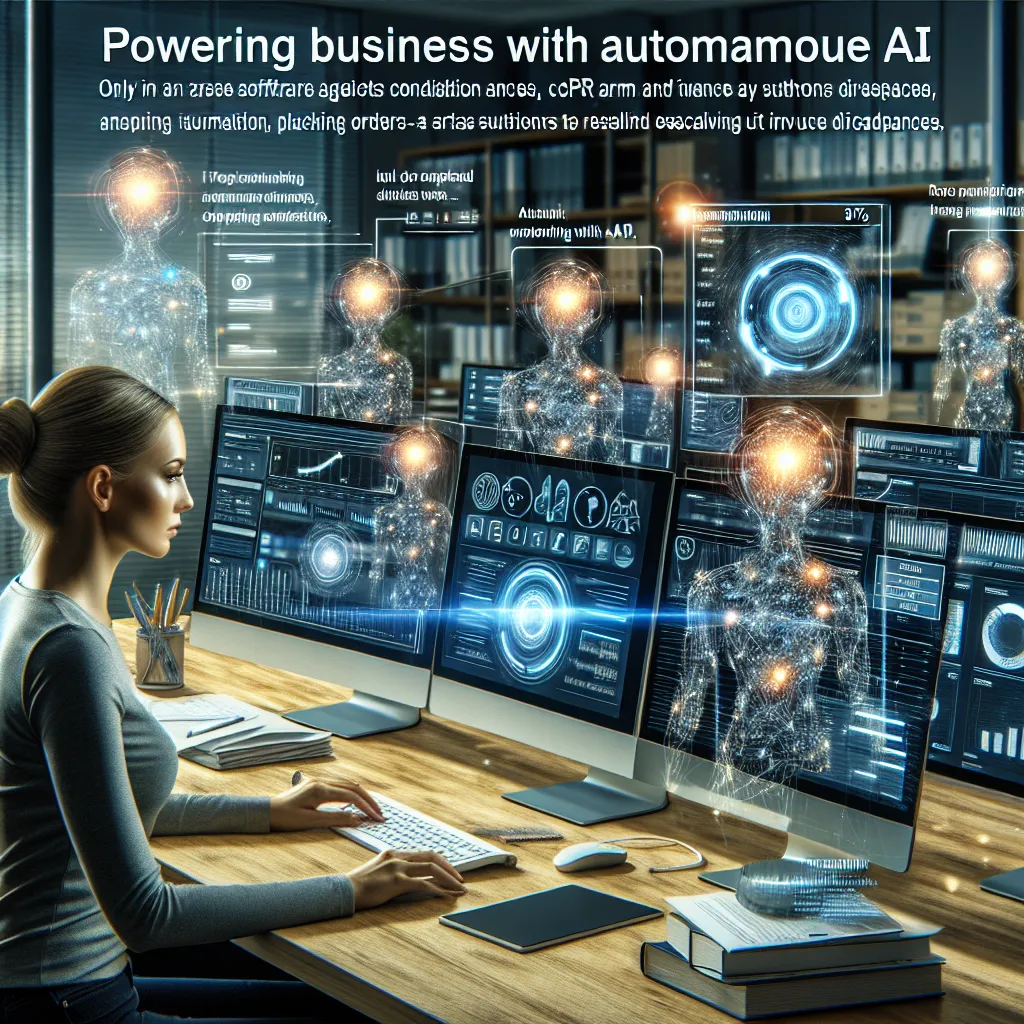
Most companies still rely on humans to move tasks between systems — purchase orders, compliance checks, invoicing. Problem: Manual handoffs are slow, error-prone, and expensive. Solution: A B2B agent network — autonomous AI agents that coordinate across a company’s ERP, CRM, finance tools — without human involvement. They place orders, resolve invoice discrepancies, and escalate only edge cases. Why Now: LLM agents are getting capable enough (AutoGPT, BabyAGI models), but there’s no secure, enterprise-grade orchestration layer yet. Example: A mid-sized logistics firm could deploy agents to auto-reconcile bills of lading with shipment invoices, reducing manual finance headcount by 60%.
Description
No additional description provided.
The Pitch
In today's fast-paced business environment, companies still heavily depend on manual processes to move tasks between various systems, such as purchase orders, compliance checks, and invoicing. This reliance on human intervention results in workflows that are slow, error-prone, and costly. As companies seek to optimize operations and reduce overhead, the demand for more efficient, automated solutions is increasing.
**Problem Statement**
The manual execution of business processes presents several challenges. First, manual handoffs are time-consuming and introduce delays into critical workflows. Additionally, they are prone to human error, which can lead to costly mistakes and inefficiencies. Finally, the labor costs associated with maintaining a human workforce to manage these processes are significant, impacting the overall profitability of a business.
**Proposed Solution**
The solution is to develop a B2B agent network composed of autonomous AI agents designed to facilitate seamless communication across a company's various systems—including ERP, CRM, and finance tools—without the need for human involvement. These AI agents would autonomously perform tasks like placing orders, resolving invoice discrepancies, and escalating only when encountering edge cases that require human decision-making.
**Product Details**
The core product offering would be an enterprise-grade orchestration layer powered by advanced AI models such as AutoGPT and BabyAGI. This layer would ensure secure and reliable operation of the AI agents across the company’s existing infrastructure. Key features would include:
- Seamless Integration: Capability to interface with existing ERP, CRM, and finance software. - Autonomous Operation: AI agents operate independently, managing tasks and reducing human oversight requirements. - Customizable Protocols: Tailored task workflows that fit the specific needs of an organization. - Edge Case Management: Escalation protocols for scenarios that require human judgment.
**Tools for MVP Launch**
To develop and launch this Minimum Viable Product (MVP), companies would leverage the following tools:
- AI Development Platforms: Use existing platforms for creating large language models like OpenAI’s APIs or Google’s AI solutions. - Workflow Automation Tools: Incorporate tools like Zapier or n8n to create customizable workflow automations. - Security Infrastructure: Implement enterprise-grade security solutions to ensure data integrity and compliance.
**Go-To-Market Strategy**
The initial GTM strategy would focus on targeting mid-sized companies in industries like logistics, healthcare, and manufacturing where operational efficiencies are critical. Key steps in the strategy include:
- Market Research: Conduct detailed industry analysis to identify key pain points and potential early adopters. - Strategic Partnerships: Collaborate with ERP and CRM vendors to provide integrated solutions. - Pilot Programs: Launch pilot programs with a select number of companies to gather feedback and demonstrate value. - Marketing Campaigns: Use case studies and testimonials to highlight success stories and drive awareness.
**Business Model**
The business model would be subscription-based, offering tiered pricing based on the complexity and scale of deployment. Additional revenue could be generated through professional services, including customization support and consulting, as well as premium support packages.
By adopting this model, organizations can significantly streamline their operations, reducing their reliance on human resources for routine administrative tasks, and enabling them to focus on strategic initiatives that drive growth and innovation. The convergence of recent advancements in AI with enterprise automation needs presents a unique opportunity to revolutionize how businesses operate.