Automated Visual Grading Tool for Teachers
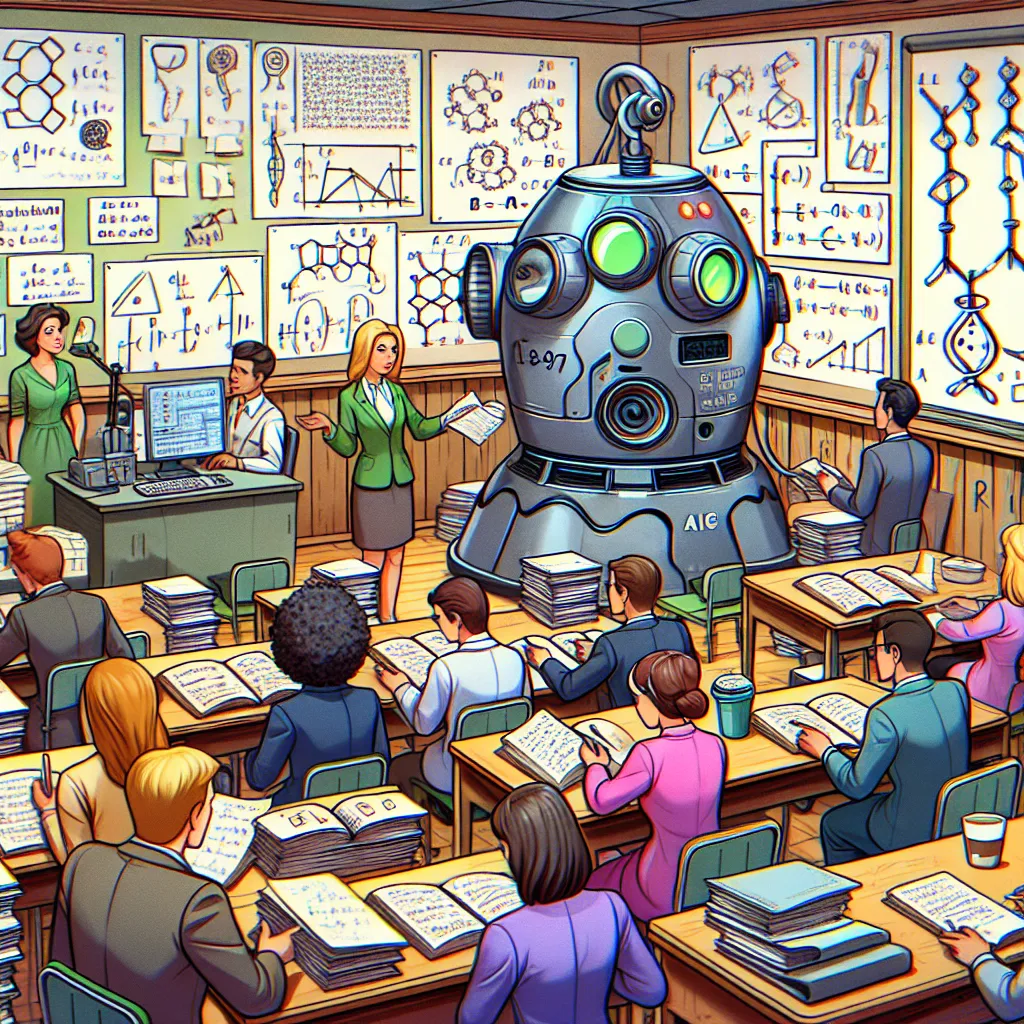
Teachers lose hours grading student assignments that involve visuals—biology diagrams, geometric proofs, or lab sketches. GPT-4o can now reason about such visuals and provide automated feedback. An education tool could let teachers upload entire batches of student work (photos or PDFs), and the AI grades them, flags errors, and generates comments. For example, a teacher uploads 25 scanned cell diagrams and gets instant grading with notes like “labels are correct, but mitochondria are missing.” This frees up time for lesson planning and personalized help.
Description
No additional description provided.
The Pitch
In today's education landscape, teachers face significant challenges in managing their workload, particularly when it comes to grading assignments that involve complex visuals such as biology diagrams, geometric proofs, or lab sketches. These tasks are exceptionally time-consuming and can detract from the valuable time teachers could spend on lesson planning and providing personalized assistance to students.
To address this issue, we propose an innovative education tool designed to streamline the grading process for visual-based assignments. Leveraging advanced AI capabilities similar to those found in GPT-4o, this tool can analyze and provide feedback on visual content, thereby helping teachers manage their time more efficiently.
The proposed solution would enable teachers to upload entire batches of student assignments, whether in the form of photos or PDFs. The AI system would then automatically grade each submission, flag any errors, and generate detailed feedback. For example, after a teacher uploads 25 scanned images of cell diagrams from a biology class, the system could instantly assess and provide feedback like labels are correct, but mitochondria are missing. Such a tool not only saves time but also ensures consistent and accurate grading.
In terms of product details, the tool would feature a user-friendly interface that allows for easy uploading and organization of student work. It would be equipped with robust algorithms capable of recognizing and understanding various visual elements typical in educational contexts. Integrations with popular Learning Management Systems (LMS) could further streamline the process, allowing for seamless data handling and storage.
To develop and launch this product as a Minimum Viable Product (MVP), a few key tools and platforms could be utilized. OpenAI's API would serve as the foundational technology for visual analysis and feedback generation. Cloud storage solutions like AWS or Google Cloud could facilitate the secure handling of sensitive data. A front-end framework such as React or Angular could be used to build the user interface, ensuring responsiveness and ease of use.
Our Go-To-Market (GTM) strategy would focus on direct engagement with educational institutions and teacher networks to underscore the time-saving benefits of the tool. Demonstrations and pilot programs could initially be offered to schools to showcase the effectiveness of the solution. Marketing efforts would emphasize the dual benefits of improving grading efficiency and enhancing the quality of student feedback.
The business model for this tool could involve a subscription-based service, offering different tiers based on the number of students or specific features required by individual users or institutions. Additionally, partnerships with educational technology firms could broaden the tool's reach and integration capabilities with existing platforms.
Ultimately, the development and implementation of this AI-powered grading tool has the potential to significantly transform the educational landscape, allowing teachers to devote more time to what truly matters: teaching and supporting their students.