Automated AI Refinement for Error-Free Outputs
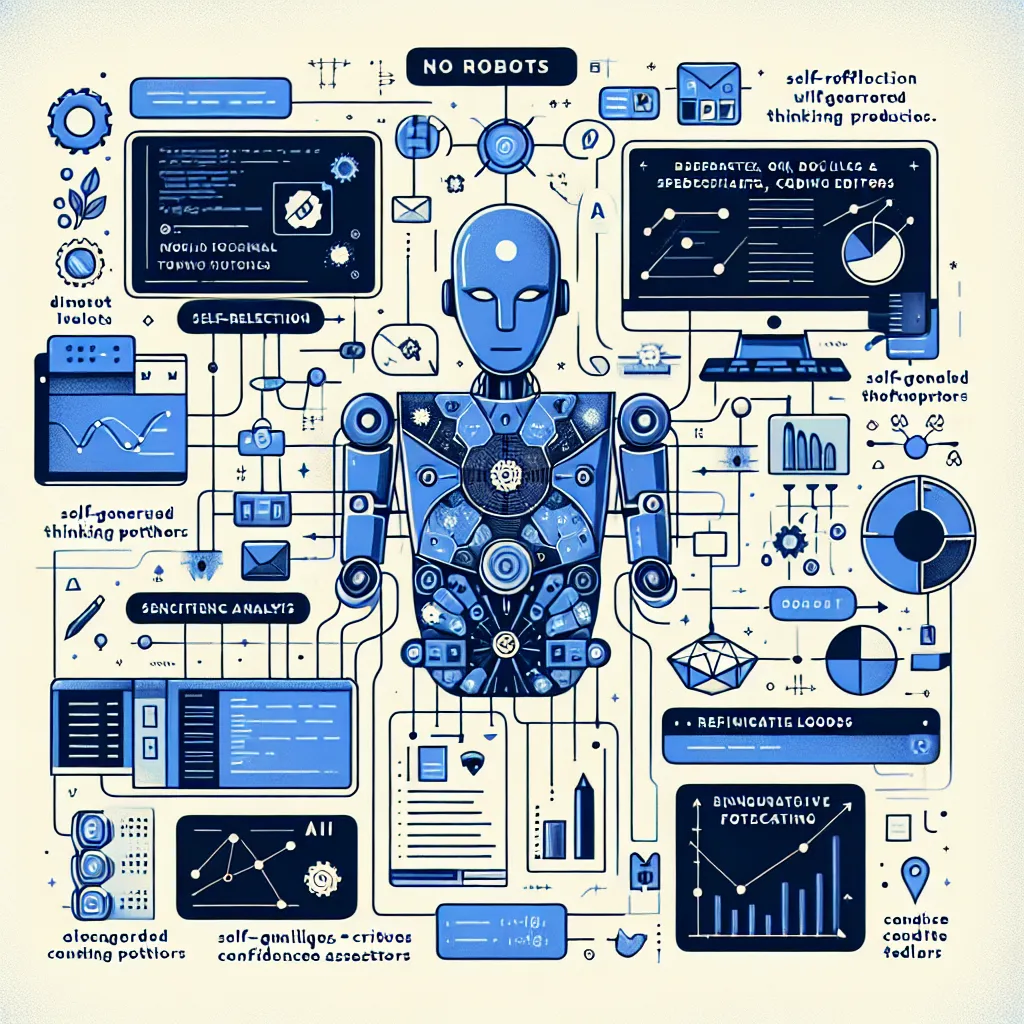
Most AI outputs are “first drafts pretending to be answers,” and humans are stuck doing the hard part: checking, revising, and validating. This company embeds structured refinement loops directly into everyday work tools — email, docs, spreadsheets, code editors — so AI is required to critique, challenge, and improve its own output before a human ever sees it. Not optional. Not prompt-based. It enforces iterative reasoning, source checks, and counterfactual testing as part of the workflow. The timing is perfect because enterprises are discovering that raw generation scales errors faster than productivity. Imagine a financial forecast that ships with its own adversarial critique, sensitivity analysis, and confidence score — generated automatically, every time.
Description
No additional description provided.
The Pitch
In recent years, the integration of artificial intelligence (AI) into everyday work tools has accelerated at an unprecedented pace. However, with this rapid integration comes a unique set of challenges. Many AI outputs are merely first drafts, requiring significant human intervention to ensure accuracy and reliability. This often results in humans having to shoulder the burden of checking, revising, and validating AI-generated content. To address this issue, there is a need for a paradigm shift that emphasizes AI's role in its own iterative refinement and validation processes.
Backstory:
The demand for AI-driven solutions to enhance productivity across various sectors has led to the widespread adoption of AI tools. However, many enterprises have discovered that while AI can generate outputs quickly, it often scales errors just as fast as it boosts productivity. This realization has highlighted the necessity for AI systems that can self-evaluate, critique, and refine their outputs before presenting them to humans.
Problem:
The core problem is the reliance on human intervention to ensure the accuracy and reliability of AI outputs. Many AI-generated documents, forecasts, and analyses lack the necessary validation and refinement, leading to potential errors and inefficiencies. This problem is exacerbated in scenarios where large volumes of data and outputs are involved, making it difficult for humans to effectively manage error correction and validation.
Solution:
The proposed solution is an innovative system that embeds structured refinement loops directly into everyday work tools such as email, documents, spreadsheets, and code editors. This system requires AI to critique, challenge, and improve its own output before any human sees it. By enforcing iterative reasoning, source checks, and counterfactual testing as integral parts of the workflow, it ensures that AI outputs are not only accurate but also reliable.
Product Details:
1. Integration with Existing Tools: Seamlessly integrates with popular work tools like Microsoft Office Suite, Google Workspace, and various code editors. 2. Automated Critique and Refinement: Utilizes AI to perform adversarial critiques, sensitivity analyses, and confidence scoring on its own outputs. 3. Real-Time Source Checking: Ensures that all information and data used by AI are consistently checked against reliable sources in real-time. 4. Counterfactual Testing: AI engages in scenario analysis and hypothetical testing to anticipate and correct potential errors. 5. Transparent Workflow: Provides users with detailed logs and reports of all refinement processes, promoting transparency and trust.
Tools for MVP Launch:
1. OpenAI or GPT API: Utilize advanced language models for initial AI generation capabilities. 2. TensorFlow or PyTorch: Frameworks for developing and training the refinement loop algorithms. 3. Zapier Integration: Automate workflow connections between various apps and tools. 4. Google Cloud Platform or AWS: For scalable cloud-based deployment and data processing.
Go-to-Market Strategy:
1. Early Adopter Program: Partner with select enterprises for early access to the system while gathering vital user feedback. 2. Industry Focus: Target industries like finance, healthcare, and legal, where accuracy is critical and the risk from errors is high. 3. Thought Leadership: Publish case studies and white papers to highlight the success and reliability of the system. 4. Partnerships: Collaborate with major software providers for integrated solutions.
Business Model:
1. Subscription-Based Model: Offer tiered subscription plans based on organization size and feature access. 2. Enterprise Licensing: Provide large-scale organizations with licensed versions for in-house implementations. 3. Consultation and Customization Services: Offer additional services to tailor the system to specific industry needs or unique organizational workflows.
Conclusion:
By embedding structured refinement loops into AI-powered tools, this system sets a new standard for accuracy and reliability in AI outputs. As enterprises increasingly recognize the risk of unrefined AI generation, this solution presents a timely and necessary advancement in the field of AI integration.