Animal Translator
An AI-powered animal translator would analyze vocalizations and body language to help humans understand and communicate with animals, improving pet care and veterinary diagnostics. This technology leverages advances in multimodal AI and affordable sensors to interpret animal behavior and needs more accurately.
Description
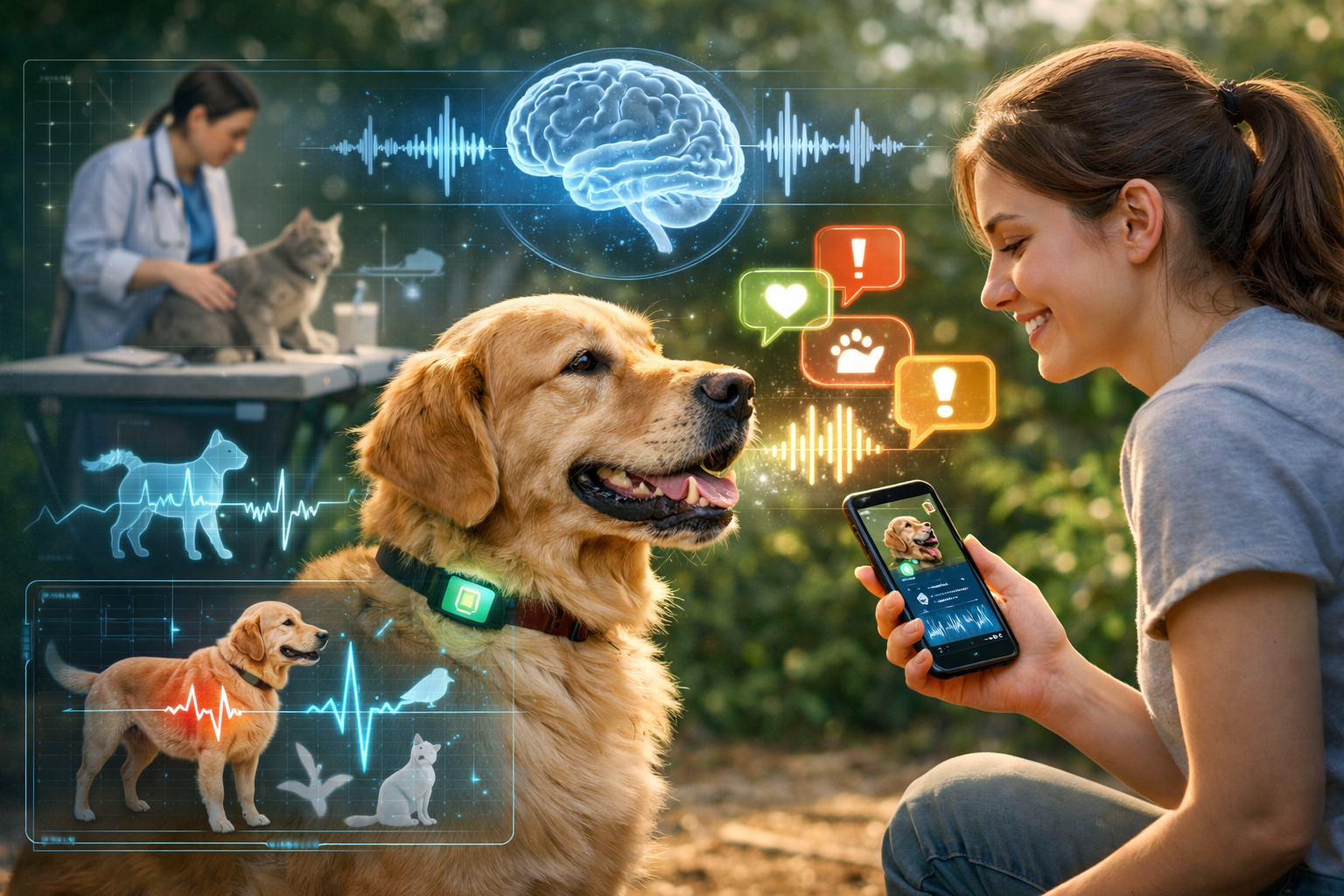
Humans spend billions caring for animals but still rely largely on guesswork to understand what they're trying to communicate. An AI-powered animal translator could analyze vocalizations, body language, movement, and environmental context to identify what animals are expressing and eventually help humans communicate back. Advances in multimodal AI, audio recognition, and inexpensive wearable sensors make it increasingly practical to identify patterns across millions of animal interactions. For example, a dog owner could use their phone to understand whether repeated barking indicates anxiety, excitement, or a specific need, while veterinarians could use the same technology to identify signs of distress that might otherwise go unnoticed.
The Pitch
Imagine a world where pet owners can truly understand their furry companions, where the nuances of barks, meows, and even the subtleties of tail wags can convey more than mere instinct. An AI-powered animal translator represents a breakthrough in our relationship with pets, transforming the way we interpret their needs and emotions. This concept taps into the deep emotional bond that humans share with animals by providing them with a voice, bridging an age-old communication gap that often leads to misinterpretation and frustration.
The allure of this business lies not only in its promise of enhanced companionship but also in addressing a critical gap in the pet caregiving market. Pet owners often grapple with uncertainty about what their animals are feeling, leading to potential behavioral issues, harm, or missed health concerns. By leveraging cutting-edge AI technology, this venture could move beyond mere observation, offering insights into the emotional and physical well-being of pets. Once equipped with the ability to decode animal sentiments, owners could make informed decisions, from training adjustments to proactive health measures, ultimately leading to happier, healthier pets.
Moreover, the application of this technology goes beyond the realm of pet ownership. Veterinarians, animal shelters, and trainers could significantly enhance their practices by integrating these insights into their routines. A vet armed with knowledge of an animal's distress through a vocalization or body language pattern can diagnose issues that might otherwise go unnoticed. This capability could elevate the standard of pet care and animal welfare, fostering environments where animals are treated with the understanding they deserve.
Additionally, the scalability of this technology raises intriguing prospects. As data accumulates from diverse interactions across various species, the AI’s machine learning capabilities improve, enabling it to identify not just individual behaviors but species-wide patterns. The breadth of insights gleaned could pave the way for research breakthroughs in animal behavior, enhancing our understanding of wildlife and domesticated animals alike.
This business embodies the spirit of innovation that resonates with today’s tech-savvy and emotionally aware consumers. People increasingly seek deeper connections with animals, and an AI translator allows them to experience a genuine dialogue, shifting the paradigm from one of silent care to meaningful interaction. As we stand at the crossroads of technology and empathy, the potential of an animal translator holds the promise of revolutionizing our connections with the animal kingdom.