Album Review Community for Music Discovery
Music discovery today is almost entirely driven by algorithms, playlists, and popularity rankings, leaving little room for thoughtful discussion around albums as complete artistic works. While movie lovers have platforms like Letterboxd to review, discuss, and discover films through people with similar tastes, there is no equivalent community built specifically around music. LP brings that experience to albums, allowing listeners to rate records, write reviews, follow reviewers with similar taste, track listening history, and discover new artists through people rather than recommendation engines. With streaming services reducing music to individual songs and TikTok accelerating the decline of the album experience, there is renewed demand for communities centered around intentional listening and discussion. Someone who loves Radiohead could follow reviewers whose tastes consistently align with theirs, discover forgotten albums from decades ago, and revisit how their own opinions evolve over time.
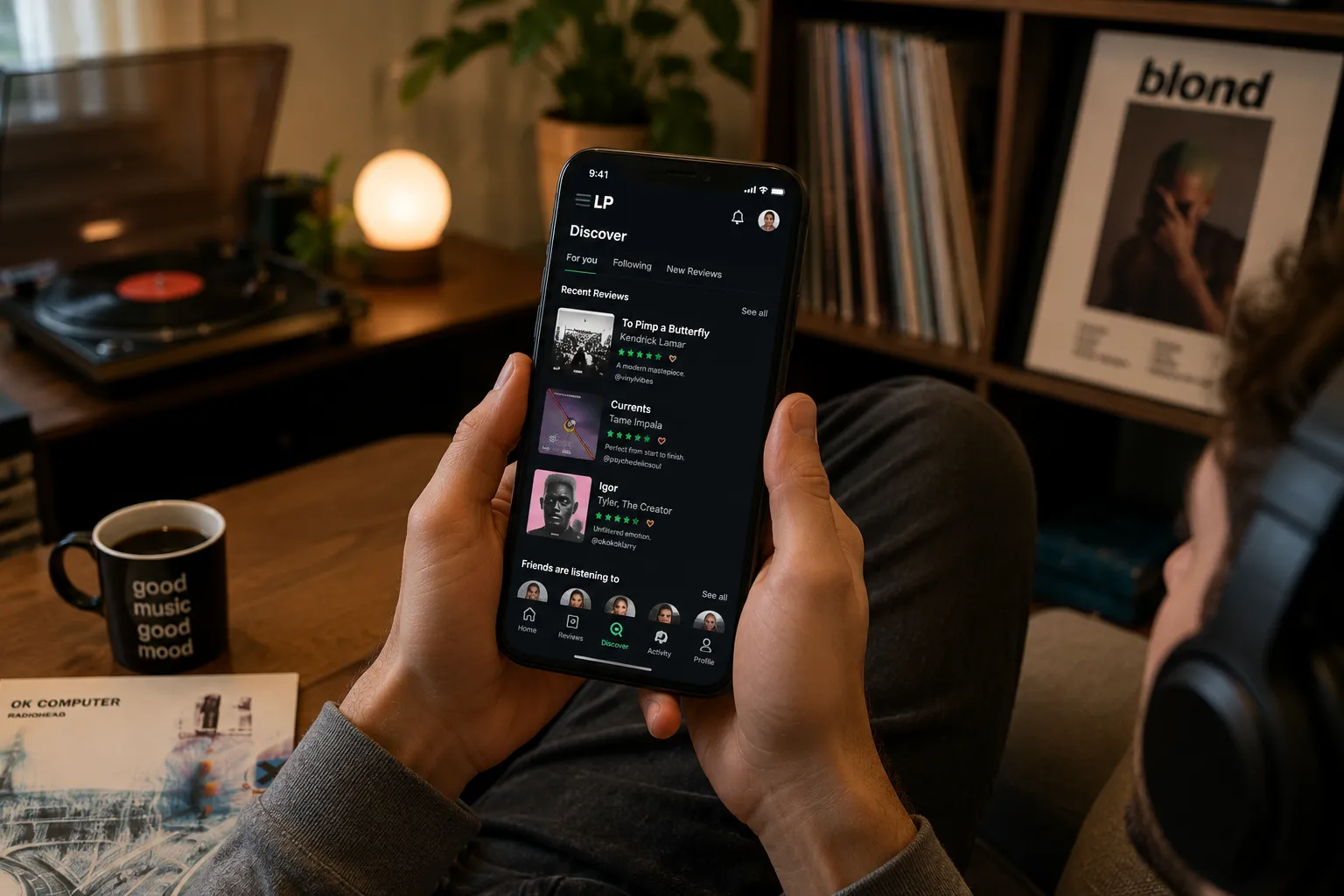
Description
No additional description provided.
The Pitch
A business like this is compelling because music has become abundant but socially thin. Streaming solved access so completely that the next scarce thing is not the recording itself, but a trusted interpretation of what is worth your time. People do not only want more recommendations; they want recommendations with a point of view. The difference between “because you liked this” and “because this person heard something in it that you might hear too” is the difference between consumption and taste formation.
Albums are especially interesting because they create a natural unit of memory. Songs are often ephemeral, but albums become eras in a listener’s life: what you played after a breakup, what made sense in college, what finally clicked ten years late. A product organized around albums is not merely cataloging media; it is helping people build a personal archive of aesthetic change. That kind of archive tends to get more valuable with age, because the user is not just saving opinions, but preserving versions of themselves.
The strongest communities form when disagreement is pleasurable rather than toxic, and music has that property. A negative review of a beloved album can be irritating, funny, persuasive, or clarifying without needing to become a culture war. The subject is personal enough to matter but usually not so consequential that it becomes unbearable. That makes it unusually well-suited to a durable social graph based on taste, where following a stranger can feel more intimate than following an acquaintance.
There is also a quiet advantage in being adjacent to the streaming giants rather than trying to replace them. The large platforms are optimized for playback, retention, and licensing economics; they are structurally bad at making listeners feel like critics, collectors, or participants in a scene. A separate layer can benefit from the ubiquity of streaming while giving listeners something the streaming apps have little incentive to provide: identity around listening rather than just efficiency of listening.
The deeper opportunity is that music discovery has been treated as a personalization problem when it is also a cultural problem. Great records often spread because someone makes a case for them at the right moment. A company that captures those cases, connects them to taste, and makes them searchable over time could become a living map of how music moves through people, not just through charts.