AI with Adaptive Long-Term Memory Layer
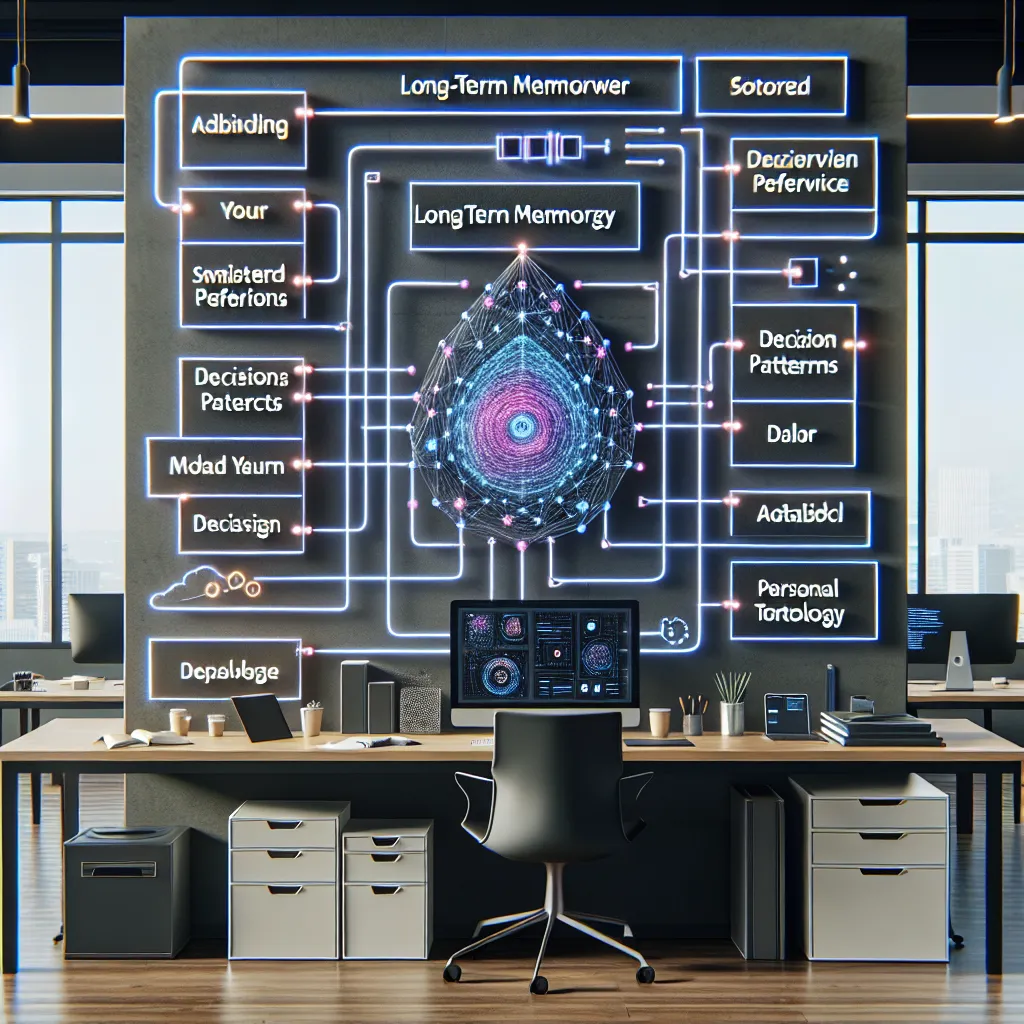
AI tools still forget everything outside the current window, forcing products to hack context rather than build persistent identity. A long-term memory layer stores user preferences, work artifacts, decision patterns, and personal ontology, feeding back only the relevant slices to any model in real time. As context windows grow but remain expensive, memory routing becomes the differentiator for truly adaptive apps. A design tool could remember your brand’s colors, layout tendencies, and past feedback cycles, producing new assets perfectly aligned with your evolving taste.
Description
No additional description provided.
The Pitch
In the rapidly evolving landscape of artificial intelligence, a significant challenge persists: AI models often struggle with context retention beyond their immediate inputs. This limitation forces developers to implement complex workarounds to simulate context memory, thereby constraining the true potential of adaptive applications. Addressing this issue can redefine the way AI tools interact with users by enabling a persistent memory layer that augments their functionality.
Background and Problem Statement: AI tools, particularly those used in creative and decision-making processes, need the ability to remember user preferences, nuances of past interactions, and specific decision patterns. However, the current architecture of AI models involves context windows that dictate how much information can be processed at a time. These context windows are not only limited in size but also incur substantial computational costs as they grow, making it impractical to increase capacity indefinitely.
The existing solutions for handling this limitation often involve external data storage and retrieval systems that inelegantly patch the problem without truly solving it. This results in adaptive applications that fall short of becoming truly personalized and responsive.
Proposed Solution: Introduce a Persistent Memory Layer: This layer functions as a dynamic storage system that archives user-specific data such as preferences, content interactions, and decision patterns. It acts as a continuous learning repository that updates in real time based on user interactions. The key innovation lies in its ability to intelligently retrieve only the relevant slices of this stored data, optimizing the inputs provided to AI models and enhancing their contextual understanding at any given moment.
Product Details: 1. User Preferences Archive: Track and store individual user preferences over time, such as frequently used colors, preferred stylistic choices, and customizations. 2. Interaction Patterns: Maintain a history of user interactions to predict future needs and suggest optimal tools or options. 3. Adaptive Feedback Mechanism: A feedback loop that continually refines the memory layer’s understanding of user context, improving the relevance of future interactions. 4. Real-Time Contextual Retrieval: Employ sophisticated algorithms to deliver pertinent memory slices to AI models without overwhelming the system. 5. Security and Privacy: Implement robust encryption and privacy controls to ensure the user's data remains secure and aligns with regulatory standards.
Tools for MVP Launch: - Develop using a combination of cloud storage solutions (like AWS or Google Cloud) for scalable and secure data management. - Employ machine learning frameworks such as TensorFlow or PyTorch to build and train context retrieval algorithms. - Use API integration tools to seamlessly connect the memory layer with various AI models.
Go-To-Market Strategy: - Target creative professionals, designers, and enterprise-level decision-makers as initial adopters. - Offer trial versions to early users for product feedback and iteration. - Partner with leading AI platforms to integrate and showcase the persistent memory layer's capabilities. - Implement a strong content marketing strategy emphasizing the enhanced productivity and personalization benefits.
Business Model: - Subscription-based pricing with tiered plans based on the volume of data storage and frequency of retrieval. - Offer enterprise solutions with customization and integration support as premium services. - Explore partnerships and licensing agreements with AI tool developers seeking to enhance their product offerings.
By implementing a persistent memory layer, we can transform AI tools into highly adaptive applications that enhance user experiences, streamline workflows, and predictively cater to user expectations. This innovation promises to bridge the existing gap in context retention and redefine the capabilities of AI-driven solutions.