AI Vendor Change Monitoring Alerts
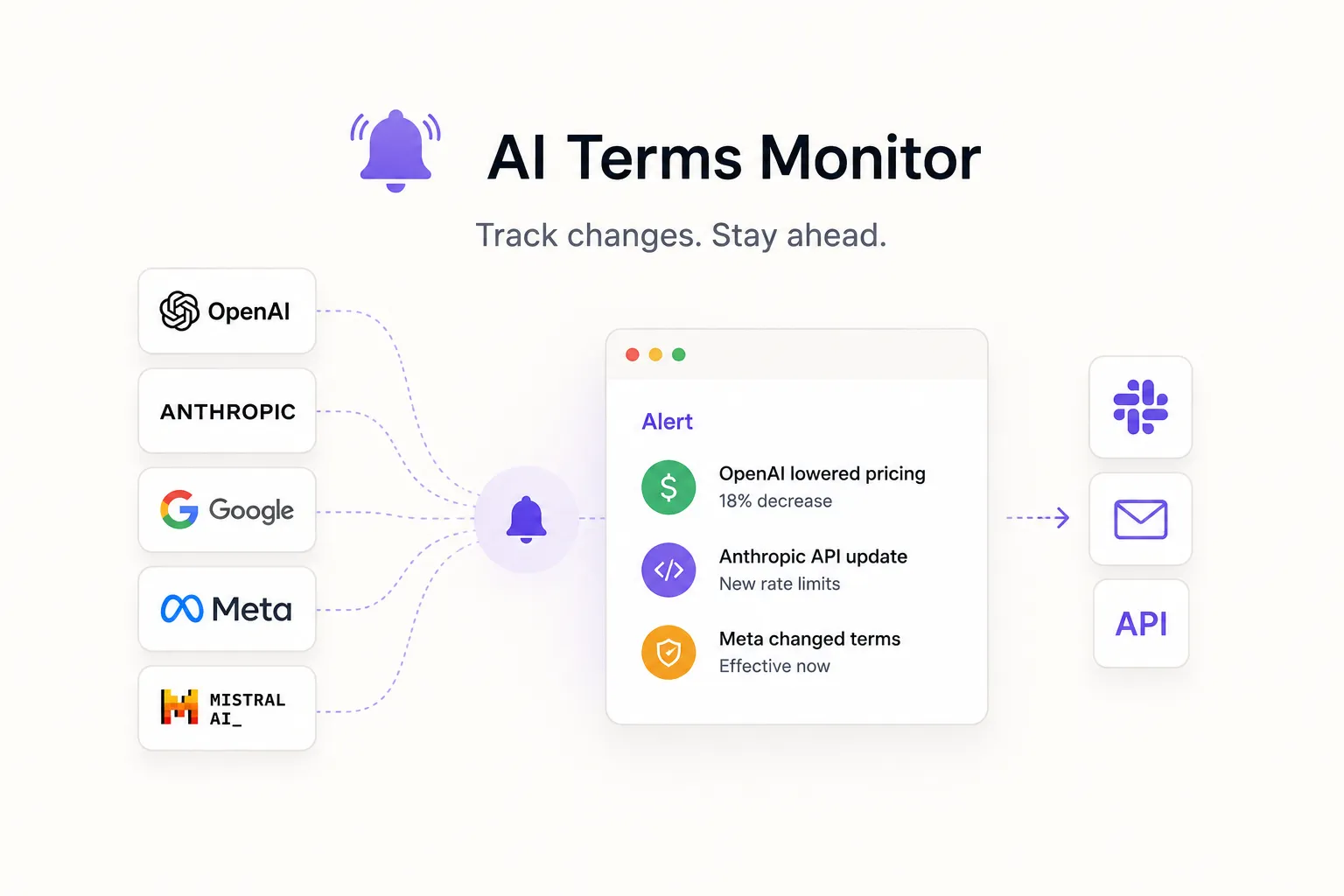
AI vendors change pricing, APIs, rate limits, models, and commercial terms almost daily, yet most businesses only discover those changes after something breaks or costs increase. This startup continuously monitors AI documentation, changelogs, pricing pages, and legal terms, using AI to identify only the changes that actually matter. Instead of reading dozens of release notes, customers receive actionable alerts explaining the business impact and what to do next. The timing is driven by every company becoming dependent on multiple AI vendors, making change management a new operational challenge. A startup using OpenAI, Anthropic, and Google could receive an alert that a model is being deprecated in 60 days, another provider just cut inference prices by 20%, and an API change requires updating production code before it causes downtime.
Description
No additional description provided.
The Pitch
AI vendors have become critical infrastructure without yet behaving like mature infrastructure. Cloud providers taught companies to expect dashboards, contracts, compatibility guarantees, and long deprecation windows; AI providers are still changing the ground underneath customers at software-startup speed. That mismatch creates a valuable gap: the more serious a company’s AI usage becomes, the less acceptable it is to learn about vendor changes through Twitter, buried changelogs, or a surprise bill.
The compelling wedge is that the information is public, but the meaning is not. A price table changing, a model name disappearing, or a paragraph in a terms page being rewritten is only useful if someone can translate it into operational consequence. Most monitoring tools notice that something changed; the valuable version knows whether finance, legal, engineering, or product should care. In AI, the same vendor update can be irrelevant to one team and existential to another, depending on which models, endpoints, contracts, and use cases they rely on.
This becomes more powerful as companies use multiple AI providers not for redundancy in the abstract, but because no single vendor is best at everything for long. The market is too fluid: one model becomes cheaper, another gains a longer context window, another tightens usage rights, another quietly deprecates an endpoint. A business that maps these shifts across vendors becomes a kind of radar for the AI stack. It helps companies see not just danger, but leverage—when to renegotiate, switch workloads, freeze an integration, or accelerate a migration.
The unusual thing about this category is that trust compounds through small saves. Preventing one outage, catching one unfavorable terms change, or identifying one material price cut can justify years of use, because the alternative is invisible operational drag. The product would not need to be used every day to become indispensable; it would become part of the company’s nervous system, the thing that notices when an external dependency moves.
If AI adoption continues, this is less like a news product and more like compliance and observability for vendor volatility. Companies are wiring probabilistic, fast-changing services into deterministic business processes. Someone has to watch the seams. The durable business is not in summarizing AI news; it is in becoming the system of record for how external AI changes affect a company’s own commitments, costs, and risks.