AI That Finds Hidden Software Assets Companies Can Sell
AI discovers forgotten corporate software and turns it into revenue.
Description
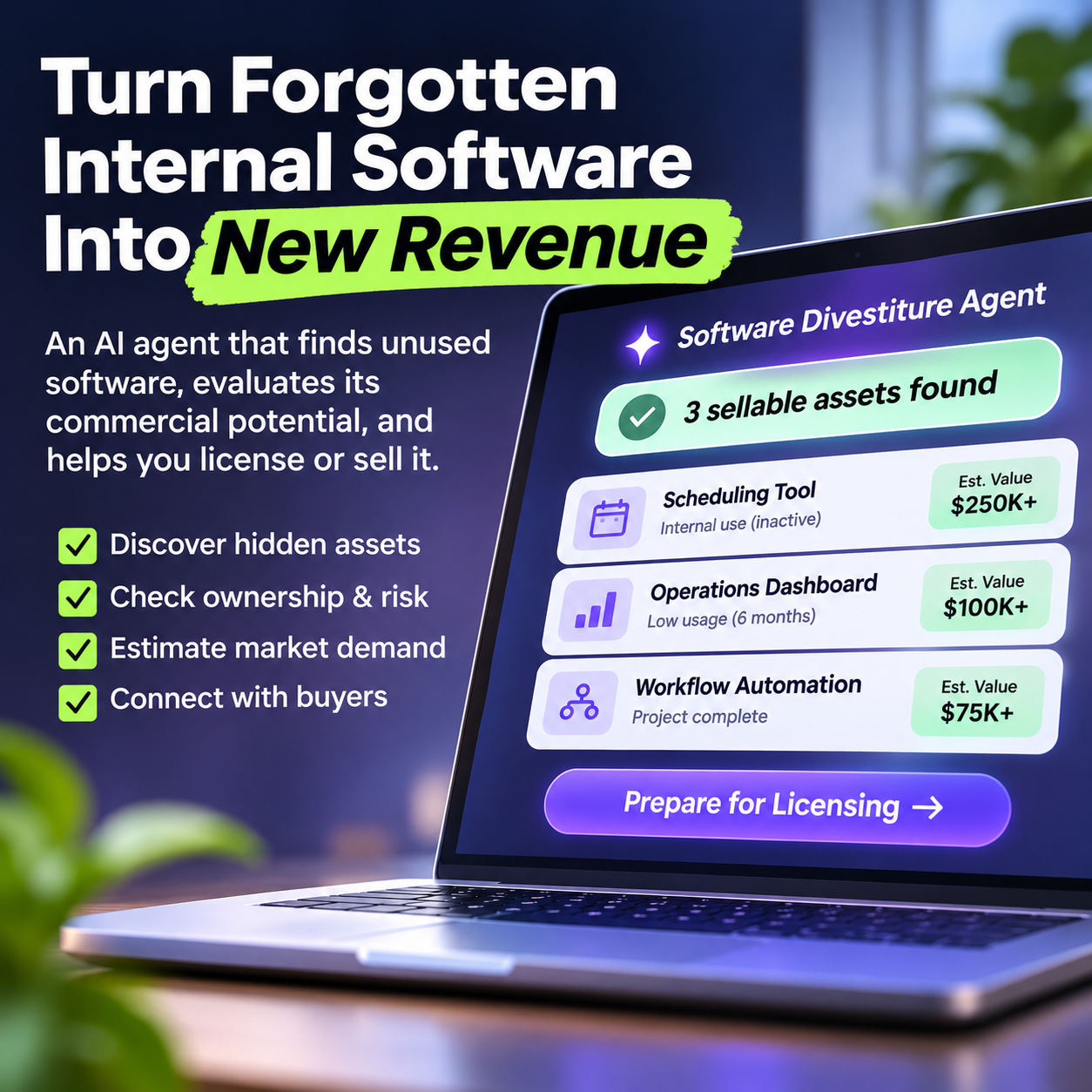
Companies spend millions developing internal software, automation tools, dashboards, and proprietary systems that eventually become obsolete, underused, or forgotten. Many of these assets could have commercial value, but businesses rarely know what they own that someone else might pay for. Imagine an AI agent that securely analyzes a company's authorized code repositories, software inventories, and contracts to identify unused applications with resale or licensing potential. It could assess ownership rights, flag sensitive dependencies, estimate commercial demand, and connect approved assets with potential buyers. A logistics company might discover that an internal scheduling tool it abandoned could be licensed to dozens of smaller operators. Advances in AI code analysis and autonomous research make it increasingly practical to uncover and evaluate these hidden assets without conducting months of manual audits. Instead of letting valuable software disappear inside corporate systems, companies could turn forgotten code into a new revenue stream.
The Pitch
Every corporation grapples with the paradox of abundant internal resources that ultimately go underutilized. Often, these resources manifest as proprietary software tools developed over years, only to be replaced by newer technologies or forgotten altogether. The idea of monetizing these lost gems presents a tantalizing opportunity that reshapes the vision of corporate assets from static tools to dynamic revenue streams. This shift in perspective hinges on harnessing advanced AI capabilities to unlock previously overlooked value, which in turn redefines how companies perceive their internal infrastructure.
The market is inundated with companies that have invested millions into their custom-built software, creating a universal climate ripe for discovery and monetization. Many businesses are blind to the wealth they possess simply because they lack the mechanisms to glean insights from their own data repositories. An AI-driven agent that expertly navigates the complexities of software inventories and legacy code can expose hidden assets that even the most astute internal auditors may miss. By systematically evaluating ownership rights and uncovering potential demand, such a tool transforms the once-ordinary task of code analysis into a catalyst for innovation and profitability.
The unique value proposition transcends mere software discovery; it also emphasizes strategic foresight by assessing market viability and pinpointing lucrative opportunities in the evolving tech landscape. Instead of relegating idle software to obscurity, firms can become proactive stewards of their proprietary technology, leveraging it to not only enhance their bottom lines but also align with market needs. As platforms for technology trading become increasingly crucial, the ability to connect internal assets with prospective buyers isn't merely visionary; it’s a necessary evolution in the digital economy.
What distinguishes this approach is the embrace of a synergistic relationship between technology and business strategy. This initiative doesn't just identify what is available but seeks to integrate these insights into broader corporate goals. Organizations can utilize their newfound awareness of hidden assets to make informed decisions about resource allocation and strategic partnerships, reinforcing a culture of innovation while fostering financial agility in a landscape defined by rapid change. This isn't just about selling software; it's about rewriting the rules of engagement in corporate resource management for the digital age.