AI Streamlining Code Enforcement in Small Towns
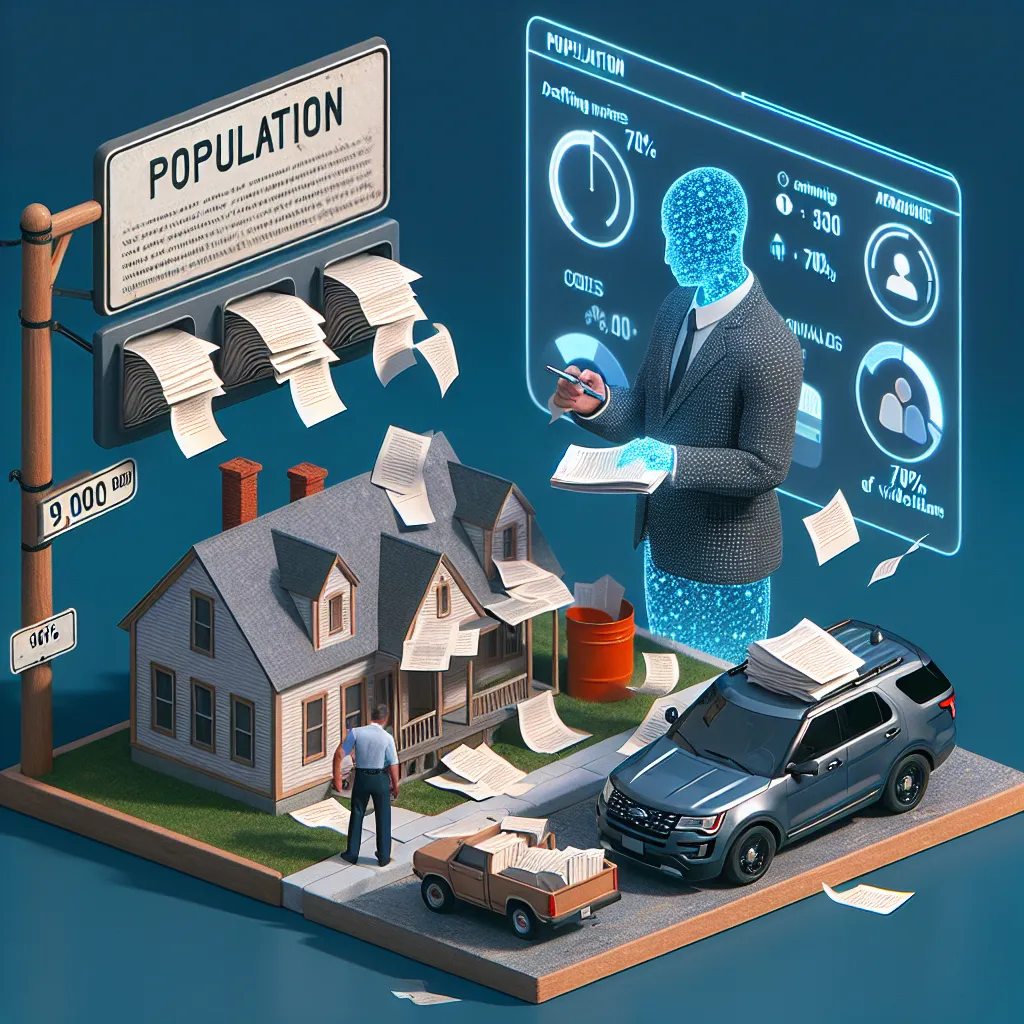
Small towns rely on one overworked official to enforce zoning, building codes, noise complaints, permits, and property violations — usually with pen, paper, and a Ford Explorer. An AI code-enforcement agent ingests resident complaints, analyzes street-view photos, interprets zoning rules, drafts violation notices, and schedules follow-ups automatically. Vertical AI wins because rules vary by town and enforcement is painfully manual. Why now? Many towns literally cannot hire the role. Imagine a 9,000-person town using an AI agent trained on its municipal code that resolves 70% of violations before a human ever steps in.
Description
No additional description provided.
The Pitch
In many small towns across the country, the responsibility for enforcing zoning laws, building codes, noise complaints, permitting, and property violations often falls on the shoulders of a single overworked official. This individual typically relies on traditional methods—pen, paper, and perhaps a trusty vehicle—to manage a wide variety of tasks. The process is time-consuming, labor-intensive, and prone to human error. Moreover, budget constraints and a limited pool of qualified candidates make it difficult for these towns to hire additional personnel to share the load.
Herein lies a significant opportunity to modernize and streamline operations with an AI-driven solution. Introducing the concept of an AI code-enforcement agent: a powerful, automated system designed to handle the majority of a town's code enforcement tasks with minimal human intervention. This digital agent would be capable of ingesting resident complaints, analyzing street-view photographs, interpreting local zoning regulations, drafting violation notices, and scheduling follow-ups, all in a seamless and efficient manner.
The real advantage of employing a vertical AI solution lies in its ability to adapt to the unique set of rules and regulations that vary from town to town. Unlike a one-size-fits-all approach, this AI agent is trained specifically on the municipal code of each individual town, ensuring accurate and contextually relevant enforcement.
Now is the ideal time to introduce this innovation. Many small towns are struggling to fill code enforcement positions, often out of necessity rather than choice. The use of an AI code-enforcement agent can alleviate the burden on human officials by resolving a substantial portion of violations without requiring their direct involvement. In some instances, it's estimated that the AI agent could efficiently handle up to 70 percent of cases before requiring human input.
Product details for this AI agent would include advanced machine learning algorithms tailored to interpret and apply local codes, integration with existing municipal complaint systems, and a user-friendly dashboard for human officials to monitor and intervene in complex cases. Furthermore, leveraging street-view analysis, natural language processing, and automated notification systems will enhance the functionality and accuracy of the AI agent.
To bring this vision to life as a minimum viable product, several tools can be used to ease the launch process. These may include cloud-based platforms for scalable computing power, open-source natural language processing libraries, and image recognition APIs for analyzing street-view photos. For the development phase, agile methodologies are recommended to iterate quickly based on user feedback and evolving needs.
The go-to-market strategy should focus on extensive field research to fine-tune the product based on real-world conditions, building credibility through pilot programs in select towns, and engaging in partnerships with local government technology associations. Hosting workshops or webinars to educate town officials on the benefits and capabilities of the AI agent can also support adoption.
For the business model, a subscription-based approach could be effective, offering tiered pricing based on the size of the municipality and the volume of cases expected. This model not only provides steady revenue streams but also makes the solution accessible to towns with varying budget constraints.
In conclusion, the introduction of an AI code-enforcement agent represents a groundbreaking shift towards efficiency and modernization for small towns. By leveraging advanced technology, towns can not only relieve overburdened officials but also improve compliance rates and enhance the quality of life for residents.