AI Streamlines Funeral Planning Amid Boomer Wave
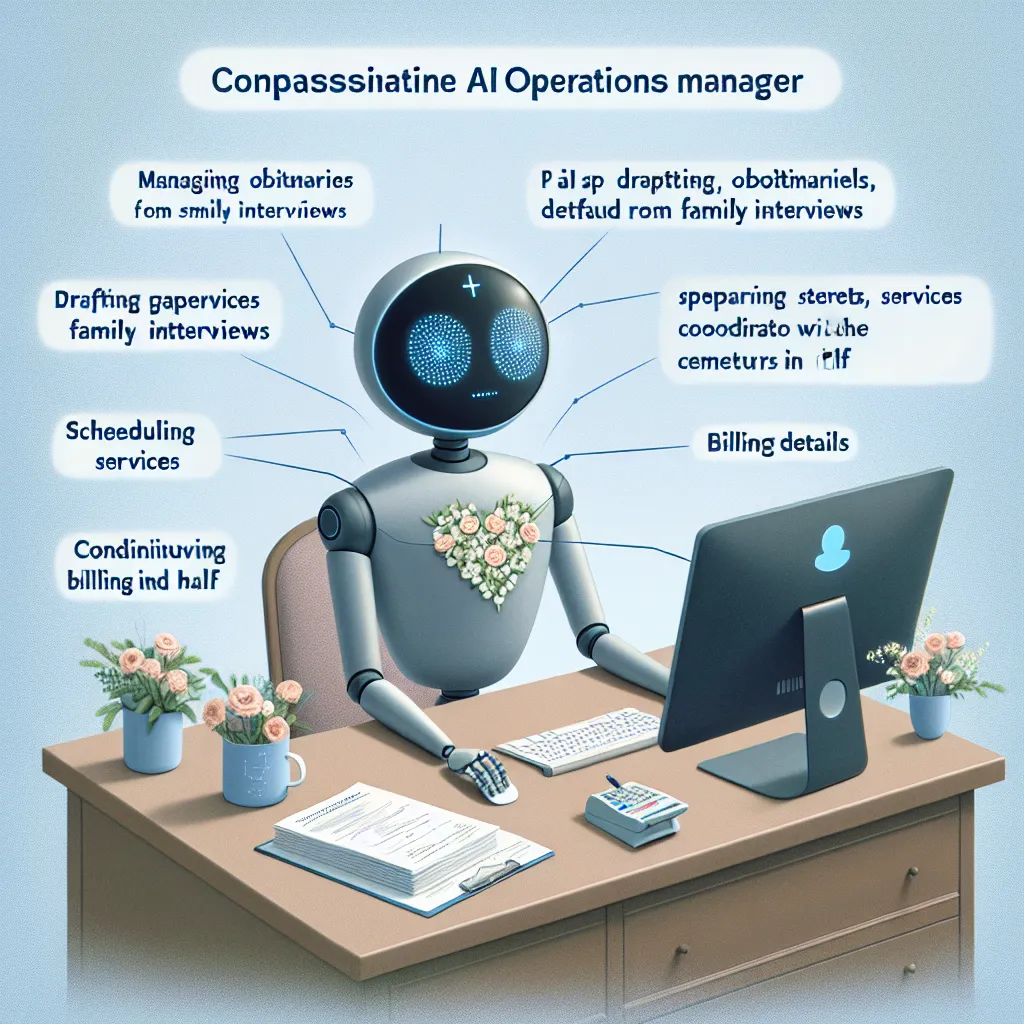
Funeral homes juggle grief-stricken families, regulatory paperwork, permits, service planning, vendor coordination, and obituary writing — mostly by hand. An AI operations manager handles intake, drafts obituaries from family interviews, prepares compliance documents, schedules services, coordinates with cemeteries and florists, and generates billing. It’s a vertical where SaaS adoption has lagged because workflows require empathy and precision. AI can finally absorb this complexity. Why now? The Boomer mortality wave is beginning, and funeral homes are understaffed. Imagine a small funeral home offering “instant planning” through a gentle AI interface that reduces stress for families and cuts admin time in half.
Description
No additional description provided.
The Pitch
Funeral homes face a unique set of challenges as they navigate the delicate process of providing end-of-life services. They must manage the emotional needs of grieving families while also handling a myriad of logistical tasks, including regulatory paperwork, permits, service planning, vendor coordination, and obituary writing. Traditionally, many of these tasks have been carried out manually, which can be both time-consuming and prone to error.
An artificial intelligence-driven operations manager offers a transformative solution to this problem. By automating key administrative and planning tasks, AI can ease the burden on funeral home staff and enhance the overall experience for families during their time of need. This system can efficiently handle client intake, draft personalized obituaries based on family interviews, prepare compliance documents, schedule services, and coordinate with cemeteries and florists. Furthermore, it can generate accurate billing, ensuring transparency and ease of mind for families.
The funeral service industry has been slow to adopt software-as-a-service (SaaS) solutions, mainly because the workflows require a high degree of empathy and precision. However, advancements in AI technology now make it possible for these systems to absorb the complexity inherent in funeral home operations, striking a balance between efficiency and compassion.
The urgency for such a solution is evident due to the demographic shift currently underway. As the Baby Boomer generation faces increased mortality rates, the demand for funeral services is expected to rise significantly. At the same time, many funeral homes are contending with understaffing issues, further straining their ability to provide timely and personalized services. Now is the perfect time for a small funeral home to differentiate itself by offering instant planning through an intuitive AI interface. This innovation not only reduces stress for grieving families but also cuts administrative time in half, providing a competitive edge in the marketplace.
To bring this vision to life, consider these product details and tools that can facilitate the launch of a minimum viable product (MVP):
1. **AI-Powered Intake and Planning**: Use NLP (Natural Language Processing) algorithms to interact with families, gathering essential information for service planning.
2. **Obituary Drafting**: Employ a machine learning model that creates draft obituaries based on family interviews, customizable to personal preferences.
3. **Compliance and Documentation**: Automate the creation of necessary regulatory documents, ensuring all required permits are handled seamlessly.
4. **Scheduling and Coordination**: Implement scheduling tools that align funeral services, cemetery arrangements, and floral deliveries.
5. **Billing System**: Integrate financial software to produce clear and precise billing statements for clients.
6. **Empathy-Focused UI/UX**: Design an interface that is user-friendly and sensitive to the emotional state of the user, prioritizing ease of use and understanding.
The tools needed for the MVP could include cloud-based platforms for scalability, AI frameworks like TensorFlow or PyTorch for developing intelligent algorithms, and user-centric design tools like Figma for crafting an appealing user interface.
For a go-to-market (GTM) strategy, consider the following steps:
- **Targeted Marketing**: Focus on reaching small to mid-sized funeral homes that could benefit the most from operational efficiencies. - **Partnerships and Alliances**: Build relationships with industry associations that can provide credibility and access to a broader network of potential customers. - **Referral Programs**: Encourage current users to recommend the service to other funeral homes in exchange for incentives. - **Content Marketing**: Develop resources like ebooks and webinars that educate funeral homes about the advantages of AI integration. - **Trial Offers**: Provide limited-time free trials to incentivize adoption and demonstrate the product's value firsthand.
Regarding the business model, a subscription-based SaaS approach could provide predictable revenue while offering flexibility to customers. Tiered pricing options can cater to different needs, spanning basic to premium services depending on the level of automation and customization required.
In conclusion, by implementing an AI-driven operations manager, funeral homes can streamline their processes, offer better service to grieving families, and respond adeptly to the evolving demands of the industry. This innovative approach positions funeral homes to thrive in an increasingly competitive and demanding market.