AI Streamlines Dental Insurance Claim Management
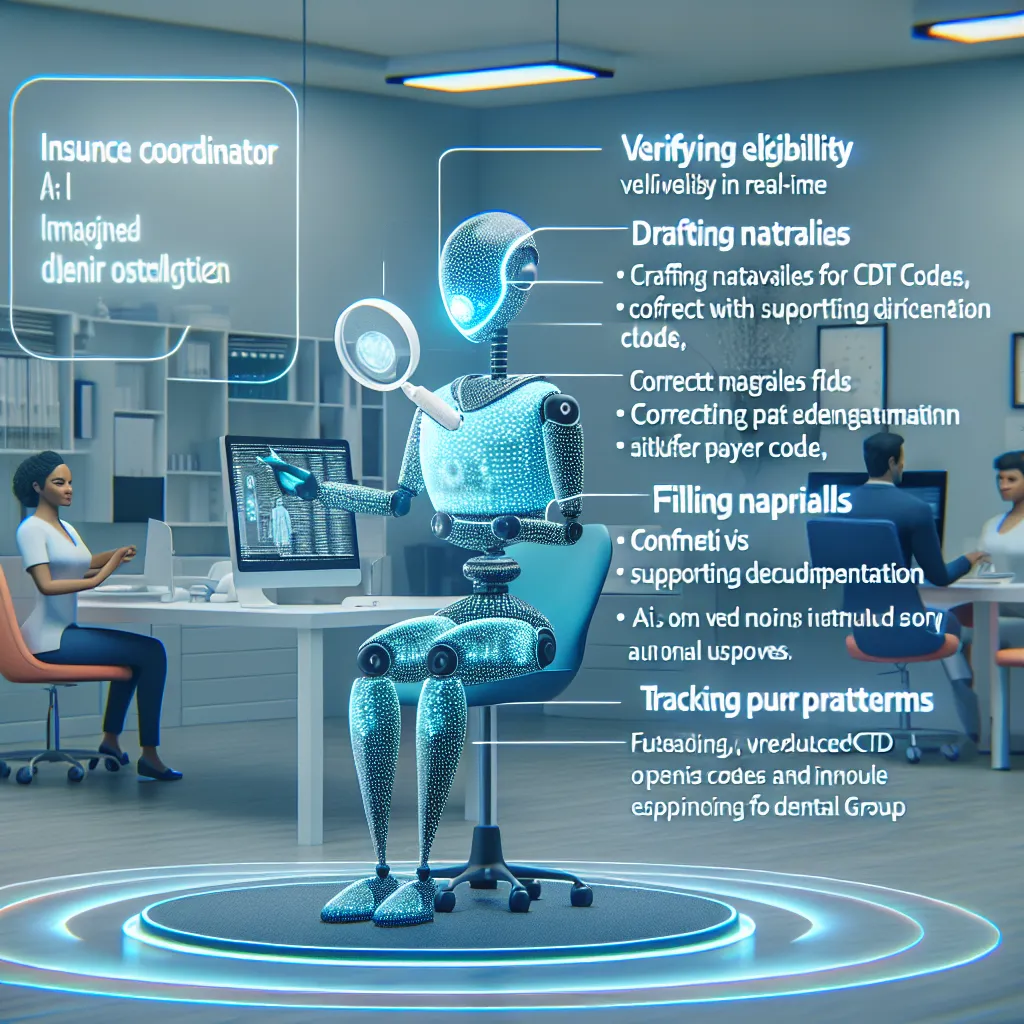
Dentists rely heavily on insurance reimbursements, yet benefit verification, pre-authorizations, coding, and denied-claim appeals consume huge staff time. An AI insurance coordinator verifies eligibility in real-time, drafts narratives for claims, corrects CDT codes, files appeals with supporting documentation, and tracks payer patterns. Vertical AI wins here because each dental office generates proprietary claim history that compounds defensibility. Why now? Staffing shortages and rising payer scrutiny have made claim management a top pain point. Imagine a dental group recovering tens of thousands annually from reduced denials and faster payments.
Description
No additional description provided.
The Pitch
In recent years, the dental industry has been increasingly challenged by the complexities of insurance reimbursement. Manual processes for benefit verification, pre-authorization, coding, and managing denied claims have become significant bottlenecks, consuming valuable staff time and resources. This document outlines the backstory, problem, and solution proposed through a cutting-edge AI insurance coordinator; a tool designed to streamline insurance processes, reduce administrative overhead, and improve financial outcomes for dental practices.
Backstory: Dental practitioners have always relied on insurance reimbursements as a significant revenue source. However, as the insurance landscape has evolved, so too have the intricacies of managing claims. With dental offices handling hundreds, if not thousands, of claims monthly, the administrative load on staff has increased substantially. This burden is compounded by recent staffing shortages within the healthcare industry, making efficient claim management even more critical. Concurrently, insurance companies have adopted more stringent scrutiny over submitted claims, leading to an uptick in denials. These industry trends have created an urgent need for a solution that can adapt to and overcome these challenges.
Problem: Traditional methods of handling insurance claims require extensive manual intervention. This process not only increases the chance of human error but also ties up staff who could otherwise focus on patient care and other critical functions. The typical workflow involves verifying patient eligibility, obtaining pre-authorizations, accurately coding procedures, and appealing denied claims, each of which demands considerable time and attention. This cumbersome process results in delayed reimbursements, increased chances of denied or underpaid claims, and financial strain on practices. In an environment where efficiency and accuracy are paramount, dental practices require an innovative approach to streamline these operations effectively.
Solution: The AI insurance coordinator presents a transformative solution to the aforementioned challenges. By harnessing the power of artificial intelligence, this tool automates the verification of patient eligibility, ensures accurate coding with real-time narrative generation, and manages claims from submission to appeal. It learns and adapts to the unique claim patterns of each dental office, enhancing its precision and efficacy over time. The tool also provides insights into payer behavior, helping practices to anticipate potential issues and adjust their strategies accordingly.
Product Details: 1. Real-time Eligibility Verification: The AI reviews patient insurance in real-time, confirming coverage before procedures are performed to ensure compliance and coverage. 2. Automated Coding and Narrative Generation: The tool suggests correct CDT codes and drafts necessary documentation to accompany claims, reducing human error and speeding up the claims process. 3. Denied Claim Management: Facilitates the appeal process by automatically generating and submitting necessary documentation and tracking the status of ongoing appeals. 4. Payer Pattern Analysis: Provides valuable data on insurance payer behaviors, allowing practices to optimize their submission strategies. 5. Compliance and Security: Ensures adherence to HIPAA and other regulatory requirements, guaranteeing data security and patient confidentiality.
Tools for MVP Launch: 1. AI Development Frameworks: Utilize platforms such as TensorFlow or PyTorch for building and training the AI models. 2. Cloud Services: Use AWS or Google Cloud for scalable infrastructure and healthcare-compliant data storage. 3. API Integration: Develop seamless integration with existing practice management software for smooth data exchange. 4. User Interface Design: Prioritize user-friendly interfaces and dashboards with tools like Figma or Adobe XD to enhance usability and accessibility for dental staff.
GTM Strategy: 1. Segment Focus: Target multi-location dental practices and dental service organizations (DSOs) for initial adoption. 2. Strategic Partnerships: Collaborate with practice management software providers to offer integrated solutions. 3. Awareness Campaigns: Utilize webinars, industry conferences, and informational content to demonstrate value and educate potential users. 4. Demo and Trial Offers: Provide demonstrations and limited-time free trials to encourage adoption and showcase effectiveness.
Business Model: 1. Subscription-Based Licensing: Offer tiered subscription plans based on practice size and claim volume. 2. Implementation Services: Charge a one-time fee for onboarding and training services to ensure seamless integration. 3. Data Insights and Analytics: Provide premium analytics services for practices interested in deeper insights into their operations and payer behaviors.
Conclusion: The introduction of an AI insurance coordinator has the potential to revolutionize dental practice management by alleviating administrative burdens and enhancing claims accuracy and efficiency. By deploying a vertical AI solution tailored to the unique challenges of dental offices, practices can achieve significant financial improvements through faster payments and reduced denials. As the dental industry continues to evolve, embracing technological advancements will be key to maintaining a competitive edge and delivering superior patient care.